



கம்பராமாயணம் 2916 · ஆரணிய 5.102
பாடல் · The poem
Tap a word to see its gloss in the commentary and where else it occurs.
பொருள் · Meaning in Tamil
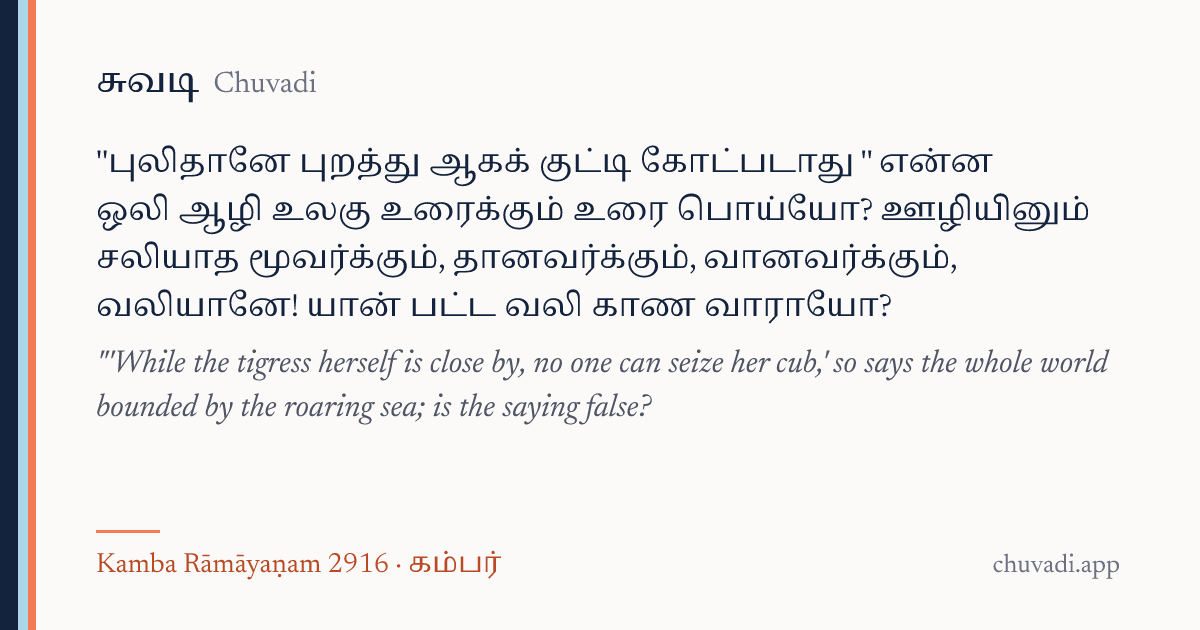
ஊழியினும் சலியாத மூவர்க்கும் தானவர்க்கும் வானவர்க்கும் வலியானே - கற்ப முடிவிலும் ஆற்றல் தளராத மும் மூர்த்திகளுக்கும் அசுரர்களுக்கும் தேவர்களுக்கும் மிக்க வலிமை கொண்ட இராவணனே; புலி தானே புறத்து ஆகக் குட்டி கோட்படாது - தாய்ப் புலியானது பக்கத்திலிருக்க அதன் குட்டி எவராலும் பிடிக்கப்பட்டுத் துன்புறாது, என்ன ஒலி ஆழி உலகு உரைக்கும் உரை பொய்யோ - என்று முழக்கத்துடன் கூடிய கடல் சூழ்ந்த உலக மக்கள் கூறும் பழமொழி பொய்யோ?, யான் பட்ட வலி காண வாராயோ - நான் அடைந்த கொடும் துன்பத்தைப் பார்க்க வரமாட்டாயா?
புலிதானே புறத்தது ஆகக்குட்டி கோட்படாது என்ற பழமொழியைப் புறநானூற்றில் உள்ள 'புலி புறங்காக்கும் குருளை போல' (புறம். 42.10) என்ற அடியோடு ஒப்பிடத்தக்கது. 'குட்டியைத் தின்னலாமே கோட்புலி புறத்ததாக' எனவரும் சிந்தாமணி (1134) அடியும் இதனை விளக்கும். 'வலியானே! யான் பட்ட வலி காண வாராயோ' என்பதில் உள்ள சொல் பின்வரு நயம் எண்ணி மகிழ்தற்குரியது. தானவர் என்பவர்கள் தனு என்பவளுக்குக் காசிபரிடம் பிறந்த அசுரர் என்பர்.
உலகு - இடவாகுபெயர். இதில் பிறிது மொழிதல் அணி உளது. உலக உண்மை மொழி தன்னிலையால் பொய்த்து விட்டதே எனச் சூர்ப்பணகை கூறியது குறிப்புமொழியாம்.
ஆங்கிலம் · English translationAI
Translation
- "'While the tigress herself is close by, no one can seize her cub,'
- so says the whole world bounded by the roaring sea; is the saying false?
- You who are mightier than the Three, who do not falter even at the end of an age, than the demons and the gods,
- mighty one! Will you not come to see the misery I have suffered?"
What the poem says
Cūrppaṇakai calls again on Irāvaṇaṉ, mightier than the three great gods, the asuras and the devas. She throws an old proverb at him: no one can touch a tiger's cub while its mother is near. Has the saying turned out false?
The last line plays on the word vali, meaning both "strength" and "pain": "mighty one, come and see the pain I have suffered."