



கம்பராமாயணம் 2927 · ஆரணிய 5.113
பாடல் · The poem
Tap a word to see its gloss in the commentary and where else it occurs.
பொருள் · Meaning in Tamil
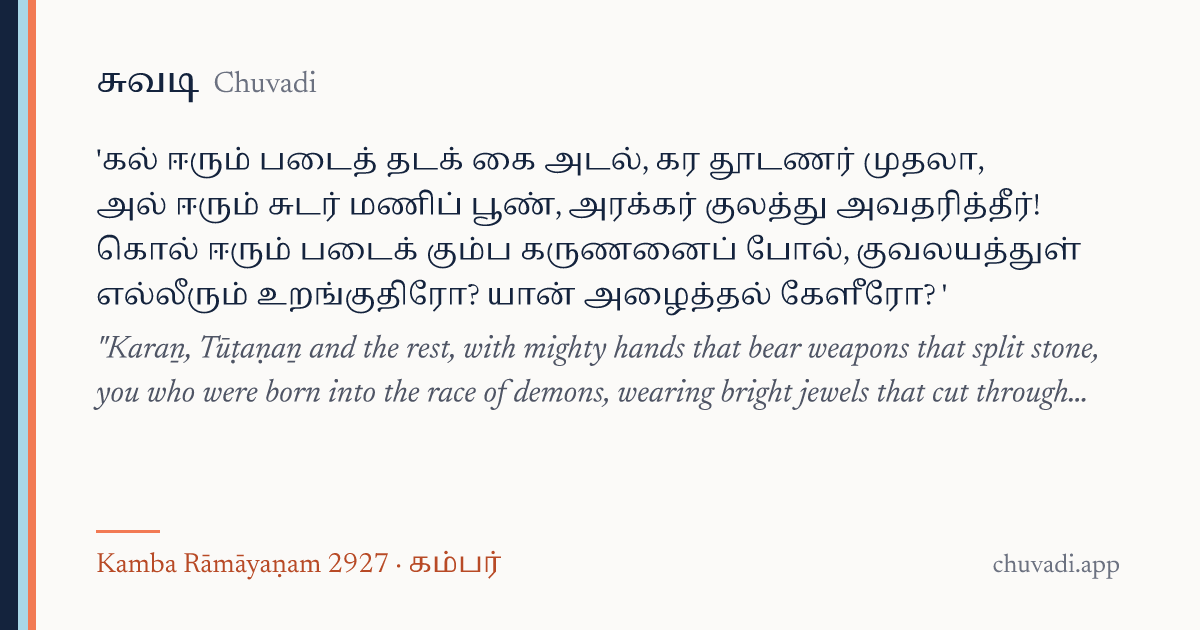
கல் ஈரும் படைத்தடக்கை அடல் கர தூடணர் முதலா - கல்லையும் பிளக்க வல்ல போர்க்கருவிகள் கொண்ட பெரிய கைகளுடைய வலிமை பெற்ற கரனும் தூடணனும் முதலாக; அல் ஈரும் சுடர் மணிப் பூண் அரக்கர் குலத்து அவதரித்தீர் - இருளை அழிக்கும் ஒளியுடைய மாணிக்கக்கலன்களை அணிந்த இராக்கதர் குலத்தில் தோன்றியவர்களே!; கொல் ஈரும் படைக் கும்பகருணனைப் போல் - கொல்லனால் அராவப்பட்ட கூரிய படைக்கலன் கொண்ட கும்பகருணனைப் போன்று, குவலயத்துள் எல்லீரும் உறங்குதிரோ - உலகத்தில் எல்லோரும் தூங்குகின்றீர்களா?; யான் அழைத்தல் கேளீரோ - (அதனால்) நான் கூப்பிடுவதைக் கேட்க மாட்டீர்களா?
சேய்மைக் கண் உள்ள இலங்கையில் இராவணன், இந்திரசித்துப் போன்றவர்கள் நான் கதறுவதைக் கேட்காமலிருக்கலாம். ஆனால் அண்மையிலுள்ள கரன் தூடணன் போன்றவர்கள் கேட்கலாம். ஆனால் அவர்கள் கேளாததற்குக் கும்பகருணன் போல உறங்கி விட்டார்களோ என ஐயுறுகிறாள் சூர்ப்பணகை. கும்பகருணன் - குடம் போலக் காதை உடையவன். இவன் தவம் செய்த போது பிரமன் இவன் முன் தோன்றி 'வரம் கேள்' என அருளிய போது இவன் நாவில் வந்து தங்கிய கலைமகளின் சூழ்ச்சியால் என்றும் நித்திரையுள்ளவனாக வரம் கேட்டதால் எப்போதும் தூங்கிய வண்ணமிருந்தான். இது புராண வரலாறு. இராமாவதாரக் காப்பியத்தில் அரக்கர்களும் அவதாரம் செய்ததாகவே சூர்ப்பணகை விளிக்கின்றாள்.
ஆங்கிலம் · English translationAI
Translation
- "Karaṉ, Tūṭaṇaṉ and the rest, with mighty hands that bear weapons that split stone,
- you who were born into the race of demons, wearing bright jewels that cut through darkness!
- Like Kumpakaruṇaṉ with his weapons honed by the smith, are all of you
- in this world asleep? Do you not hear me calling?"
What the poem says
Cūrppaṇakai turns to Karaṉ, Tūṭaṇaṉ and the other demons nearby. Irāvaṇaṉ and his son are far away in Ilaṅkai and might not hear her, but these warriors are close. Have they all fallen asleep like Kumpakaruṇaṉ?
Kumpakaruṇaṉ, "pot-eared," sleeps most of the time because of a boon gone wrong. When he did penance, the goddess of speech sat on his tongue, and he asked Brahmā for endless sleep instead of what he meant to ask.