



கம்பராமாயணம் 2957 · ஆரணிய 5.143
பாடல் · The poem
Tap a word to see its gloss in the commentary and where else it occurs.
பொருள் · Meaning in Tamil
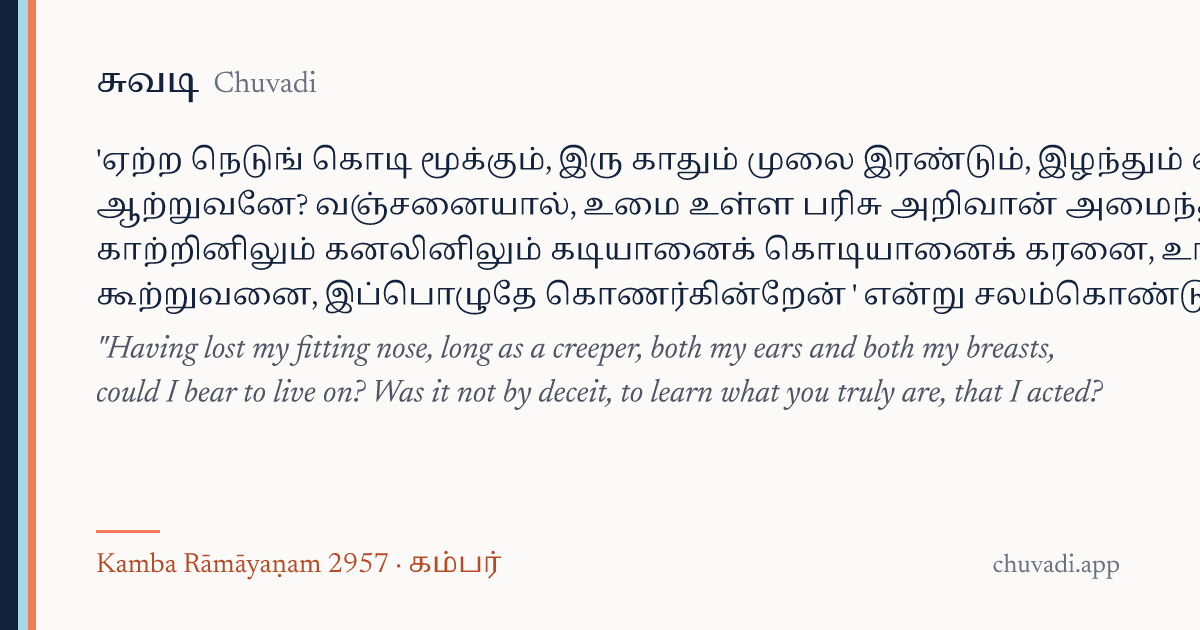
ஏற்ற நெடுங் கொடி மூக்கும் இருகாதும் முலை இரண்டும் இழந்தும் வாழ ஆற்றுவனே - என் அழகுக்குப் பொருத்தமாயிருந்த நீண்ட கொடி போலும் உயர்ந்திருந்த மூக்கும் இரண்டு செவிகளும் இரு கொங்கைகளும் அறுக்கப் பெற்றும் உயிரோடு வாழ்வதைப் பொறுத்து இருப்பேனோ (மாட்டேன்); வஞ்சனையால் உமை உள்ள பரிசு அறிவான் அமைந்தது அன்றோ - கபடமாய் நான் உம்முடைய நோக்கினை அறியச் செய்த செயல் அல்லவா? (ஆதலால்) காற்றினிலும் கனலினிலும் கடியானை - காற்றையும் தீயையும் விட ஆற்றலுடையானை; கொடியானை - கொடியவனை; கரனை - கரன் எனும் பெயருடையவனை; உங்கள் கூற்றுவனை இப்பொழுதே கொணர்கின்றேன் - உங்களை அழிக்கும் யமனை இக்கணத்தே கூட்டி வருகிறேன்; என்று சலம் கொண்டு போனாள் - எனக் கூறித் தணியாத கோபமுற்றுச் சென்றாள்.
'நெடுங் கொடி மூக்கு' என்பதை முன்னரே 'மேக்கு உயரும் நெடு மூக்கு' எனக் கூறினாள் (286). காற்றுப் போல் வேகமும் தீப்போலக் கொடுமையும் பூண்ட என நிரல் நிரையாகப் பொருள் கூறுவர். சலம் - தணியாப் பகையுமாம். 'சலம் புணர்கொள்கைச் சலதி' எனச் சிலப்பதிகாரம் கூறுவதும் கொண்டு (சிலம்பு.9.69) முன்னர்க் காதல் மொழி கூறியும் இறுதியில் வஞ்சனையால் உமை உள்ள பரிசு அறிவான் அமைந்தது, கரனை உங்கள் கூற்றுவனை இப்பொழுதே கொணர்கிறேன் எனக் கூறுவதும் சூர்ப்பணகையின் பொய் நிலையைக் காட்டும் எனலுமாம். இவளைத் தாடகை போல் கொல்லாமல் விட்டதற்குக் காரணம் கரன் முதல் இராவணன் குலத்தை அழிக்கும் நோக்கமே எனக் குறிப்புப் பொருள் காண்பர் இப்படலம் முழுதும் 'கம்ப நாடகம்' என்ற பெயர்க்கு ஏற்பப் பொருத்தமான உரையாடல்கள் செவ்விய நிலையில் அமைந்துள்ளன.
ஆங்கிலம் · English translationAI
Translation
- "Having lost my fitting nose, long as a creeper, both my ears and both my breasts, could I bear
- to live on? Was it not by deceit, to learn what you truly are, that I acted?
- Kara, fiercer than wind and fire, the cruel one, your
- death in person, I will bring him here this very moment!" she said, and went off in implacable rage.
What the poem says
Cūrppaṇakai finally gives up and leaves in fury. She claims her whole courtship was only a trick to find out what the brothers were really like, and swears that she cannot live with such disfigurement.
She threatens to bring Karaṉ, swifter than the wind and fiercer than fire, who will be their death. The commentary notes that sparing her, unlike Tāṭakai, serves the larger purpose of drawing Karaṉ and finally Irāvaṇaṉ to their doom. This ends the episode of Cūrppaṇakai, whose dialogue shows Kampaṉ's dramatic gift.