



கம்பராமாயணம் 2959 · ஆரணிய 6.2
பாடல் · The poem
Tap a word to see its gloss in the commentary and where else it occurs.
பொருள் · Meaning in Tamil
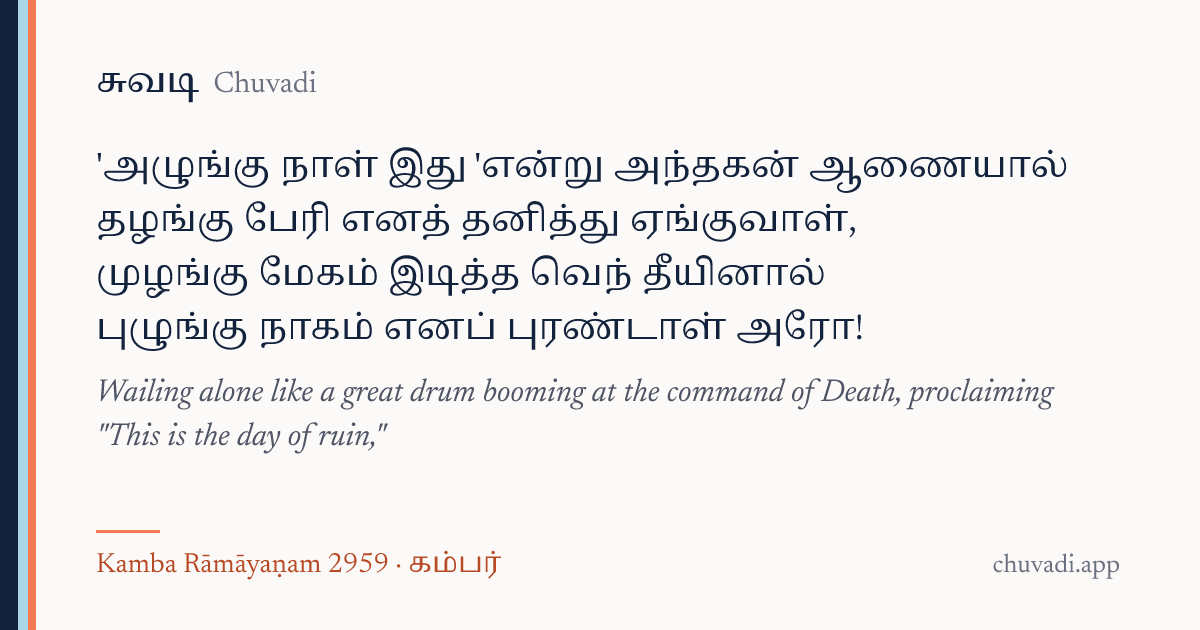
அழுங்கு நாள் - (அந்த அரக்கர்கள்) அழியக் கூடிய நாள்; இது என்று - இதுவே என்று; அந்தகன் ஆணையால் - யமனுடைய கட்டளையால், தழங்கு பேரி என - (அடிக்கப்பட்டு) ஒலிக்கின்ற பெரிய முரசு போல; தனித்து ஏங்குவாள் - தனியே (பேராரவாரம் உண்டாகுமாறு) கதறியழுபவளான சூர்ப்பணகை; முழங்கு மேகம் இடித்த - ஆரவாரிக்கின்ற மேகம் கக்கும்; வெந் தீயினால் - கொடிய நெருப்பாகிய இடியினால்; புழுங்கு நாகம் என - வெந்து துடிக்கின்ற பாம்பு போல; புரண்டாள் - (நிலத்திலே) புரண்டாள்.
சூர்ப்பணகை கதறியழுத குரலோசை அங்குள்ள கரன் முதலான அரக்கரை இராமனோடு உடனே போர் செய்ய எழுமாறு தூண்டி அவரனைவரும் அன்றே இறந்தொழிவதற்குக் காரணமாவது குறித்து அந்தக் கதறல் இராக்கத அழிவுக் குறிப்பாக யமன் அறைவித்த பறைபோலுமென்றது தன்மைத் தற்குறிப்பேற்றவணி. பின்னிரண்டடி; உவமையணி. இடிக்கு அழிதல் நாகத்தின் இயல்பு. அரோ - ஈற்றசை.
ஆங்கிலம் · English translationAI
Translation
- Wailing alone like a great drum booming at the command of Death,
- proclaiming "This is the day of ruin,"
- she rolled on the ground like a snake
- scorched by the fierce fire of thunder from a roaring cloud.
What the poem says
Cūrppaṇakai's wailing is compared to a drum beaten at Yamaṉ's command to announce that the rākṣasas' day of destruction has come. Her cries will rouse Karaṉ and his warriors to march against Irāmaṉ that very day and die, so the poet imagines them as a death knell.
She writhes on the ground like a snake struck by lightning; in Indian poetic lore snakes are destroyed by thunder.