



கம்பராமாயணம் 2960 · ஆரணிய 6.3
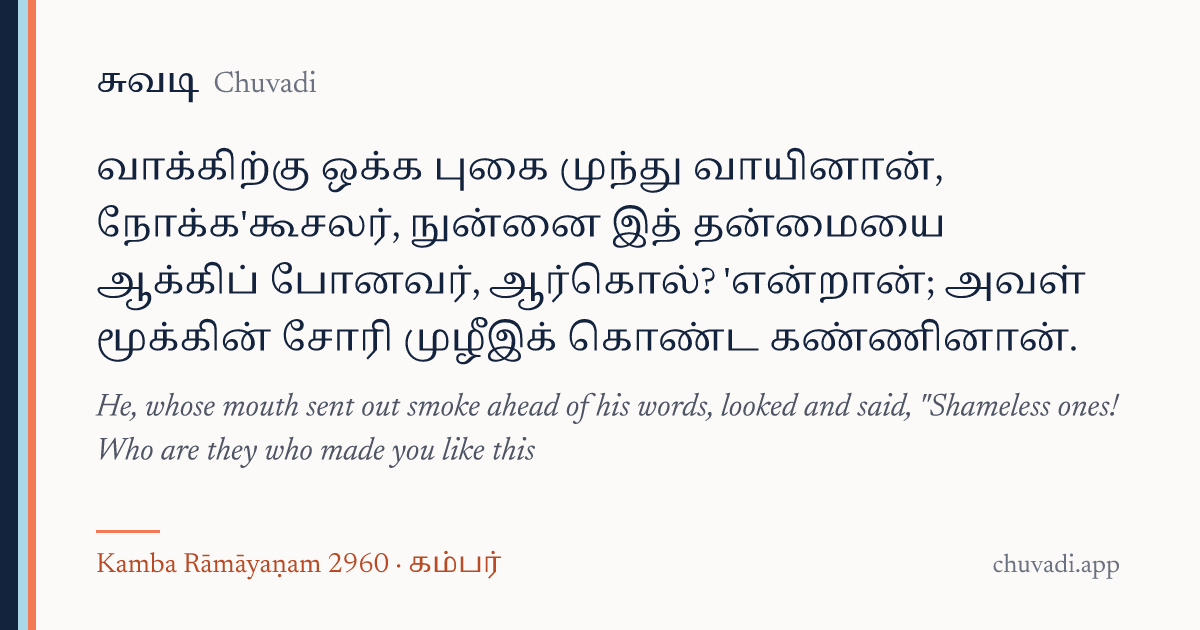
பாடல் · The poem
Tap a word to see its gloss in the commentary and where else it occurs.
பாட வேறுபாடு · Project Madurai reads
பொருள் · Meaning in Tamil
அவள் மூக்கின் சோரி - அந்தச் சூர்ப்பணகையின் மூக்கிலிருந்து வடிந்த இரத்தத்தில்; முழீஇக் கொண்ட - மூழ்கடிக்கப்பட்ட; கண்ணினான் - கண்களையுடையவனும்; வாக்கிற்கு ஒக்க - (தன் வாயிலிருந்து பிறக்கும்) சொற்களுக்கு ஒத்தபடி, புகை முந்து வாயினான் - புகை முந்தி வெளிப்படுகின்ற வாயையுடையவனுமான கரன்; நோக்கி - (அந்தச்) சூர்ப்பணகையைப் பார்த்து; கூசலர் - கூச்சமில்லாதவர்களாய்; நுன்னை - உன்னை; இத் தன்மையை ஆக்கிப் போனவர் - இவ்வாறு அலங்கோலப்படுத்திச் சென்றவர்; ஆர் கொல் என்றான் - யார் என்று கேட்டான்;
வாக்கிற்கு ஒக்க புகை - அவனது வாயிலிருந்து பின் வந்த பேச்சாகிய தீக்கு ஒப்ப, முன் எழுந்து வந்தது புகை.
இன்னாரென்று அறியாததால் 'போனவர் என்று பன்மையால் கூறினான்; துணியலாகாத இடத்துப் பன்மையால் கூறுதல் மரபு. முழீஇ - சொல்லிசையளபெடை.
ஆங்கிலம் · English translationAI
Translation
- He, whose mouth sent out smoke ahead of his words,
- looked and said, "Shameless ones! Who are they who made you like this
- and went away?" So he asked, he whose eyes were drowned
- in the blood from her nose.
What the poem says
Karaṉ, seeing his sister's state, is so enraged that smoke pours from his mouth before his words, as smoke goes before fire, and his eyes fill with the blood streaming from her nose.
He asks who has done this to her. Not yet knowing whether it was one person or many, he speaks of the culprits in the plural, as Tamil custom does when the person is unknown.