



கம்பராமாயணம் 2964 · ஆரணிய 6.7
பாடல் · The poem
Tap a word to see its gloss in the commentary and where else it occurs.
பாட வேறுபாடு · Project Madurai reads
பொருள் · Meaning in Tamil
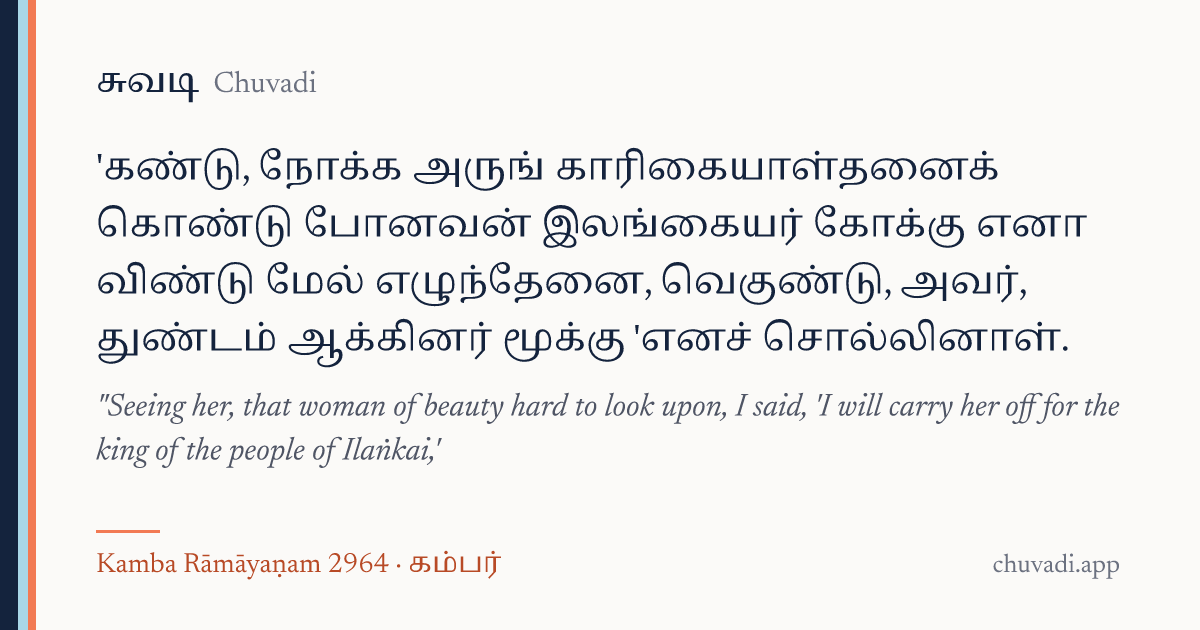
கண்டு - (இத் தன்மையுடைய அழகிய பெண்ணைப்) பார்த்து; நோக்கு அருங் காரிகையாள்தனை - காணவியலாத அழகுடைய இப்பெண்ணை; இலங்கையர் கோக்கு - இலங்கையில் வாழும் அரக்கர்க்கு அரசனான இராவணனுக்காக; கொண்டு போவன் எனா விண்டு - (இவளை) எடுத்துக் கொண்டு போவேன் என்று சொல்லி; மேல் எழுந்தேனை - அவள் மேல் பாயக் கிளம்பிய என்னை; அவர் வெகுண்டு - அந்த இராமலக்குவர்கள் சினந்து; மூக்குத் துண்டம் ஆக்கினர் - என் மூக்கையறுத்தார்கள்; எனச் சொல்லினாள் - என்று கூறினாள்.
இராவணன் பொருட்டு அந்தக் கட்டழகியைக் கொண்டு போவேனென்று அவள் மேல் பாய்ந்த பொழுது அவர்கள் வெகுண்டு என் மூக்கை அறுத்தார்கள் என்கிறாள். மேல் விழுதல் - மிகப் பரபரப்போடு முயலுதல் காரிகை - அழகு; 'கழல் யாப்பு காரிகை நீர்த்து' (குறள் 777) மூக்கு என்றது, அறுபட்ட மற்ற உறுப்புகளுக்கும் உபலட்சணமாம்.
ஆங்கிலம் · English translationAI
Translation
- "Seeing her, that woman of beauty hard to look upon,
- I said, 'I will carry her off for the king of the people of Ilaṅkai,'
- and as I rushed upon her, they grew angry
- and cut my nose to pieces," she said.
What the poem says
Cūrppaṇakai gives Karaṉ a false account of what happened. She claims she tried to seize the beautiful woman to carry her off to Irāvaṇaṉ, king of Ilaṅkai, and that the brothers cut off her nose in anger.
She hides her own lust for Irāmaṉ and casts herself as a loyal servant of her brother. Her nose stands for all the parts she lost.