



கம்பராமாயணம் 2987 · ஆரணிய 6.30
பாடல் · The poem
Tap a word to see its gloss in the commentary and where else it occurs.
பாட வேறுபாடு · Project Madurai reads
பொருள் · Meaning in Tamil
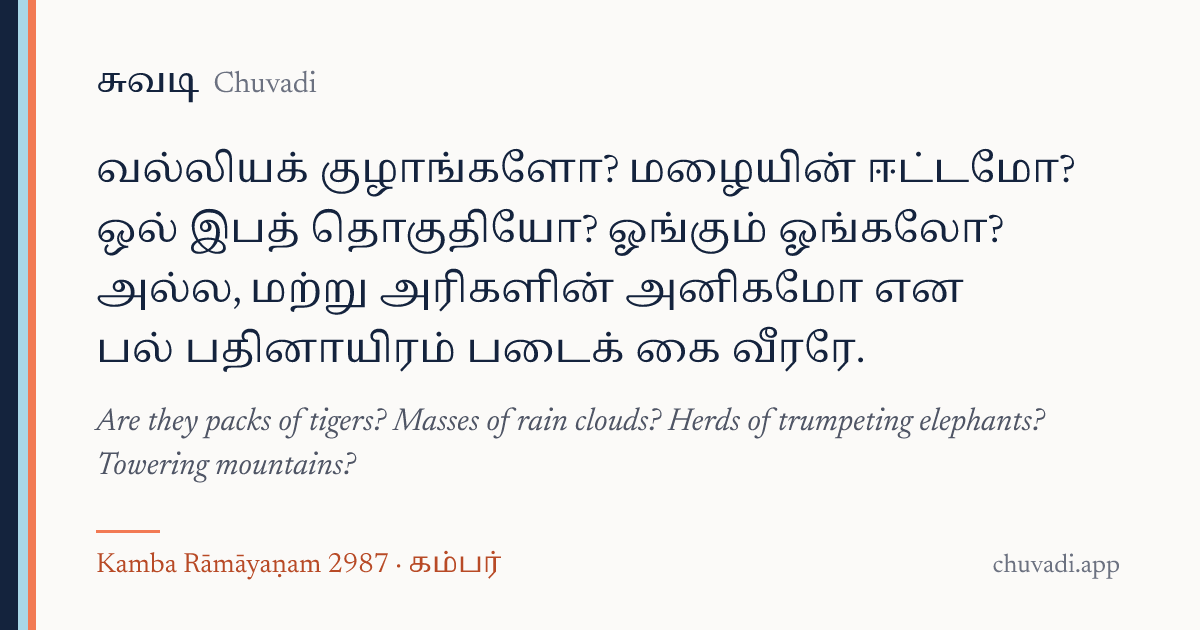
வல்லியக் குழாங்களோ - புலிகளின் கூட்டங்களோ?; மழையின் ஈட்டமோ - மேகங்களின் கூட்டமோ?; ஒல் இபத் தொகுதியோ - ஆரவாரம் செய்யும் யானைகளின் கூட்டமோ?; ஓங்கும் ஓங்கலோ - உயர்ந்து விளங்கும் மலைகளோ?; அல்ல - (இவை யாவும்) அல்ல; மற்று அரிகளின் அனிகமோ என - சிங்கங்களின் சேனைகளே என்று சொல்லும்படி (வந்த); படைக் கை வீரர் - போர்ப் படைகளை ஏந்திய கைகளையுடைய அரக்கர்களின் தொகை; பல் பதினாயிரம் - மிகப் பல பதினாயிரமாகும்; ஏ - ஈற்றசை.
வீரர்களான அரக்கர்கள் புலிக் கூட்டங்களைப் போலவும், யானைத் தொகுதிகளைப் போலவும், மலைக் கூட்டங்களை ஒப்பவும், சிங்கப் படைகளைப் போலவும், பல பதினாயிரக் கணக்கில் போருக்கு வந்தனர் என்பது. கொடுமைக்குப் புலியும், பெரிய உருவத்திற்கும் கர்ச்சனைக்கும் மேகமும், பெரிய வலிய உருவத்திற்கு யானையும், வீர பராக்கிரமத்திற்குச் சிங்கமும் அந்த அரக்க வீரர்க்கு உவமைகளாயின.
ஐயவணி அல்லது மயக்கவணியாம். இரண்டும் கலந்து வந்த கலவையணியுமாம். ஒல் - ஒலிக்குறிப்பு.
ஆங்கிலம் · English translationAI
Translation
- Are they packs of tigers? Masses of rain clouds?
- Herds of trumpeting elephants? Towering mountains?
- No, rather an army of lions, so it seemed:
- many tens of thousands of warriors with weapons in hand.
What the poem says
The poet piles up questions to convey the rākṣasa foot soldiers, many tens of thousands strong. Are they tigers for cruelty, storm clouds for size and roar, elephants for bulk, mountains for height? No, they are an army of lions, for sheer valour.
The figure is the rhetoric of doubt, in which the poet pretends not to know what he sees.