



கம்பராமாயணம் 2990 · ஆரணிய 6.33
பாடல் · The poem
Tap a word to see its gloss in the commentary and where else it occurs.
பாட வேறுபாடு · Project Madurai reads
பொருள் · Meaning in Tamil
தேர் இனம் - தேர்களின் கூட்டங்கள்; துவன்றின - நெருங்கின; சிறுகண் செம்முகக் கார் இனம் - சிறிய கண்களையும் சிவந்த முகத்தையுமுடைய மேகங்களைப் போன்ற யானைக் கூட்டங்கள்; நெருங்கின - அடர்ந்தன; காலின் கால்வரு - காற்றைப் போலக் கால்களால் விரைந்து ஓடி வரும்; தார் இனம் - குதிரைப் படைகளின் கூட்டங்கள்; குழுமின - திரண்டன; தடை இல் கூற்று என - தடுக்கப் படாத யமனைப் போல; பேர் இனம் - பெரிய அரக்கராகிய காலாட் படை; கடல் என - கடல் போல; பெயரும் காலை - செல்லும் பொழுதில், ஏ - ஈற்றசை.
கார் - உவமவாகுபெயர் : யானை என்பது விளங்கச் 'சிறுகண் செம்முகக் கார்' என்றார் சிறிய கண்களும் செம்புள்ளிகளும் உத்தமயானைக்கு இலக்கணமாம். தார்: குதிரைச் சேனை.
துவன்றின, நெருங்கின, குழுமின என்பவற்றில் ஒரு பொருளே மீண்டும் வந்ததால் பொருட் பின்வரு நிலையணியாம். முன்னே காலாட்படை பெயரத் தேர் யானை, குதிரை என்னும் முப்படைகளும் பின்னே பெயர்ந்தன என்பது கூறப்பட்டது. தார் - கிண்கிணிமாலை. அதனைப் பூண்ட குதிரை என்க.
ஆங்கிலம் · English translationAI
Translation
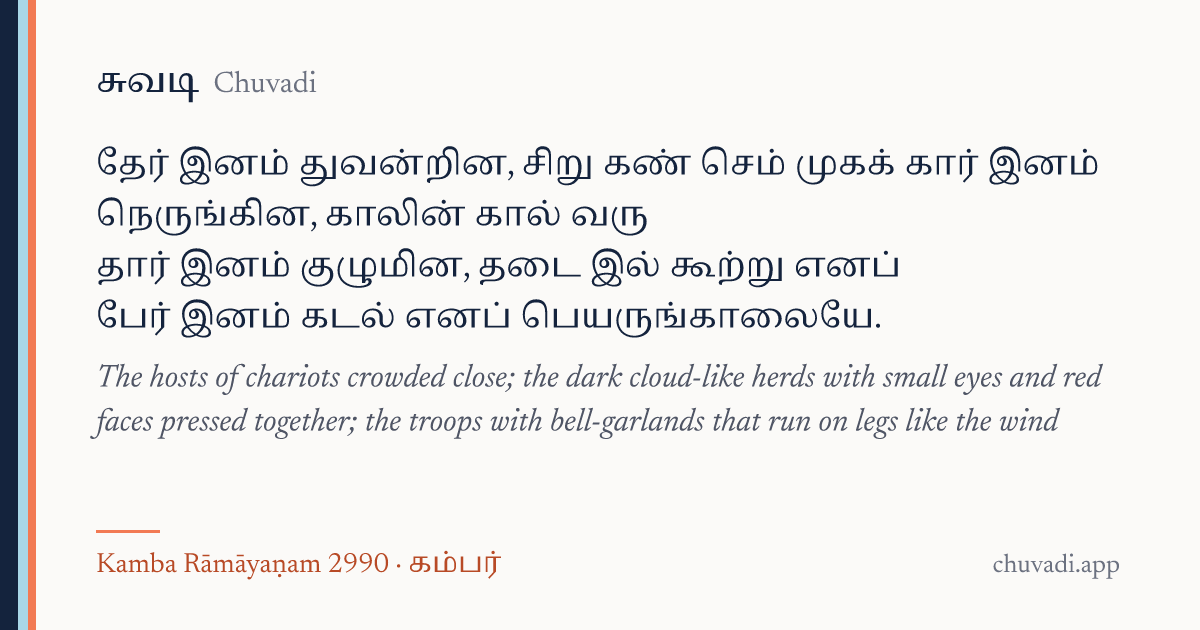
- The hosts of chariots crowded close; the dark cloud-like herds with small eyes and red faces
- pressed together; the troops with bell-garlands that run on legs like the wind
- massed together, when the great host, like Death that none can stop,
- moved on like the sea.
What the poem says
As the vast foot army moves forward like the sea, unstoppable as Death, the other three arms of the army follow close behind: chariots, elephants and cavalry.
The elephants are called dark clouds with small eyes and red-spotted faces, the marks of a fine war elephant, and the horses are named by the garlands of bells they wear and run as fast as the wind.