



கம்பராமாயணம் 304 · பால 5.136
பாடல் · The poem
Tap a word to see its gloss in the commentary and where else it occurs.
பாட வேறுபாடு · Project Madurai reads
பொருள் · Meaning in Tamil
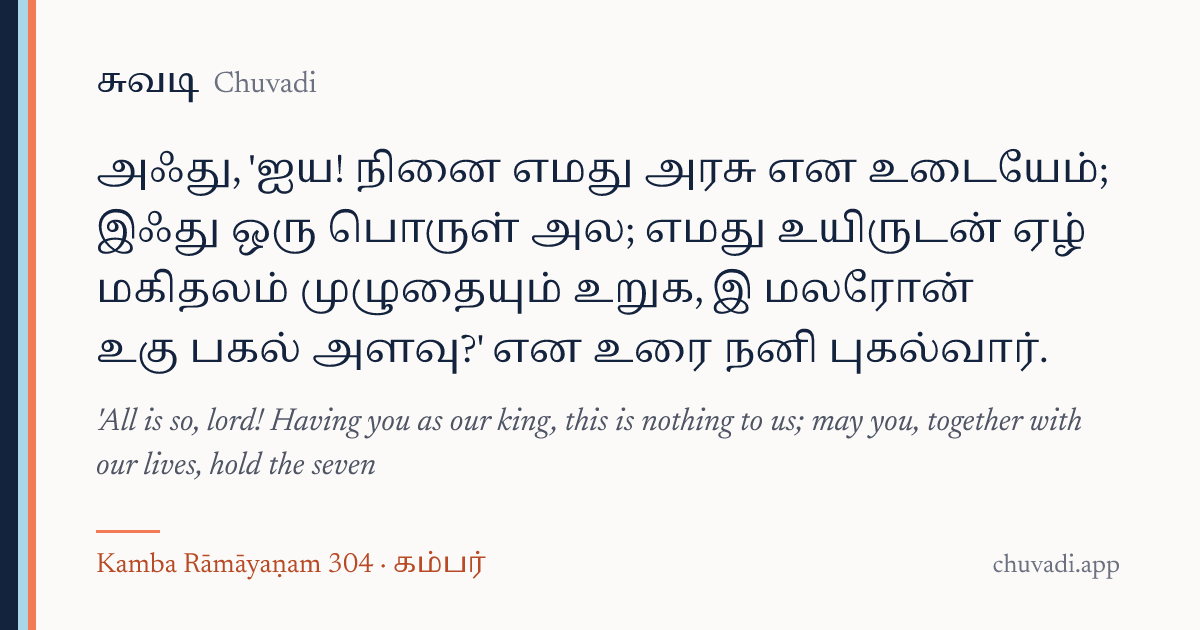
அஃது ஐய - ஐயனே, அப்படியே எல்லாம் நலமே; நினை எமது அரசு என உடையேம் - உன்னை அரசனாக உடைய எங்களுக்கு; இஃது ஒரு பொருள் அல - இது ஒரு பொருளாகாது; எமது உயிருடன் ஏழ் மகிதலம் முழுதும் - எங்கள் உயிரோடு ஏழு உலகங்கள் எல்லாம்; மலரோன் உகுபகல் அளவு - (பிரமன் அழிகின்ற காலமான) பிரமப் பிரளய காலம் வரையும்; உறுக என உரை நனி புகல்வார் - நீயே ஆட்சி புரிவாயாக என்று மறுமொழி கூறுவார்கள்.
“அஃது ஐய” என்பதற்கு நீ நினைத்தபடியே யாவும் நன்மையே என்றனர் என்பது பொருள். மலரோன்: பிரமன். உகுபகல்: அழியும் காலம். உரை: சொல்லாகு பெயர். “பகல்” என்ற சிறுபொழுதின் பெயர் பெரும்பொழுதை உணர்த்தும். இராமபிரானை எதிர்ப்பட்ட நகர மக்களை அவர்கள் நலம் விசாரிப்பதற்கு முன்பே தான் அவர்களின் நலம் கேட்பான். அவர்கள் மகிழ்ந்து, நீ எங்களுக்கு அரசனாக இருக்க என்ன குறைவு வரும்? நீடுழி வாழ வேண்டும் என வாழ்த்துவர் என்பது கருத்து.
ஆங்கிலம் · English translationAI
Translation
- 'All is so, lord! Having you as our king,
- this is nothing to us; may you, together with our lives, hold the seven
- worlds entire, until the day of the lotus-born one
- comes to its end,' they would say in reply.
What the poem says
The people answer that with Irāmaṉ as their prince nothing can go wrong for them, and wish that he may rule all seven worlds until the end of Brahmā's day, the cosmic dissolution.
The commentary notes that Irāmaṉ always asks after their welfare before they can ask after his.