



கம்பராமாயணம் 3047 · ஆரணிய 6.90
பாடல் · The poem
Tap a word to see its gloss in the commentary and where else it occurs.
பொருள் · Meaning in Tamil
சிலை பிடித்தான் - வில்லைக் கையில் ஏந்தியவனான இராம பிரான்; செறிந்தாரையும் - கூட்டமாகத் திரண்டு வந்த அரக்கர்களையும்; பிரிந்தாரையும் - தனித் தனியே எதிர்த்து வந்த அரக்கர்களையும்; செறுத்தாரையும் - மிகக் கோபித்துப் பகைத்த அரக்கர்களையும்; சினத்தால் மறிந்தாரையும் - (தோற்றோடிப் பின்பு) கோபத்தால் திரும்பி வந்த அரக்கர்களையும்; வலித்தாரையும் - வலிந்து போர் செய்ய வந்தவர்களையும் (ஆகிய அனைவரையும்), எறிந்தார் என - இன்னவர் வேல் முதலிய எறிபடைகளை வீசினவர்களென்றும்; எய்தார் என - இன்னார் பாணங்களைப் பிரயோகித்தவரென்றும்; நினைந்தார் என - (இன்னார் ஆயுதங்களைப் பயன்படுத்தக்) கருதினவரென்றும்; எறிய அறிந்தார் என - (இன்னார் ஆயுதங்களை) வீச ஆராய்ந்து துணிந்தவரென்றும்; அறியாவகை - அறியாதபடி; அயில் வாளியின் அறுத்தான் - கூர்மையான (தன்னுடைய) அம்புகளால் துணித்து; மடித்தான் - கொன்றொழித்தான்.
சிலை பிடித்தவன் அறுத்தான் மடித்தான் என்று வினை முடிவு செய்க. இன்ன அரக்கர் இன்ன விதமாக இன்னது செய்தாரென்று அறிய முடியாதபடி அவர்களையெல்லாம் மிக விரைவில் இராமபிரான் துணித்தான் என்பது. செறிந்தார் - தன்னைச் சூழ்ந்து நெருங்கி நின்றவரும், பிரிந்தார் - விலகித் தூரத்தில் நின்றவரும் எனவும் உரைக்கலாம்.
ஆங்கிலம் · English translationAI
Translation
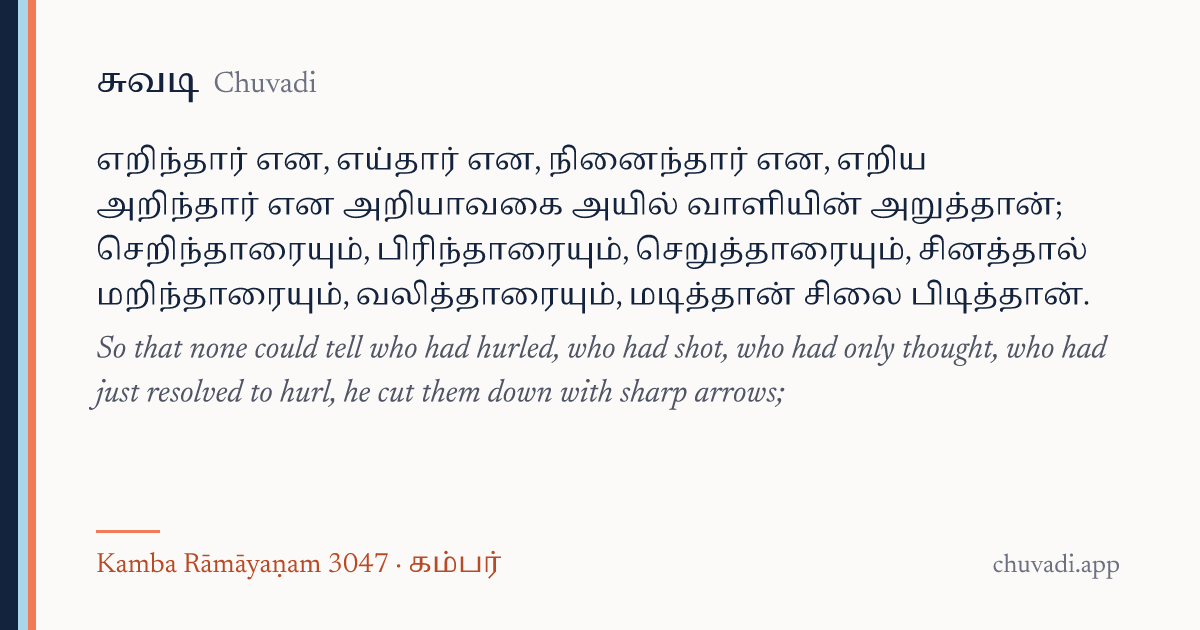
- So that none could tell who had hurled, who had shot, who had only thought,
- who had just resolved to hurl, he cut them down with sharp arrows;
- those packed together, those apart, those who attacked, those who wheeled back
- in anger, those who pressed on: all of them he who held the bow struck dead.
What the poem says
Irāmaṉ kills so fast that no one can tell which rākṣasa threw a weapon, which shot an arrow, which only thought of attacking, and which was just deciding to.
Those in close ranks and those on their own, those who charged, those who turned back in rage and those who forced their way forward: the archer cuts them all down.