



கம்பராமாயணம் 3051 · ஆரணிய 6.94
பாடல் · The poem
Tap a word to see its gloss in the commentary and where else it occurs.
பாட வேறுபாடு · Project Madurai reads
பொருள் · Meaning in Tamil
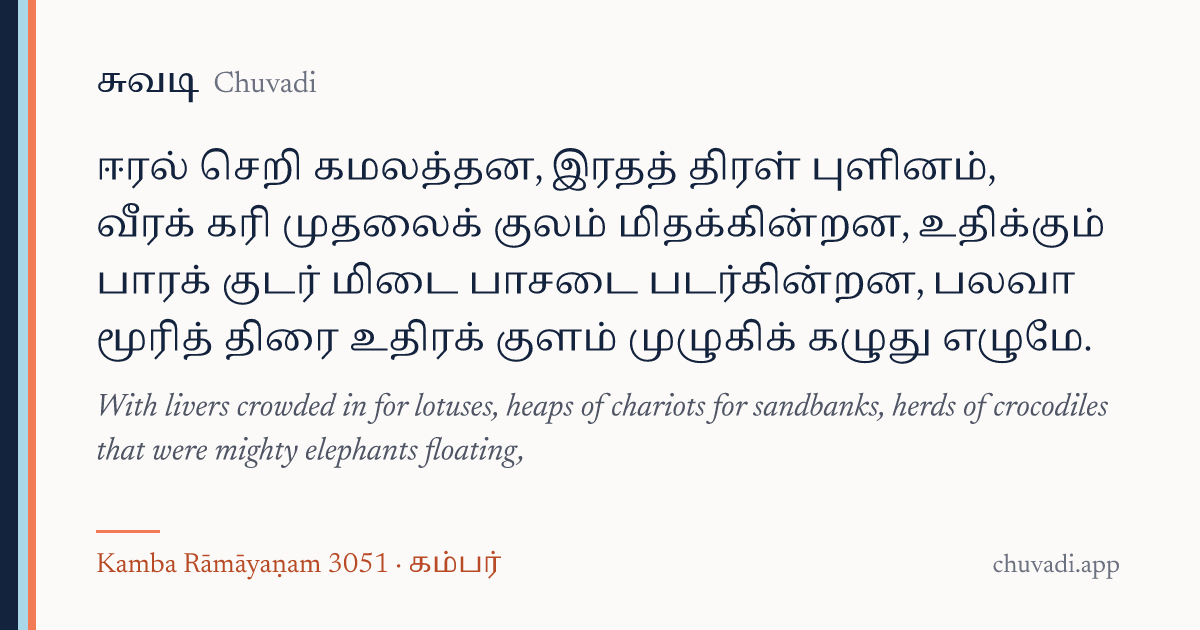
ஈரல் செறி கமலத்தன - (இறந்த அரக்கர்களின்) ஈரல்களாகிய நிறைந்த தாமரை மலர்களையுடையவையும்; இரதம் திரள் புளினம் - தேர்களாகிய திரண்ட மணற்குன்றுகளையுடையவை; வீரக் கரி - வலிய யானைகளாகிய; முதலைக் குலம் - முதலைகளின் கூட்டம்; மிதக்கின்றன - மிதக்கப் பெற்றவையும்; பாரம் குடர் - கனத்த குடல்களாகிய; மிடை பாசடை - நெருங்கிய பசுமையான தாமரையிலைகள்; படர்கின்றன - மேலே படரப் பெற்றவையுமாகிய, மூரித் திரை உதிரம் குளம் பல - பெரிய அலைகளையுடைய இரத்தக் குளங்கள் பல; கழுது முழுகி எழ - பேய்கள் முழுகி நீராடி எழுமாறு; உதிக்கும் - உண்டாயின.
பெரிய இரத்த வெள்ளத்தைப் பேய்கள் நீராடியெழுவதற்கு இடமான தாமரைப் பொய்கைகளென்று உருவகப்படுத்தி, அவற்றிற்குக் குடல்களைத் தாமரையிலைகளாகவும், ஈரல்களைத் தாமரை மலர்களாகவும் தேர்களை மணற் குன்றுகளாகவும், யானைகளை முதலைகளாகவும் குறித்து வருணித்தார் முற்றுவமையணி.
ஆங்கிலம் · English translationAI
Translation
- With livers crowded in for lotuses, heaps of chariots for sandbanks,
- herds of crocodiles that were mighty elephants floating,
- with heavy entrails spread over them for green lotus leaves,
- many blood-pools with great waves appeared, for ghouls to plunge and bathe in.
What the poem says
The pools of blood have become lotus ponds where the ghouls go bathing. Livers are the lotus flowers, entrails the floating lotus leaves, wrecked chariots the sandbanks, and dead elephants the crocodiles.
The poet maps every part of the familiar lotus pond onto the battlefield, a sustained metaphor.