



கம்பராமாயணம் 3056 · ஆரணிய 6.99
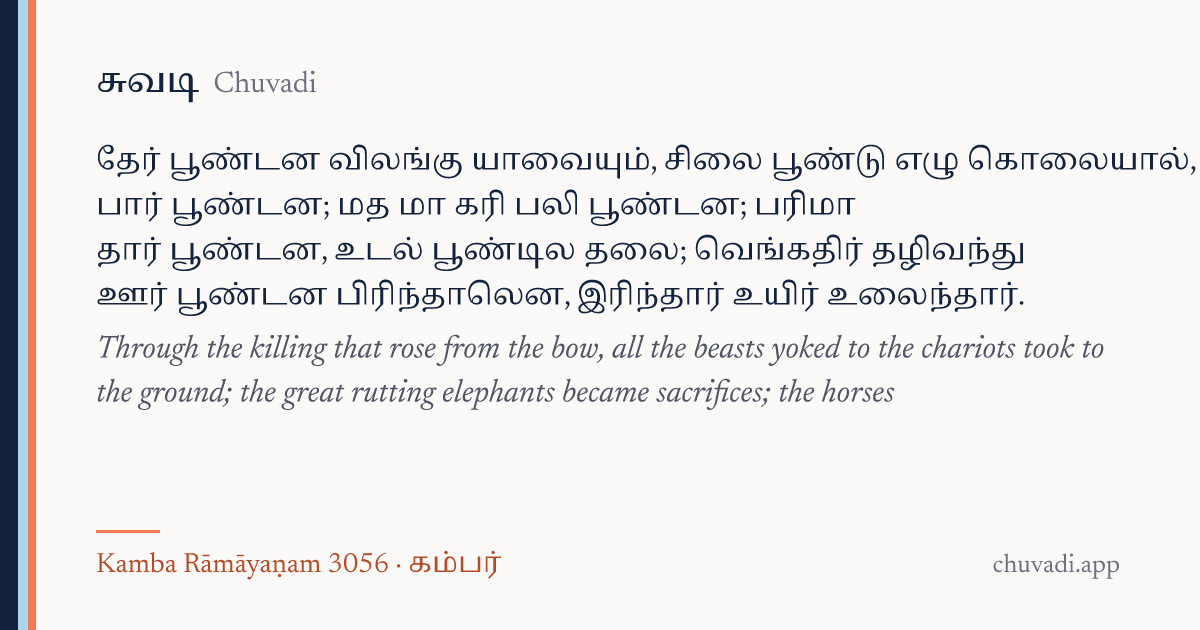
பாடல் · The poem
Tap a word to see its gloss in the commentary and where else it occurs.
பொருள் · Meaning in Tamil
சிலை பூண்டு எழு கொலையால் - இராமபிரானின் வில்லிலிருந்து கிளம்பிய கொல்லுதல் தன்மையுடைய அம்புகளால்; தேர் பூண்டன விலங்கு யாவையும் - (அந்த அரக்கர்களின்) தேர்களில் பூட்டப் பட்ட மிருகங்களெல்லாம்; பார் பூண்டன - (இறந்து விழுந்து) தரையைச் சேர்ந்தன; மத மா கரி - மதம் பிடித்த பெரிய யானைகள்; பலி பூண்டன - பலியிடப்பட்டன (கொல்லப்பட்டன); தார் பூண்டன பரிமா - கிண்கிணி மாலையணிந்த குதிரைகள்; உடல் தலை பூண்டில - உடல்களில் தம் தலைகள் பொருந்தப் பெறாதனவாயின (இவ்வாறு ஆகவே அரக்கர்கள்); வெங் கதிர் தழிவந்து ஊர் பூண்டன - வெப்பமான கதிர்களையுடைய சூரியனைத் தழுவிச் சூழ்ந்த ஊர்கோள் என்னும் பரிவேடங்கள்; பிரிந்தால் என - விரைவில் நீங்கினாற் போல; இரிந்தார் - நிலைகெட்டு ஓடி, உயிர் உலைந்தார் - உயிர் நடுங்கினார்கள்.
'வெங்கதிர் தழிவந்து ஊர் பூண்டன பிரிந்தால்' என்றது, இராமனை இடைவிடாமற் சூழ்ந்த அரக்கர்கள் அப் பெருமானை யாதொன்றும் செய்ய மாட்டாமல் விரைவிலே எளிமைப்பட்டு விலகிச் சென்றதை விளக்கக் கூடிய உவமையாம். ஒருவர் பின் ஒருவராகப் பல வரிசையரக்கர்களும் சூழ்ந்து நின்றதை விளக்குவதற்கு 'ஊர் பூண்டன என்று உவமையைப் பன்மையில் கூறினார். தழி - தழுவி என்னும் வினையெச்சத்தின் மரூஉ.
ஆங்கிலம் · English translationAI
Translation
- Through the killing that rose from the bow, all the beasts yoked to the chariots
- took to the ground; the great rutting elephants became sacrifices; the horses
- wore their bell-garlands, but their bodies wore no heads; like haloes that had clung
- around the hot-rayed sun breaking away, they fled, their lives shaken.
What the poem says
Irāmaṉ's arrows kill every beast harnessed to the chariots, slaughter the rutting elephants like sacrificial victims, and leave the horses still wearing their bell garlands but no longer their heads.
The rākṣasas who had ringed Irāmaṉ scatter in terror, like the halos round the sun suddenly breaking up. They had packed round him rank after rank, yet could do him no harm at all.