



கம்பராமாயணம் 3066 · ஆரணிய 6.109
பாடல் · The poem
Tap a word to see its gloss in the commentary and where else it occurs.
பொருள் · Meaning in Tamil
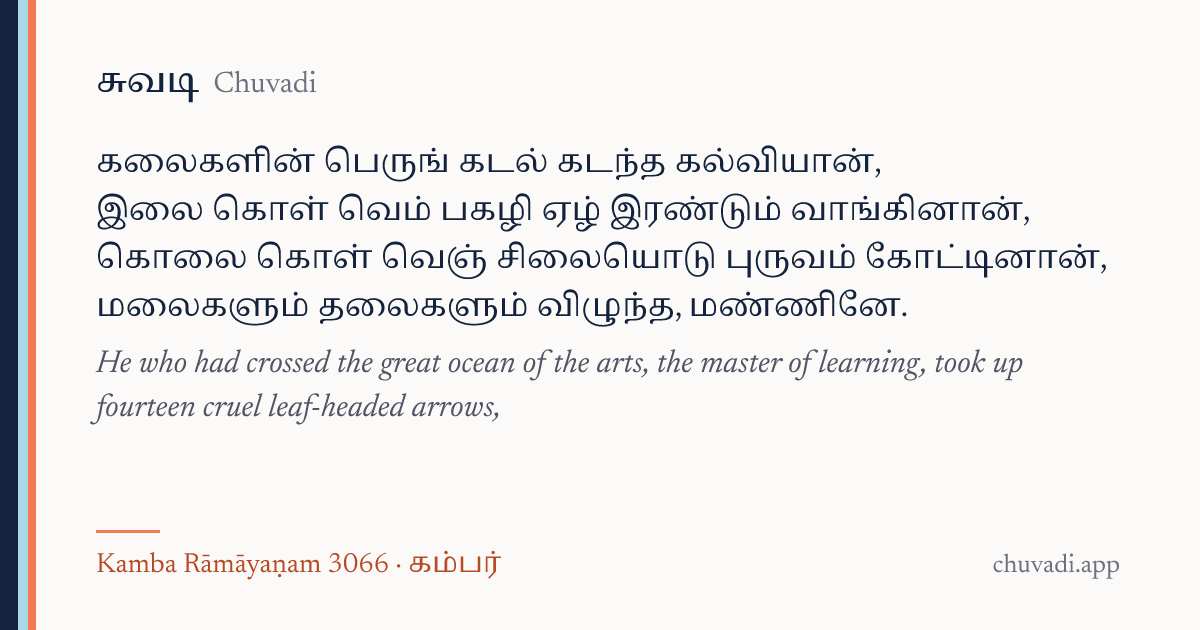
கலைகளின் பெருங் கடல் கடந்த - கலைகளாகிய பெரிய கடல்களை முற்றும் கற்றுத் தேர்ந்த; கல்வியான் - கல்வி நிரம்பிய இராமன்; இலை கொள் வெம் பகழி ஏழ் இரண்டும் - இலை வடிவத்தைக் கொண்ட கொடிய பதினான்கு அம்புகளை; வாங்கினான் - எடுத்து எய்தான்; கொலை கொள் வெம் சிலையொடு - கொல்லும் தொழிலைக் கொண்ட கொடிய தனது வில்லுடன்; புருவம் கோட்டினான் - தன் புருவங்களையும் வளைத்தான்; மலைகளும் - (அந்த அரக்கர்கள் எறிந்த) மலைகளும்; தலைகளும் - (அவர்களின்) தலைகளும்; மண்ணின் விழுந்த - (துண்டாக) தரையில் விழுந்தன. ஏ - ஈற்றசை.
இராமன் கோபங்கொண்டு புருவத்தை நெரித்துப் பதினான்கு அம்புகளைப் பொழிய மலைகளும், அவற்றையெறிந்த அரக்கர்களின் தலைகளும் ஒரு சேரத் துணிபட்டுத் தரையில் விழுந்தன என்பது. புருவம் விற்போன்றதென்றும், தலைகள் மலைகள் போன்றனவென்றும் தோன்றும். கலைகளைக் கடல் என்றதற்கு ஏற்ப அறிவைப் புணையென்னாமையால் ஏகதேச உருவகவணி.
ஆங்கிலம் · English translationAI
Translation
- He who had crossed the great ocean of the arts, the master of learning,
- took up fourteen cruel leaf-headed arrows,
- bent his brows along with his cruel, killing bow;
- and the hurled hills and the heads fell to the ground.
What the poem says
Irāmaṉ is fighting the army of Karaṉ in the forest of Pañcavaṭi, and here he faces the fourteen commanders. In anger he knits his brows and looses fourteen leaf-headed arrows, one for each.
The hills the demons had hurled at him and the heads of those who hurled them are cut down together and fall to the earth. His bent brows mirror his bent bow. Calling the arts an ocean that he has crossed is a metaphor left incomplete: the knowledge that served him as a raft is not named.