



கம்பராமாயணம் 3083 · ஆரணிய 6.126
பாடல் · The poem
Tap a word to see its gloss in the commentary and where else it occurs.
பொருள் · Meaning in Tamil
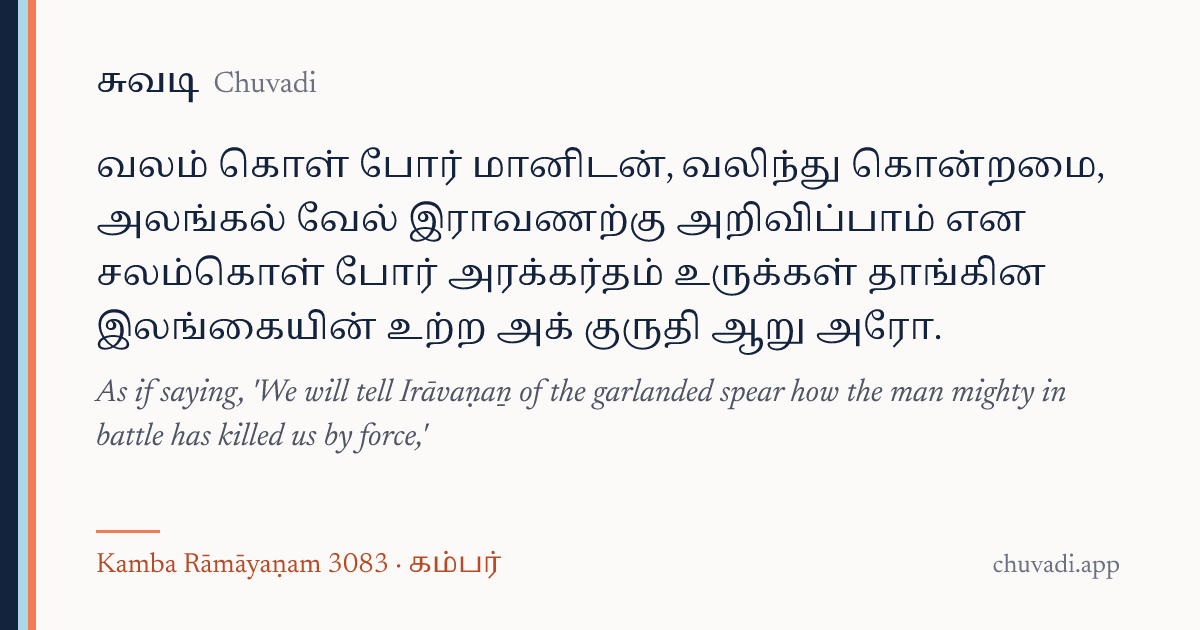
வலம் கொள் - வலிமை கொண்ட; போர் - போரில்; மானிடன் வலிந்து கொன்றமை - சிறந்த ஒரு மனிதனான இராமன் அரக்கர் பலரை வலிமையாற் கொன்றதை; அலங்கல் வேல் இராவணற்கு - மாலையணிந்த வேல் ஏந்திய இராவணனுக்கு; 'அறிவிப்பாம்' என - சென்று தெரிவிப்போம் என்று; அக்குருதி ஆறு - அங்குள்ள அந்த இரத்த நதி; சலம் கொள் போர் - மாயப் போர் செய்த; அரக்கர் தம் உருக்கள் - அரக்கரின் உடல்களை; தாங்கின - சுமந்து கொண்டு போய்; இலங்கையின் உற்ற - (அவற்றை) இலங்கையில் சேர்த்தது. அரோ - ஈற்றசை.
போரில் இறந்துவிட்ட அரக்கர்களின் உடல்களைச் சுமந்த இரத்தப் பெருக்கு கடலிலே கலந்து அந்த உடல்களை இலங்கை நகருக்குக் கொண்டு சேர்த்தது என்பது.
போரில் அரக்கர்களுக்கு உண்டான அழிவை இராவணனுக்குத் தெரிவித்ததோடு இதனால் இராமனது பேராற்றலையும், அவனையெதிர்த்தால் இராவணனுக்கும் இலங்கைக்கும் இதே கேடு சூழும் என்பதையும் அந்த இரத்தப் பெருக்கு அறிவித்தது என்பது புலப்படும்.
'வலங்கொள் போர் மானிடன்' என்று சொற்கூட்டி, மானிடனான இராமனுக்கே வெற்றி என்பதைக் குறிப்பால் உணர்த்தியதாக நயம் காணலுமாம்.
ஆங்கிலம் · English translationAI
Translation
- As if saying, 'We will tell Irāvaṇaṉ of the garlanded spear
- how the man mighty in battle has killed us by force,'
- those rivers of blood bore the bodies of the treacherous, warring demons
- and reached Ilaṅkai.
What the poem says
The rivers of blood flow into the sea and carry the demons' corpses all the way to Ilaṅkai, Irāvaṇaṉ's island city. The poet imagines them as messengers bringing the king news that a mere man has slaughtered his warriors.
The bodies also carry a warning: this is Irāmaṉ's power, and the same ruin awaits Irāvaṇaṉ and Ilaṅkai if he makes an enemy of him. The phrase 'the man who wins in battle' hints that victory belongs to the human, Irāmaṉ.