



கம்பராமாயணம் 3091 · ஆரணிய 6.134
பாடல் · The poem
Tap a word to see its gloss in the commentary and where else it occurs.
பொருள் · Meaning in Tamil
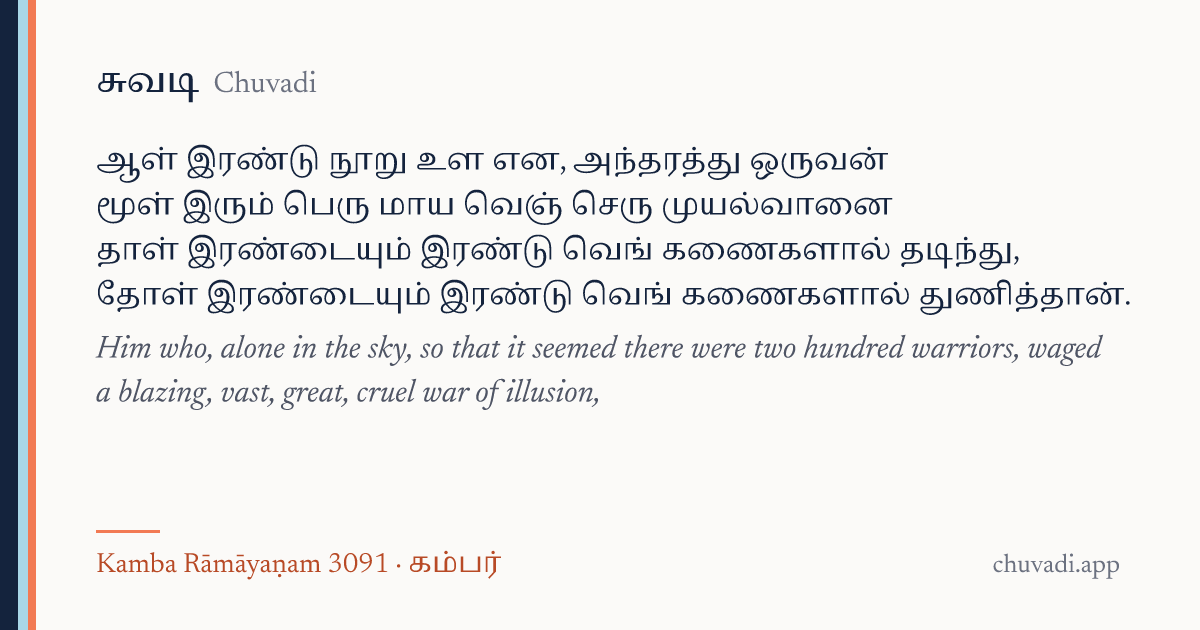
அந்தரத்து - ஆகாயத்திலே; ஒருவன் - தான் தனியொருவனாக நின்று கொண்டு; இரண்டு நூறு ஆள் உள என - இருநூறு வீரர்கள் உள்ளார்கள் என்று தோன்றும்படி; மூள் இரும்பெரு மாய வெஞ் செரு முயல்வானை - தொடங்கிய மிகப் பெரிய மாயம் நிறைந்த கொடிய போரைச் செய்கின்ற திரிசிரனை; தாள் இரண்டையும் - (இராமபிரான்) இரண்டு கால்களையும்; இரண்டு வெங்கணைகளால் தடிந்து - கொடிய இரண்டு பாணங்களால் துண்டித்து; தோள் இரண்டையும் - இரண்டு தோள்களையும்; இரண்டு வெங்கணைகளால் துணித்தான் - கொடிய இரண்டு அம்புகளால் துண்டித்தான்.
தான் ஒருவன் போர் செய்தலே இருநூறு பேர் போர் செய்வது போலத் தோன்றும்படி பெரு மாயையால் கடும் போர் செய்த திரிசிரன் என்னும் அரக்கனை, இராமன் தன் பாணங்களால் மாயையையொழித்துத் தாள்களையும் தோள்களையும் துணித்தான் என்பது.
செரு என்னும் ஒரு சொல்லுக்கு மூள், இரும், பெரு, மாய, வெம் என ஐந்து அடைமொழிகள் தந்து மாயப் போர் செய்த திரிசிரன் மறம் புலப்படுத்தினார் கம்பர். ஆள் - வீரன். இரும் - பெரிய.
ஆங்கிலம் · English translationAI
Translation
- Him who, alone in the sky, so that it seemed there were two hundred warriors,
- waged a blazing, vast, great, cruel war of illusion,
- Irāmaṉ cut down both his legs with two cruel arrows
- and severed both his arms with two cruel arrows.
What the poem says
Tiricirā turns to sorcery: alone in the sky, he makes himself appear as two hundred fighters. The poet loads the single word for 'battle' with five adjectives to convey the scale of this magic warfare.
Irāmaṉ breaks the illusion. With two arrows he cuts off both the demon's legs, and with two more both his arms.