



கம்பராமாயணம் 3128 · ஆரணிய 6.171
பாடல் · The poem
Tap a word to see its gloss in the commentary and where else it occurs.
பொருள் · Meaning in Tamil
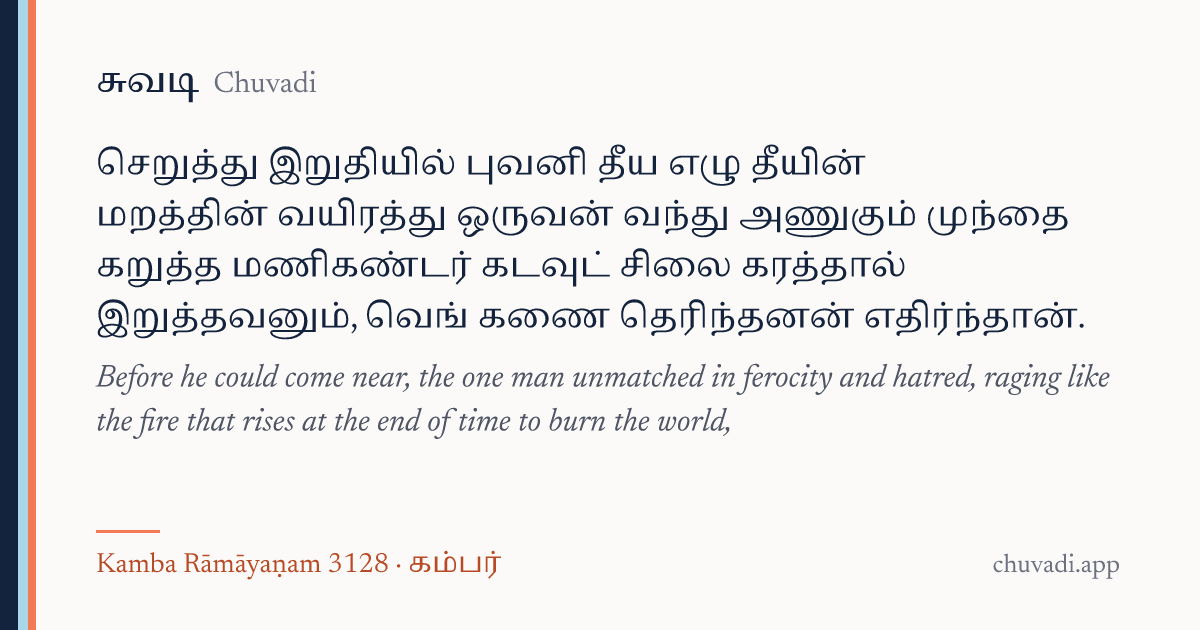
இறுதியில் புவனி தீய - யுகம் முடியும் ஊழிக் காலத்தில் உலகம் எரியும்படி; எழுதீயின் - கிளர்ந்து எழுகின்ற ஊழித் தீப்போல்; செறுத்து - உக்கிரம் கொண்டு; மறத்தின் வயிரத்து ஒருவன் - கொடுமையிலும் பகைமையிலும் ஒப்பற்றவனான அந்தக் கரன்; வந்து அணுகும் முந்தை - வந்து நெருங்குவதற்கு முன்னே; கறுத்த மணிகண்டர் - (நஞ்சுண்டதால்) கருநிறங் கொண்ட நீலமணி போலும் கழுத்தையுடைய; கடவுட் சிலை கரத்தால் இறுத்தவனும் - சிவபிரானின் தெய்வத் தன்மையுள்ள வில்லை (ச் சீதையை மணக்கும் பொருட்டுக்) கையால் ஒடித்திட்ட இராமபிரானும்; வெம் கணை தெரிந்தனன் எதிர்ந்தான் - கொடிய அம்புகளை ஆராய்ந்து எடுத்து எதிரே சென்றான்.
அரக்கனான கரன் வருமுன்பே இராமபிரான் கடுங்கணை தெரிந்து எதிர்த்தான் என்பது.
சிவபிரான் தந்த வில் சனகனால் சீதையின் திருமணத்திற்கு ஒரு பந்தயமாக வைக்கப்பட்டிருந்ததென்பதும், அதனை இராமபிரான் எடுத்து வளைக்குங்கால் அவ்வில் முறிந்துவிட்டதென்பதும் வரலாறு. கரனுக்கு ஊழித் தீ உவமை.
ஆங்கிலம் · English translationAI
Translation
- Before he could come near, the one man unmatched in ferocity and hatred,
- raging like the fire that rises at the end of time to burn the world,
- he who with his hand had broken the divine bow of the god
- whose throat is dark as a sapphire chose cruel arrows and went to meet him.
What the poem says
Karaṉ bears down like the fire that burns up the world at the end of an age. Before he can close in, Irāmaṉ chooses his fiercest arrows and goes out to meet him.
Irāmaṉ is named here as the one who broke the bow of Civaṉ, the god whose throat turned dark blue when he swallowed the poison of the ocean. Caṉakaṉ had set that bow as the test for Cītai's hand, and Irāmaṉ snapped it in bending it.