



கம்பராமாயணம் 3148 · ஆரணிய 6.191
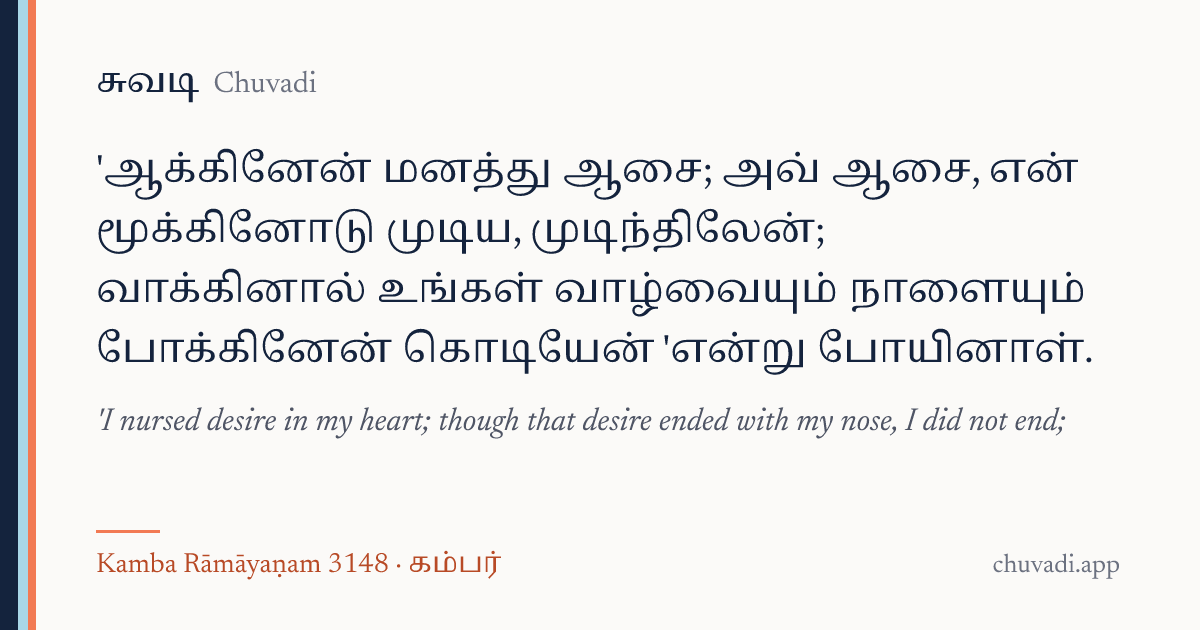
பாடல் · The poem
Tap a word to see its gloss in the commentary and where else it occurs.
பொருள் · Meaning in Tamil
மனத்து - என் மனத்தில்; ஆசை ஆக்கினேன் - (இராமன்பால்) ஆசையை வளர்த்தேன்; அவ் ஆசை - அந்த (வேண்டாத) ஆசை; என் மூக்கினோடு முடிய - என் மூக்கு முதலியன அறுபட்டதோடு முடிந்தொழிய; முடிந்திலேன் - (அவ்வளவில்) இறந்து படாத நான்; வாக்கினால் - என் வாய்ச் சொற்களால்; உங்கள் வாழ்வையும் நாளையும் போக்கினேன் - உங்களுடைய வாழ்க்கையையும் வாழ்நாளையும் ஒழித்தேன்; கொடியேன் - (ஆதலால் மிகவும் கொடியவளாவேன்; என்று போயினாள் - என்று புலம்பிக் கொண்டு அந்த இடத்தைவிட்டுச் சென்றாள்.
நான் இராமன்பால் ஆசை வைத்தேன்; அத் தகாத ஆசை என்னுடைய மூக்கு ஆகியவற்றைப் போக்கிற்று; அதனால் நாணமுற்று எனது உயிரைப் போக்கியிருக்க வேண்டும்; ஆனால், அவ்வாறு இறந்திடாமல் 'எம்மவரே' இராமலக்குவரின் உயிரைப் போக்குங்கள் என்று உங்களை ஏவி, உங்கள் செல்வ வாழ்வையும், உயிர் வாழ்க்கையையும் ஒழிக்கக் காரணமானேன்; ஆகையால் நான் கொடியவள்' என்று தன்னை நொந்தவாறு சூர்ப்பணகை சென்றாள் என்பது.
ஆங்கிலம் · English translationAI
Translation
- 'I nursed desire in my heart; though that desire ended
- with my nose, I did not end;
- with my words I have made an end of your lives and your days,
- wicked that I am,' she said, and went away.
What the poem says
Cūrppaṇakai laments over her dead brothers. She let herself desire Irāmaṉ, and that desire ended with her nose being cut off. She should have died of shame then.
Instead she lived on, and with her words she sent her kinsmen against Irāmaṉ and Ilakkuvaṉ, destroying their lives and their fortunes. Calling herself wicked, she leaves the battlefield.