



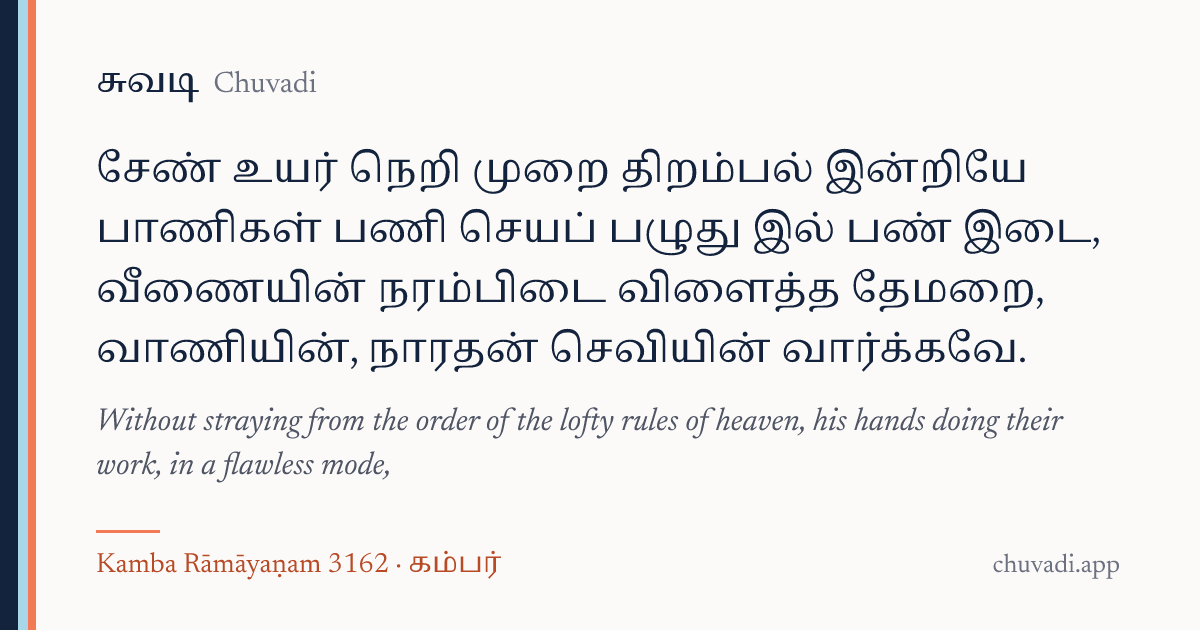
கம்பராமாயணம் 3162 · ஆரணிய 7.13
பாடல் · The poem
Tap a word to see its gloss in the commentary and where else it occurs.
பாட வேறுபாடு · Project Madurai reads
பொருள் · Meaning in Tamil
சேண் உயர் - தொலைவிலுள்ள விண்ணுலகில் மேம்பட்ட; நெறி முறை - இசை விதிகளின் ஒழுங்கு; திறம்பல் இன்றி - தவறுதல் இல்லாமல்; பாணிகள் - கைகள்; பணி செய - (இசைத் தானங்களில்) உரிய தொழில் செய்ய; வீணையின் நரம்பிடை விளைத்த - வீணையின் நரம்புகளில் தடவி எழுப்பிய; பழுது இல் பண் இடை - குற்றமில்லாத இராகத்தில்; தே மறை - இனிய வேதத்தை; நாரதன் - நாரத மாமுனி; வாணியின் - கலைமகளைப் போல; செவியின் வார்க்க - காதுகளில் பொழிய....(ஏ - அசை.
இராவணன் கேட்டு மகிழ வீணை தடவிச் சாம வேத கீதம் நாரதன் இசைத்தான். தே மறை என்றலால் சாம வேதமாயிற்று. நாரதன் - ஆத்ம ஞானம் அளிப்பவன்; மனிதர் ஒற்றுமை கெடுப்பவன் என்றும் பொருள் கூறுவர். அவன் வீணையின் பெயர் மகதி.
(சரசுவதி வீணை - கச்சபி).
ஆங்கிலம் · English translationAI
Translation
- Without straying from the order of the lofty rules of heaven,
- his hands doing their work, in a flawless mode,
- the sweet Veda drawn from the strings of the vīṇā,
- Nāratar, like Vāṇi herself, poured into his ears,
What the poem says
The sage Nāratar plays the vīṇā for Irāvaṇaṉ's pleasure. His fingers move exactly by the rules of heavenly music, and he sings the 'sweet Veda', the Sāma Veda, which is chanted to melody.
He pours it into the king's ears as beautifully as Vāṇi, the goddess of learning, would. Nāratar's vīṇā is called Makati; Vāṇi's is the Kacchapi.