



கம்பராமாயணம் 3180 · ஆரணிய 7.31
பாடல் · The poem
Tap a word to see its gloss in the commentary and where else it occurs.
பொருள் · Meaning in Tamil
புரந்தரன் - இந்திரன்; போர் இலான் - (இராவணனுடன்) போர் செய்யமாட்டாதவனாய்; ஏவல் பூண்டனன் - அடிமைத் தொழில் பூண்டான்; ஆர் உலாம் நேமியான் - ஆரங்கள் கொண்ட சக்கரப் படை ஏந்திய திருமால்; ஆற்றல் தோற்றுப் போய் - வலிமை அழிந்து போனவனாய்; நீரினான் - கடலில் வாழலானான்; நெருப்பினான் - கையில் நெருப்பேந்திய சிவபெருமான்; பொருப்பினான் - (இவனிடம் பயந்து) கைலை மலையில் தங்கலானான்; இனி ஆர் கொல் ஆம் ஈது - இதனைச் செய்தவர் வேறு யாராக இருக்கக் கூடும்?; என அறைகின்றார் சிலர் - என்று சில அரக்கர் வினவி நின்றனர்.
பாற்கடலிலும், கயிலை மலையிலும் உறைகின்ற தெய்வங்களின் இயல்பை, அஞ்சி அவ்வாறு வாழ்வதாய்க் கற்பித்து உரைத்தார். 'ஆற்றல் தோற்றுப் போய்' என்பதைச் சிவனுக்கும் கூட்டுக. நெற்றியில் நெருப்புக்கண் உடையவன், நெருப்பு வடிவாய் நின்றவன் என்றும் பொருள் கூறலாம்.
ஆங்கிலம் · English translationAI
Translation
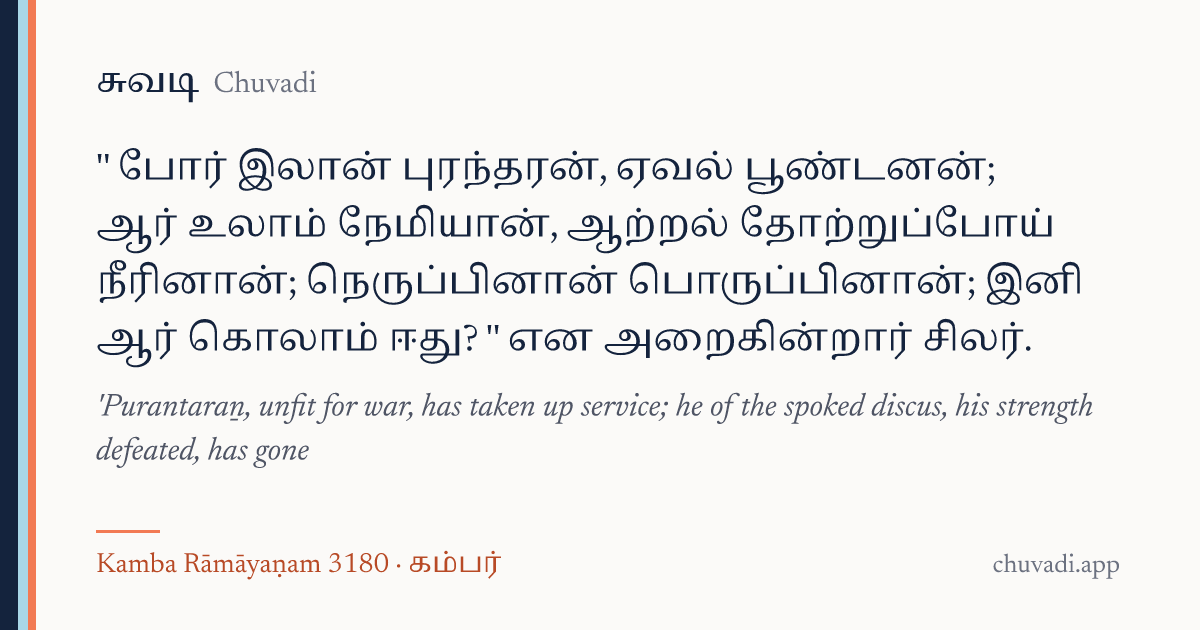
- 'Purantaraṉ, unfit for war, has taken up service;
- he of the spoked discus, his strength defeated, has gone
- to live in the water; he of the fire, on his mountain; now
- who could have done this?' some declared.
What the poem says
Other demons run through the possible culprits. Intiraṉ, unable to fight, has become Irāvaṇaṉ's servant. Tirumāl, beaten, has retreated to live in the ocean, and Civaṉ, the god of fire, has withdrawn to his mountain.
So who is left? The poet playfully explains the gods' well-known homes, the sea of milk and Mount Kailāsa, as places they fled to in fear of Irāvaṇaṉ.