



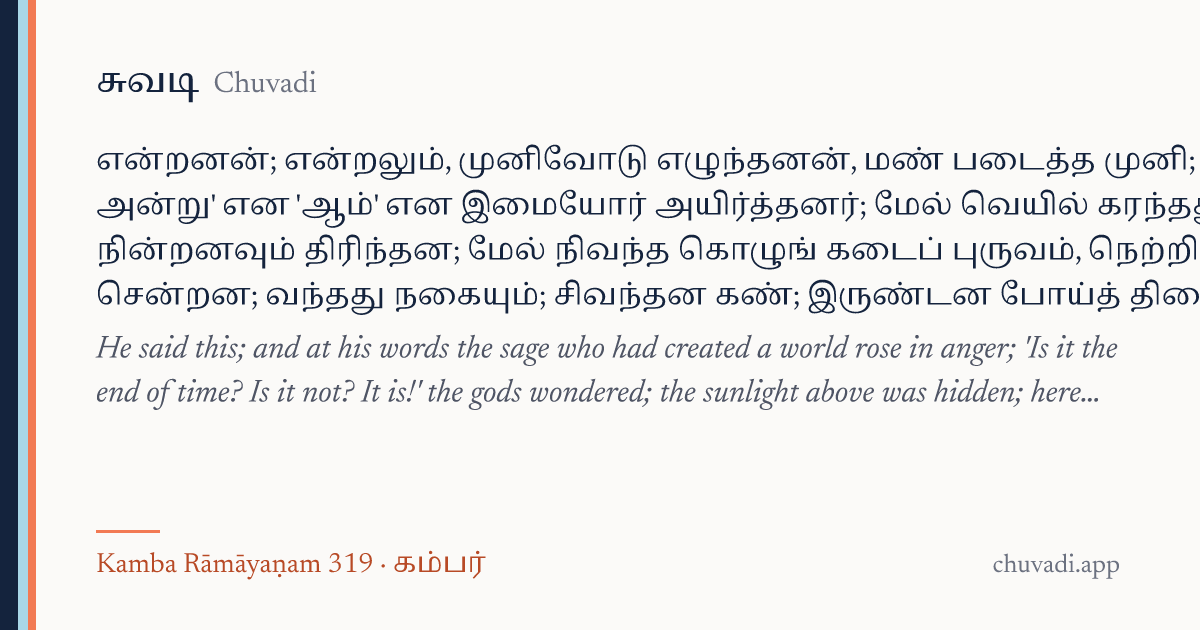
கம்பராமாயணம் 319 · பால 6.13
பாடல் · The poem
Tap a word to see its gloss in the commentary and where else it occurs.
பாட வேறுபாடு · Project Madurai reads
பொருள் · Meaning in Tamil
என்றனன் என்றலும் - என்று தயரதன் சொன்னான். அவ்வாறு கூறலும்; மண்படைத்த முனி முனிவோடு எழுந்தனன் - உலகத்தையே படைக்கத் தொடங்கிய முனிவனாகிய விசுவாமித்திரன் சினத்தோடு எழுந்தான்; மேல் நிவந்த கொழுங்கடைப் புருவம் - அம்முனிவனது மேலே உயர்ந்தனவாகிய புருவங்கள்; நெற்றிமுற்றச் சென்றன - அவரது நெற்றியில் முற்றவும் சென்றன; நகையும் வந்தது - கோபச் சிரிப்பும் வந்து சேர்ந்தது; கண் சிவந்தன - அம்முனிவனது இரு கண்களும் சினத்தால் சிவந்தன; மேல் வெயில் கரந்தது - வானிலே உலாவிக் கொண்டிருந்த கதிரவன் அஞ்சி மறைந்தான்; அங்கும் இங்கும் நின்றனவும் திரிந்தன - அவ்வுலகத்திலும், இவ்வுலகத்திலும் நின்ற உயிரினங்கள் யாவும் நிலைகெட்டுத் திரிந்தன; திசைகள் எல்லாம் போய் இருண்டன - திக்குகள் எல்லாம் ஒளி இழந்து இருண்டன; இமையோர் - இத் தோற்றங்களைக் கண்ட தேவர்கள் எல்லோரும்; இறுதிக்காலம் அன்று என ஆம் என அயிர்த்தனர் - கடையூழிக் காலமோ அல்லவோ என ஐயம் கொள்வாராயினர்.
முனிவோடு: கோபத்துடன். “ஓடு” மூன்றனுருபு உடனிகழ்ச்சிப் பொருளில் வந்தது. ஆயினும் முனிவன் எழுவதற்கு முன் சினம் எழுந்தது என்னும் குறிப்பைக் காட்டி நின்றது. இம்முனிவனது சீற்றத்தால் விளைந்த செயல்களைக் கண்ட தேவர்கள் ஊழிக்காலமோ? அன்றோ என அஞ்சினர். அயிர்த்தனர்: ஐயுற்றனர். “வெயில்” சினையாகுபெயராய்ச் சூரியனை உணர்த்தும். “கண் இருண்டன” இதில் கண் பால் பகா அஃறிணைப் பெயராதலின் பன்மைப் பயனிலைக்கு ஒருமை எழுவாயாகி நின்றது. போய்: போதல் (அழிதலுமாம்). முனிவன் கொண்ட சீற்றத்தால் நிகழ்ந்தவைகளை அழகுறச் சித்திரிக்கும் பாடல் இது. வெகுளிச் சுவைக்குச் சிறந்ததொரு எடுத்துக்காட்டு இப்பாட்டு எனலாம்.
ஆங்கிலம் · English translationAI
Translation
- He said this; and at his words the sage who had created a world rose in anger; 'Is it the end of time?
- Is it not? It is!' the gods wondered; the sunlight above was hidden; here and there
- even things that stood still were shaken; his thick-tipped eyebrows rose up and spread
- across his whole forehead; a laugh came; his eyes reddened; and all the quarters went dark.
What the poem says
Vicuvāmittiraṉ, who once began to create a world of his own, rises in fury at Tacarataṉ's refusal. His brows climb his forehead, he laughs in anger, his eyes turn red; the sun hides, all things are thrown into confusion and the directions go dark, so that the gods wonder whether the end of the world has come.
The commentary calls this one of the finest examples of the sentiment of anger in poetry.