



கம்பராமாயணம் 3190 · ஆரணிய 7.41
பாடல் · The poem
Tap a word to see its gloss in the commentary and where else it occurs.
பாட வேறுபாடு · Project Madurai reads
பொருள் · Meaning in Tamil
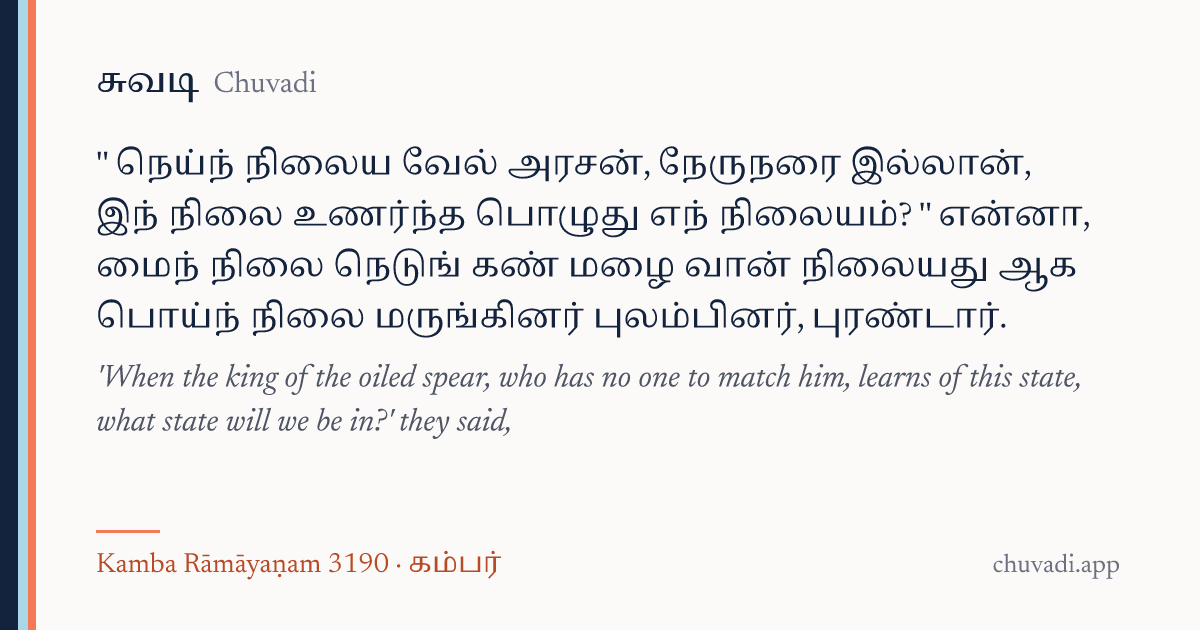
நெய்ந்நிலைய வேல் அரசன் - நெய் பூசி அழகு செய்யப் பெற்ற வேலேந்திய அரசனும்; நேருநரை இல்லான் - தனக்கு எதிராக நிற்பார் எவரும் இல்லாதவனும் (ஆகிய இராவணன்); இந்நிலை உணர்ந்த பொழுது - (சூர்ப்பணகைக்கு உற்ற) இக் கொடிய நிலையினை அறியுங்கால்; எந்நிலையம் என்னா - எத்தகைய மனநிலை கொள்ள நேருமோ என்று; மைந்நிலை நெடுங்கண் - மை நிலைபெற்ற தம் பெரிய கண்களில்; மழை வான் நிலையது ஆக - பொழியும் கண்ணீர் மேகம் சொரியும் மழையை நிகர்த்ததாக; பொய்ந் நிலை மருங்கினர் - பொய்யோ என்னும் இடை படைத்த பெண்கள்; புலம்பினர் புரண்டார் - அழுது கீழே விழுந்து புரண்டனர்.
இடையின் மென்மையை உயர்வு நவிற்சியாகப் பொய்யான இடை என்று மொழிந்தார். (3606 வரையிலும் உள்ளது போலவே 3107 முதல் 3128 முடியுமளவு உள்ளனவும் கலிவிருத்தங்களே எனினும் சீரின் அசைகள் வேறு அமைப்புடைய.
ஆங்கிலம் · English translationAI
Translation
- 'When the king of the oiled spear, who has no one to match him,
- learns of this state, what state will we be in?' they said,
- and with their long kohl-lined eyes become like the rain-filled sky,
- women with waists so slender they seemed not to exist wailed and rolled on the ground.
What the poem says
Other women wonder in dread what will become of them when Irāvaṇaṉ, the unrivalled king with the polished spear, learns what has happened to his sister.
Their kohl-darkened eyes pour tears like rain clouds, and they wail and roll on the ground. Their waists are so slender as to seem unreal, a playful exaggeration.