



கம்பராமாயணம் 3199 · ஆரணிய 7.50
பாடல் · The poem
Tap a word to see its gloss in the commentary and where else it occurs.
பாட வேறுபாடு · Project Madurai reads
பொருள் · Meaning in Tamil
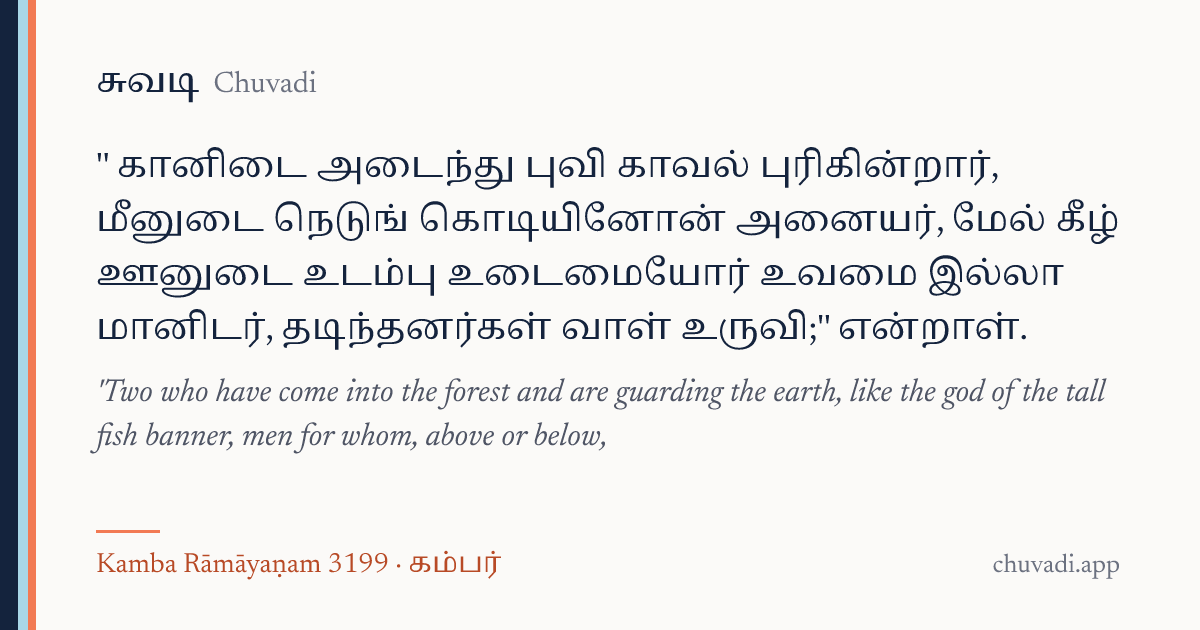
கானிடை அடைந்து - (நான் இருந்த) கானகத்திற்கு வந்து; புவி காவல் புரிகின்றார் - இந்தப் பூமியைப் பாதுகாக்கும் பணியினை மேற் கொண்டிருக்கின்றனர்; மீனுடை நெடுங் கொடியினோன் அனையர் - மகர மீன் கொடியை உடைய மன்மதனுக்கு நிகரானவர்கள்; மேல் கீழ் - விண்ணிலும் மண்ணிலும்; ஊனுடை உடம்பு உடைமையோர் - தசையாலாகிய உடம்பு படைத்தோர் எவரும்; உவமை இல்லா மானிடர் - தமக்கு உவமையாகக் கூற முடியாத (அழகும் வீரமும் உடைய) மானிடர் இருவர்; வாள் உருவித் தடிந்தனர்கள் - வாளை உருவி இவ்வாறு அரிந்தனர்; என்றாள் - என்று (சூர்ப்பணகை) கூறினாள்.
தனக்குத் தீமை செய்தவர்களின் அழகையும் காம மிகுதியால் பாராட்டி உரைத்தாள். புவி காவல் புரிகின்றார் என்றது அரசகுமாரர்கள் என்ற குறிப்பை உணர்த்த எனலாம். அனுபவிக்கும் அவலத்திடையிலும் முறையிட்டுப் பழி தூண்டும் செயலிடையிலும் இராமலக்குவரின் மேனி அழகை மறக்க முடியவில்லை.
ஆங்கிலம் · English translationAI
Translation
- 'Two who have come into the forest and are guarding the earth,
- like the god of the tall fish banner, men for whom, above or below,
- among all who have bodies of flesh, there is no comparison,
- humans, drew their swords and cut me,' she said.
What the poem says
Cūrppaṇakai answers: two humans who have come to the forest and act as protectors of the land, a hint that they are princes, drew their swords and mutilated her.
Even in her pain, and while trying to rouse her brother to revenge, her desire makes her praise their beauty. They are as handsome as Kāmaṉ, the god of love whose banner bears a fish, and no one with a body of flesh, in heaven or on earth, can compare with them.