



கம்பராமாயணம் 3215 · ஆரணிய 7.66
பாடல் · The poem
Tap a word to see its gloss in the commentary and where else it occurs.
பாட வேறுபாடு · Project Madurai reads
பொருள் · Meaning in Tamil
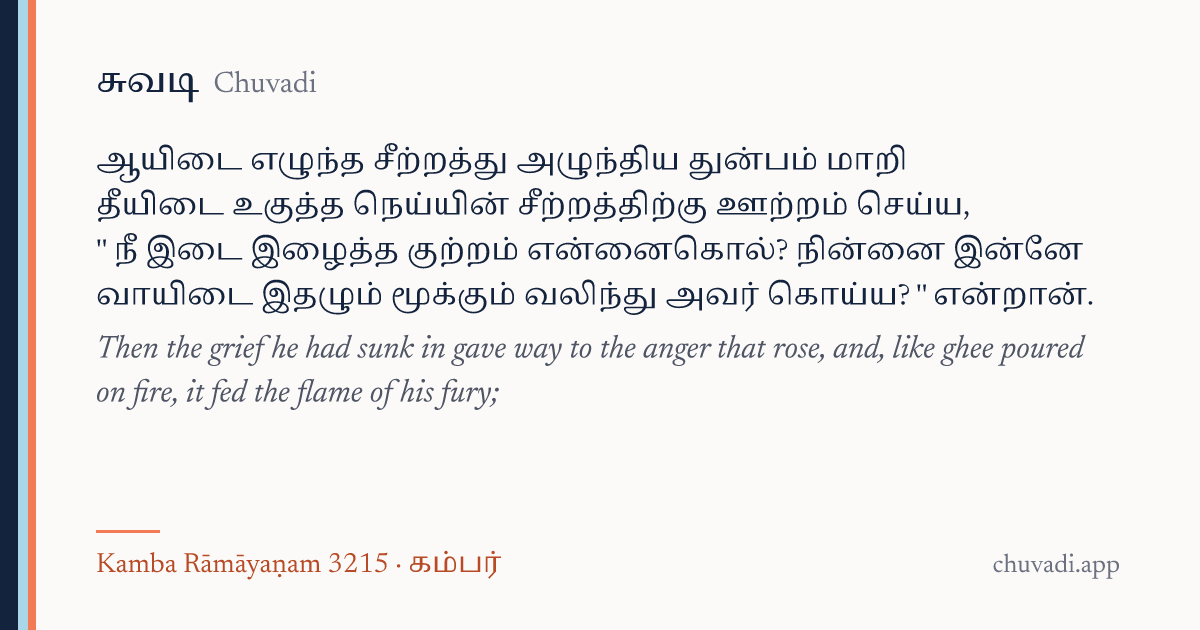
ஆயிடை - அவ்வமயம், எழுந்த சீற்றத்து - உண்டாகிய கோபத்தில்; அழுந்திய துன்பம் மாறி - அனுபவித்த துயரம் நீங்கி; தீயிடை உகுத்த நெய்யின் - நெருப்பிலே விழுந்த நெய்போல; சீற்றத்திற்கு ஊற்றம் செய்ய - (துயரம் குறைந்த இடத்தில் கோபம் வலிமை கொள்ள; (இராவணன் சூர்ப்பணகையிடம்); அவர் வலிந்து - இராம இலக்குவர் பலம் கொண்டு; நின்னை இன்னே - உன்னை இவ்வாறு; வாயிடை இதழும் மூக்கும் கொய்ய - காதின் மடலும் மூக்கும் அரிய; நீ இடை இழைத்த குற்றம் - நீ அவர்கள்பாற் செய்த தவறு; என்னைகொல் - யாதேனும் உண்டோ, என்றான் - என்று கேட்டான்.
ஊற்றம் - ஊன்று கோல். ஓசை உட்புகும் வழியாதலால் செவியை வாய் என்றும் செவிமடலை இதழ் என்றும் மொழிந்தார்.
ஆங்கிலம் · English translationAI
Translation
- Then the grief he had sunk in gave way to the anger that rose,
- and, like ghee poured on fire, it fed the flame of his fury;
- 'What wrong did you do them, that they should, like this,
- forcibly cut off your nose and the lobes of your ears?' he asked.
What the poem says
Irāvaṇaṉ's grief turns into anger, which flares up like a fire fed with ghee. He asks his sister what she could have done to make the two men cut off her nose and ears.
The poet calls the ear a 'mouth', since sound enters through it, and the earlobe its 'lip'. The question sets up Cūrppaṇakai's crafty answer in the next verse.