



கம்பராமாயணம் 3216 · ஆரணிய 7.67
பாடல் · The poem
Tap a word to see its gloss in the commentary and where else it occurs.
பொருள் · Meaning in Tamil
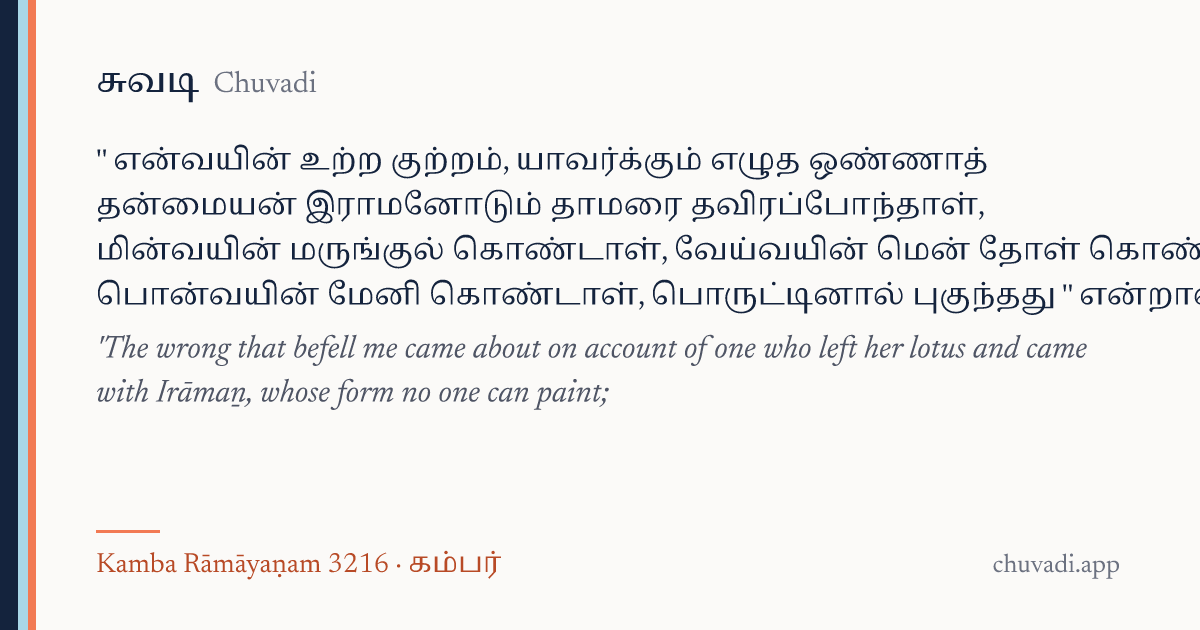
(அதற்குச் சூர்ப்பணகை) என் வயின் உற்ற குற்றம் - என்னிடத்தில் நேர்ந்த பிழை யாதெனில்; தாமரை தவிர - தன் இருக்கையான தாமரைப் பூவை விட்டு; யாவர்க்கும் எழுத ஒண்ணாத தன்மையன் இராமனோடும் - எத்தகு திறன்மிக்க ஓவியனாலும் எழுதிக் காட்ட முடியாத எழில் மிக்க இராமனுடன்; போந்தாள் - வந்தவளும்; மின் வயின் மருங்குல் கொண்டாள் - மின்னலிடம் இடையைப் பெற்றவளும்; வேய் வயின் மென்றோள் கொண்டாள் - மூங்கிலினிடம் மெல்லிய தோள்களைப் பெற்றவளும்; பொன் வயின் மேனி கொண்டாள் பொருட்டினால் - செம்பொன்னிடத்தில் தனி உடலைக் கொண்டவளுமான ஒருத்தி காரணமாக; புகுந்தது என்றாள் - நேர்ந்தது எனச் சொன்னாள்.
நான் உனக்காக இராமனுடன் வந்த கட்டழகியைக் கருதியதுதான் குற்றம் என மறைமுகமாகக் கூறினாள்.
குலமுறை கிளத்து படலத்துள் எழுதரிய திருமேனி (657) என்றும் வாலி வதைப் படலத்துள் ஓவியத்து எழுத ஒண்ணா உருவத்தாய் என்றும் முறையே (4020) இராமன் அழகு கூறப்பட்டது. அடுக்கிக் கூறிய உவமைகளால் சீதையின் அழகு ஓர் உவமையில் அடங்குவதன்று என உணர்த்தினார்.
ஆங்கிலம் · English translationAI
Translation
- 'The wrong that befell me came about on account of one who left her lotus
- and came with Irāmaṉ, whose form no one can paint;
- she took her waist from the lightning, her soft shoulders from the bamboo,
- her body from gold; it happened because of her,' she said.
What the poem says
Cūrppaṇakai answers cleverly. Her only fault, she says, concerns a woman who came to the forest with Irāmaṉ, whose beauty no painter could capture. This woman is like Lakṣmī who has left her lotus seat; she has borrowed her waist from lightning, her shoulders from bamboo and her body from gold.
She hints that she was punished for trying to win this beauty for her brother. Piling up comparisons suggests that no single image can contain Cītai's beauty.