



கம்பராமாயணம் 3217 · ஆரணிய 7.68
பாடல் · The poem
Tap a word to see its gloss in the commentary and where else it occurs.
பாட வேறுபாடு · Project Madurai reads
பொருள் · Meaning in Tamil
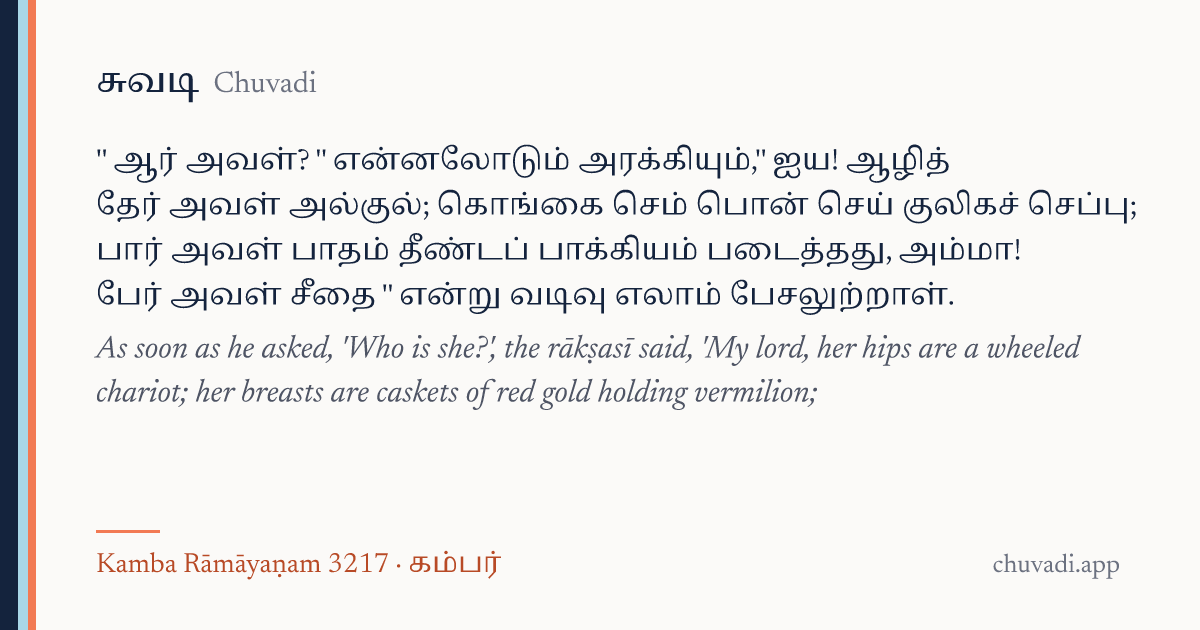
(அது கேட்டு ஆர்வமுற்ற இராவணன் ஆர் அவள் என்னலோடும் - அந்தப் பெண் யார் என்று கேட்டவுடன்; அரக்கியும் - சூர்ப்பணகையும்; ஐய - ஐயனே; அவள் அல்குல் ஆழித்தேர் - அவளுடைய அல்குல் சக்கரம் பூட்டிய தேர் போலும்; கொங்கை செம் பொன் செய் குலிகச் செப்பு - அவளுடைய மார்பகங்கள் தங்கத்தால் செய்யப்பட்ட குங்குலியச் செப்புப் போலும்; அவள் பாதம் தீண்டப் பார் பாக்கியம் படைத்தது - அவள் திருவடி பட பூமி புண்ணியம் செய்தது போலும்; அம்மா - வியப்பு இது; அவள் பேர் சீதை - அவள் பெயரோ சீதையாம்; என்று வடிவெலாம் பேசலுற்றாள் - எனச் சீதையின் அழகு நலங்களை உரைக்கத் தொடங்கினாள்.
இராவணன் ஆசைத் தீயை வளர்க்க நெய் சொரிந்தாற் போல் இவ்வங்க வருணனைகள் அமைந்துள்ளன.
ஆங்கிலம் · English translationAI
Translation
- As soon as he asked, 'Who is she?', the rākṣasī said, 'My lord, her hips
- are a wheeled chariot; her breasts are caskets of red gold holding vermilion;
- the earth has won great fortune, that her feet should touch it!
- Her name is Cītai,' and she began to describe all her form.
What the poem says
Irāvaṇaṉ's interest is caught at once, and he asks who the woman is. Cūrppaṇakai begins a long description of Cītai's body: her hips broad like a chariot, her breasts like golden caskets, her feet so lovely that the earth is fortunate to be touched by them. Then she gives her name.
These descriptions of each limb are like ghee poured on the fire of Irāvaṇaṉ's desire, and that is exactly what she intends.