



கம்பராமாயணம் 3229 · ஆரணிய 7.80
பாடல் · The poem
Tap a word to see its gloss in the commentary and where else it occurs.
பாட வேறுபாடு · Project Madurai reads
பொருள் · Meaning in Tamil
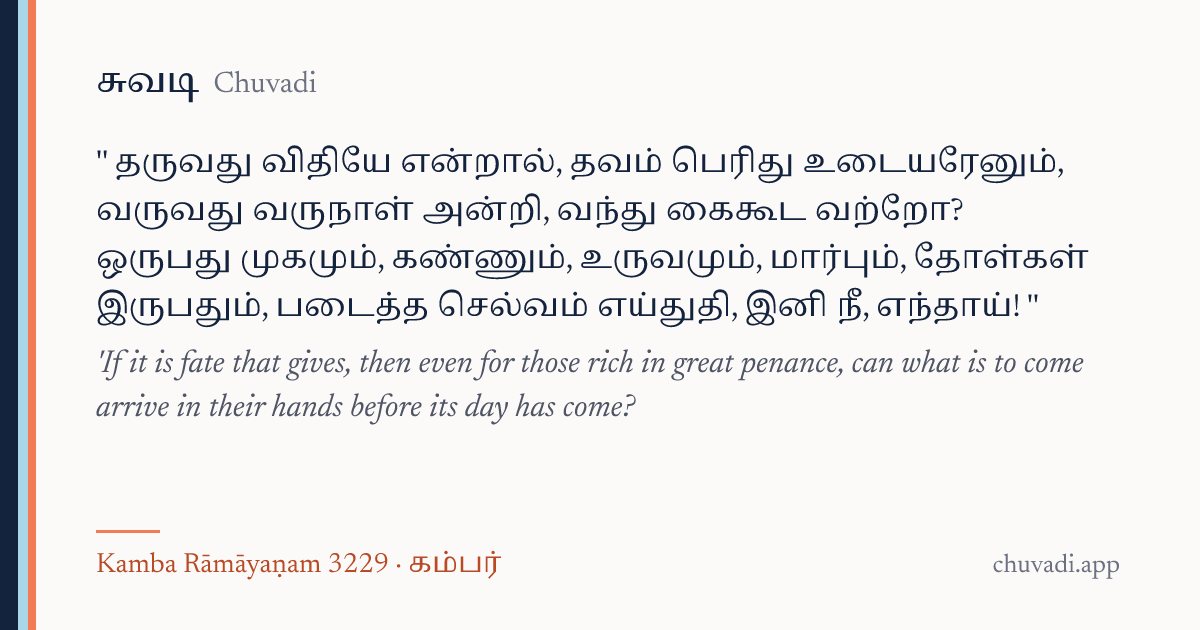
எந்தாய் - என் ஐயனே; தருவது - உரிய காலத்தில் எதனையும் தருவது; விதியே - ஊழ்வினையே ஆகும்; என்றால் - அவ்வாறாயின்; தவம் பெரிது உடையரேனும் - பெரிய தவ வலிமை பெற்றவர்களாயினும்; வருவது - வர வேண்டும் நலங்கள்; வருநாள் அன்றி வந்து கைகூட வற்றோ - உரிய காலம் வரு முன் வந்து கையிற் சேர முடியுமோ? (முடியாது), ஒருபது முகமும் - பத்து முகங்களும், இருபது கண்ணும் தோள்கள் - இருபது கண்களும் இருபது தோள்களும், மார்பும் உருவமும் - வீர மார்பும் பொலிவுமிக்க உருவமும்; படைத்த - நீ வரத்தால் பெற்றதனுடைய; செல்வம் - (உண்மையான) சிறப்பை; இனி நீ எய்துதி - (சீதையைப் பெறுவதால்) இனிமேல் தான் நீ அடைய இருக்கின்றாய்.
எல்லையற்ற அழகுடைய சீதையின் நலம் நுகரப் போதாதென்றே பத்து முகம், இருபது கண்கள், இருபது தோள்கள் உற்றாய் என்று உயர்த்திக் கூறினாள்.
ஆங்கிலம் · English translationAI
Translation
- 'If it is fate that gives, then even for those rich in great penance,
- can what is to come arrive in their hands before its day has come?
- The true wealth of having ten faces and eyes, a form and a chest, and shoulders
- twenty in number, you will attain now, my father!'
What the poem says
Cūrppaṇakai appeals to fate. Good fortune comes only when its time arrives; even great ascetics cannot hurry it. Now Irāvaṇaṉ's time has come: only now will his ten faces, twenty eyes, twenty shoulders and mighty chest find their true use.
Her flattery suggests that his many heads and eyes were given to him precisely so that he could take in Cītai's boundless beauty.