



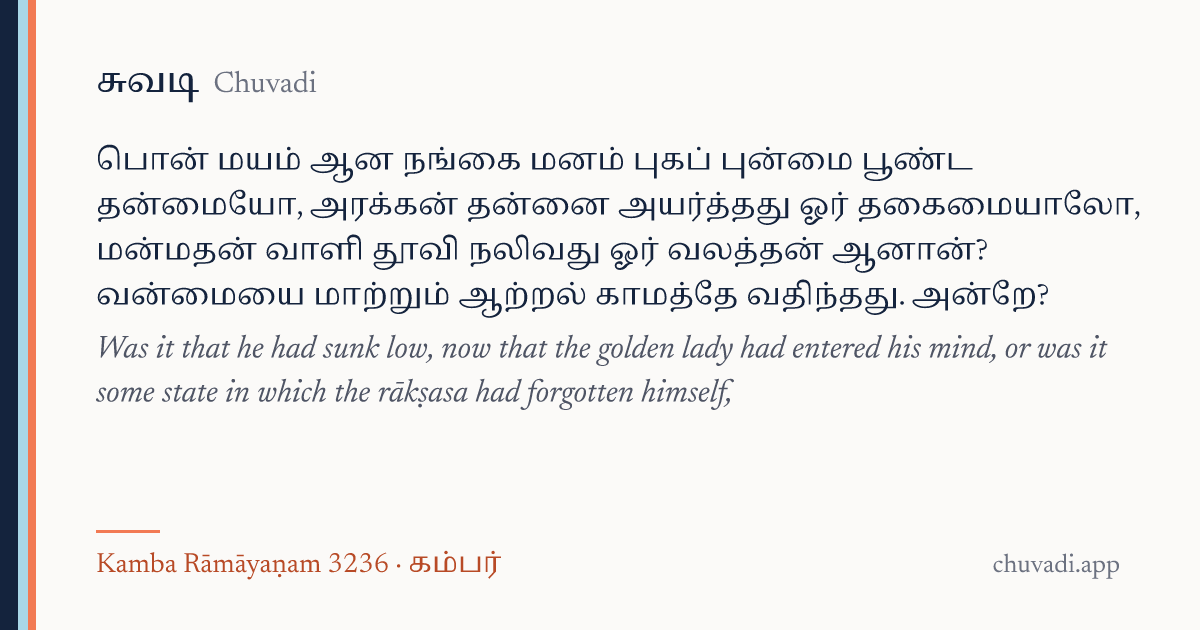
கம்பராமாயணம் 3236 · ஆரணிய 7.87
பாடல் · The poem
Tap a word to see its gloss in the commentary and where else it occurs.
பொருள் · Meaning in Tamil
பொன்மயமான நங்கை - (அழகு மிகுதியினால்) பொன்னின் ஒளி சூழும் எழிலுடைய சீதை; மனம் புக - மனத்தில் புகுந்துவிட்டதனால்; புன்மை பூண்ட தன்மையோ - (இராவணன்) இழிவடைந்து விட்டானோ? (அல்லது); அரக்கன் - அவ்விராவணன்; தன்னை அயர்த்ததோர் தகைமையாலோ - தனக்குத் தானே மறந்துவிட்டதாய தன்மையினாலே; மன்மதன் வாளி தூவி - மன்மதன் அம்புகள் ஏவி; நலிவது ஓர் வலத்தன் ஆனான் - (இராவணனுக்கு) வருத்தம் தரும் வல்லமையுடையவன் ஆனான்; வன்மையை மாற்றும் ஆற்றல் - ஒருவனுடைய வீரத்தை அழிக்கும் திறமை; காமத்தே வதிந்தது அன்றே - காமத்தின் பால் பொருந்திற்று அன்றோ?
வீராதி வீரனையும் வீழ்த்த எளிய மலரம்புகளே காரணமாயின என உணர்த்தினார்.
ஆங்கிலம் · English translationAI
Translation
- Was it that he had sunk low, now that the golden lady had entered his mind,
- or was it some state in which the rākṣasa had forgotten himself,
- that Maṉmataṉ, showering his arrows, became strong enough to torment him?
- The power to undo strength dwells in desire, does it not?
What the poem says
The poet asks how Kāma, armed only with flower arrows, could torment a warrior as mighty as Irāvaṇaṉ. Was it because Cītai, glowing like gold, had entered his mind and lowered him, or because he had lost hold of himself?
The answer is a general truth: desire has the power to undo any strength. The greatest of heroes is brought down by the softest of weapons.