



கம்பராமாயணம் 3244 · ஆரணிய 7.95
பாடல் · The poem
Tap a word to see its gloss in the commentary and where else it occurs.
பொருள் · Meaning in Tamil
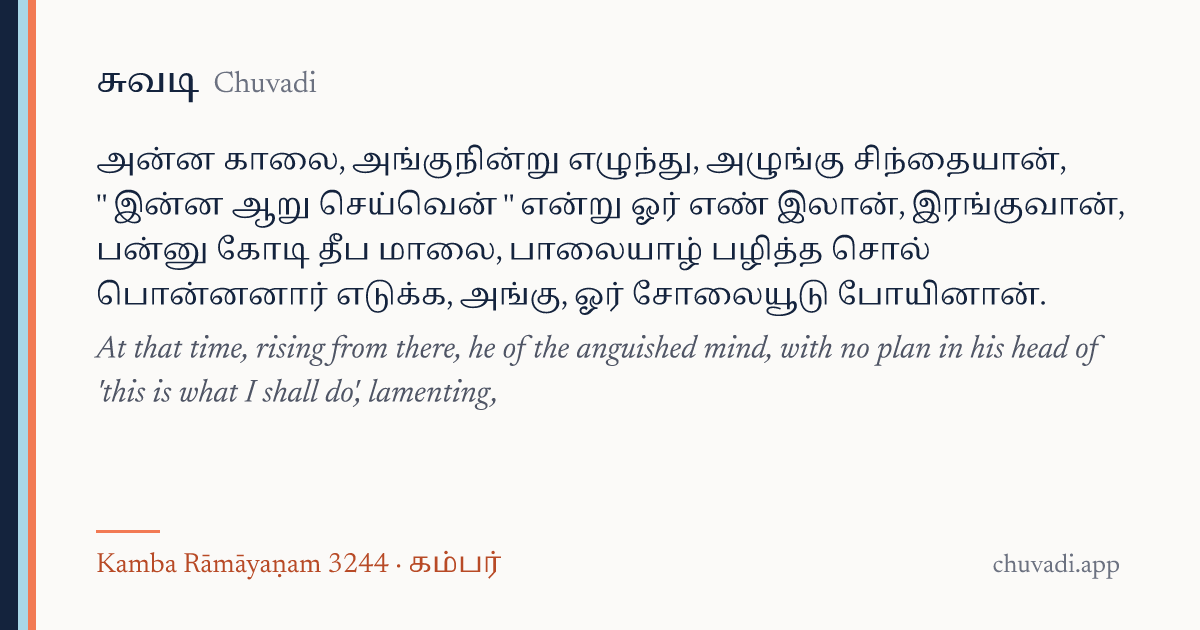
அன்ன காலை - அப்பொழுது; அழுங்கு சிந்தையான் - நொந்த மனத்தினனாகிய இராவணன்; அங்கு நின்று எழுந்து - அவ்விடத்திலிருந்தும் செல்ல எழுந்து; இன்னவாறு செய்வென் - இம் முறையில் நடந்து கொள்வேன்; என்று ஓர் எண் இலான் - என்று எண்ணும் சிந்தனை ஏதும் இல்லாதவனாய், இரங்குவான் - வருந்துகின்றவன்; பாலை யாழ் பழித்த சொல் பொன்னனார் - பாலை யாழின் இன்னிசையை வென்ற அழகிய பேச்சுக்களை உடைய பொன் மேனிப் பணிப் பெண்கள்; பன்னு கோடி தீப மாலை எடுக்க - பாராட்டி உரைக்கத்தக்க எண்ணற்ற விளக்கு வரிசைகளை ஏந்த; அங்கு ஓர் சோலையூடு போயினான் - அங்குள்ள ஒரு சோலைக்குள் நுழைந்தான்.
செய்தல் அறியானாய் இராவணன் சோலைக்குச் சென்றான். பாலை யாழ் நால்வகைப் பண்களுள் ஒன்று. குறிஞ்சி, மருதம், செவ்வழி என்பன பிற.
ஆங்கிலம் · English translationAI
Translation
- At that time, rising from there, he of the anguished mind,
- with no plan in his head of 'this is what I shall do', lamenting,
- while golden women whose speech put the pālai lute to shame
- carried countless garlands of lamps, went into a grove there.
What the poem says
Unable to rest, Irāvaṇaṉ gets up from his bed with no idea what to do. Still lamenting, he walks into a pleasure garden of the palace, while beautiful maidservants, whose voices are sweeter than the pālai mode played on the lute, carry endless rows of lamps before him.
Pālai is one of the four basic melodic modes of old Tamil music, along with kuṟiñci, marutam and cevvaḻi.