



கம்பராமாயணம் 3251 · ஆரணிய 7.102
பாடல் · The poem
Tap a word to see its gloss in the commentary and where else it occurs.
பொருள் · Meaning in Tamil
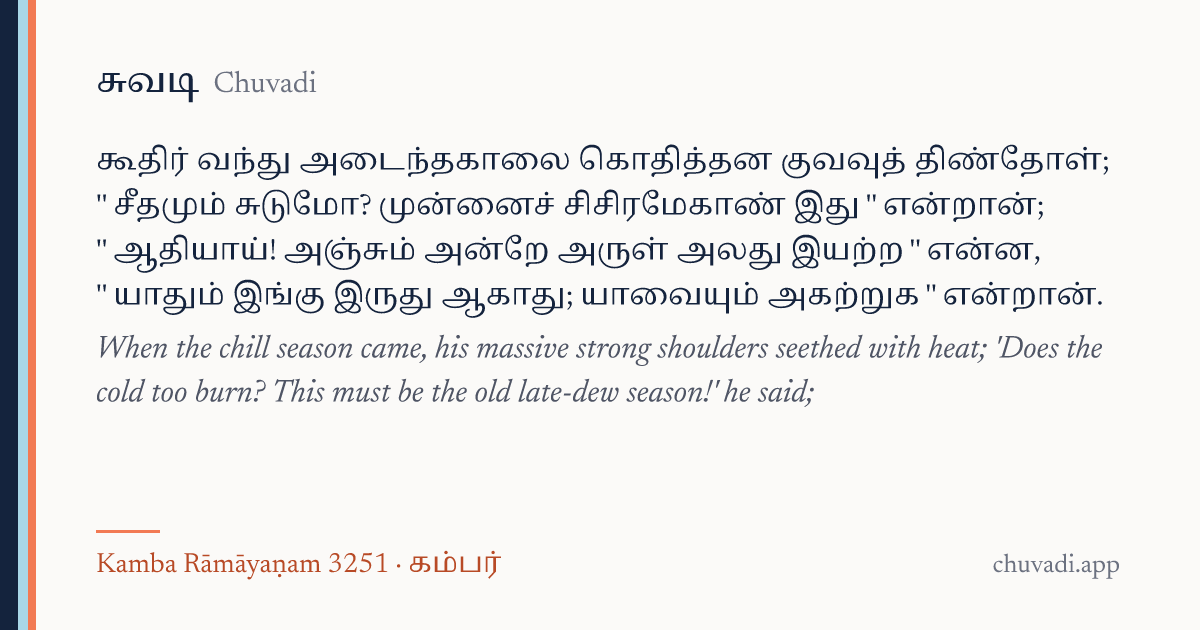
கூதிர் வந்து அடைந்த காலை - குளிர் காலம் உடன் வந்து சேர்ந்த போது; குவவுத் திண் தோள் கொதித்தன - வலிமை வாய்ந்த திரண்ட (இராவணன்) தோள்கள் முன்னை விட வெப்பம் பூண்டன; (அப்போது அவன்); சீதமும் சுடுமோ? - கூதிர் காலத்துக் குளிர்ச்சியும் சுடுவது உண்டோ?; முன்னைச் சிசிரமே இது காண் - பழைய பனிக் காலம் தான் இது; என்றான் - எனக் கூறினான்; அதற்குப் பணியாளர்; 'ஆதியாய் - (எம்) தலைவனே; அருள் அலது இயற்ற அஞ்சும் அன்றே - தங்கள்பால் உத்தரவு இல்லாத ஒன்றைச் செய்ய எம்மனோர் அச்சம் கொள்வரே; என்ன - என்று தெரிவிக்க; (அது கேட்ட இராவணன்; இங்கு இருது யாதும் ஆகாது - இனி இங்கு எவ்வகைப் பருவ காலமும் வருதல் கூடாது; யாவையும் அகற்றுக என்றான் - எல்லாப் பருவகாலங்களையும் நீக்கி விடுங்கள் என ஆணையிட்டான்.
அனைத்துப் பருவகாலங்களையும் அகன்று போகுமாறு கட்டளையிட்டான் இராவணன்.
ஆங்கிலம் · English translationAI
Translation
- When the chill season came, his massive strong shoulders seethed with heat;
- 'Does the cold too burn? This must be the old late-dew season!' he said;
- 'O lord, we are afraid to do anything without your grace,' they said;
- 'No season at all shall be here; send them all away!' he said.
What the poem says
The cold season arrives, but Irāvaṇaṉ's shoulders burn even hotter. He suspects his servants have simply brought back the dewy season. They protest that they would never dare do anything he had not ordered.
Exasperated, he commands that no season at all should be allowed in his presence, and that every one of them be sent away.