



கம்பராமாயணம் 3252 · ஆரணிய 7.103
பாடல் · The poem
Tap a word to see its gloss in the commentary and where else it occurs.
பாட வேறுபாடு · Project Madurai reads
பொருள் · Meaning in Tamil
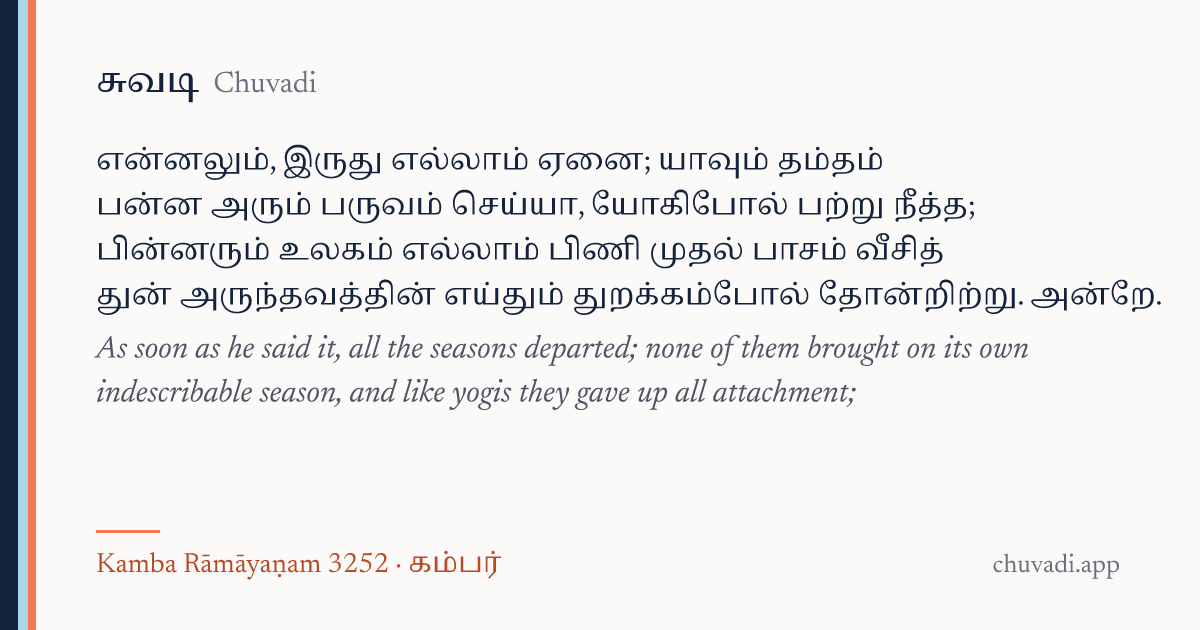
என்னலும் - என இராவணன் ஆணை பிறப்பித்ததும்; இருது எல்லாம் ஏனை - எல்லாப் பருவங்களும் விலகிப் போயின; யாவும் - ஆறு பருவ காலங்களும், தம் தம் பன்ன அரும் பருவம் செய்யா - தத்தமக்குரிய பருவ கால நிகழ்வுகளைச் செய்யாமல்; யோகி போல் பற்று நீத்த - தனக்குள் ஒடுங்கும் தவசி போல் செயல்பாடுகளைக் கைவிட்டன; பின்னரும் உலகம் எல்லாம் - அதன் பின்பு அனைத்துலகும்; பிணி முதல் பாசம் வீசி - நோய் முதலிய வினைத் தொடர்புகளை ஒழித்து; துன்னருந் தவத்தின் எய்தும் - செயற்கரிய தவத்தால் அடையத்தக்க; துறக்கம் போல் தோன்றிற்று - முக்தி உலகம் போல் எவ்வித மாறுபாடுமின்றி விளங்கலாயிற்று. அன்றே - ஈற்றசை.
உலகம் செயலற்றுப் போன நிலையை இவ்வாறு கூறினார். இன்ப, துன்பங்களுக்குக் காரணமாவன பருவங்கள். பருவங்கள் தொழிற்படாமையால் இன்ப, துன்ப நிலைகளற்ற துறக்க உலகம் போலாயிற்று இலங்கை என்பது கருத்து.
ஆங்கிலம் · English translationAI
Translation
- As soon as he said it, all the seasons departed; none of them
- brought on its own indescribable season, and like yogis they gave up all attachment;
- and then the whole world, casting off sickness and every bond,
- appeared like the heaven that is reached by penance hard to perform.
What the poem says
At his command all six seasons leave. None of them does its work any more; like yogis who have renounced the world, they give up all activity.
With no seasons, the world is free of sickness and the other bonds of change, and it looks like the changeless heaven that only great penance can win. Since the seasons bring pleasure and pain, their absence leaves Ilaṅkai in a strange, motionless state beyond both.