



கம்பராமாயணம் 3253 · ஆரணிய 7.104
பாடல் · The poem
Tap a word to see its gloss in the commentary and where else it occurs.
பாட வேறுபாடு · Project Madurai reads
பொருள் · Meaning in Tamil
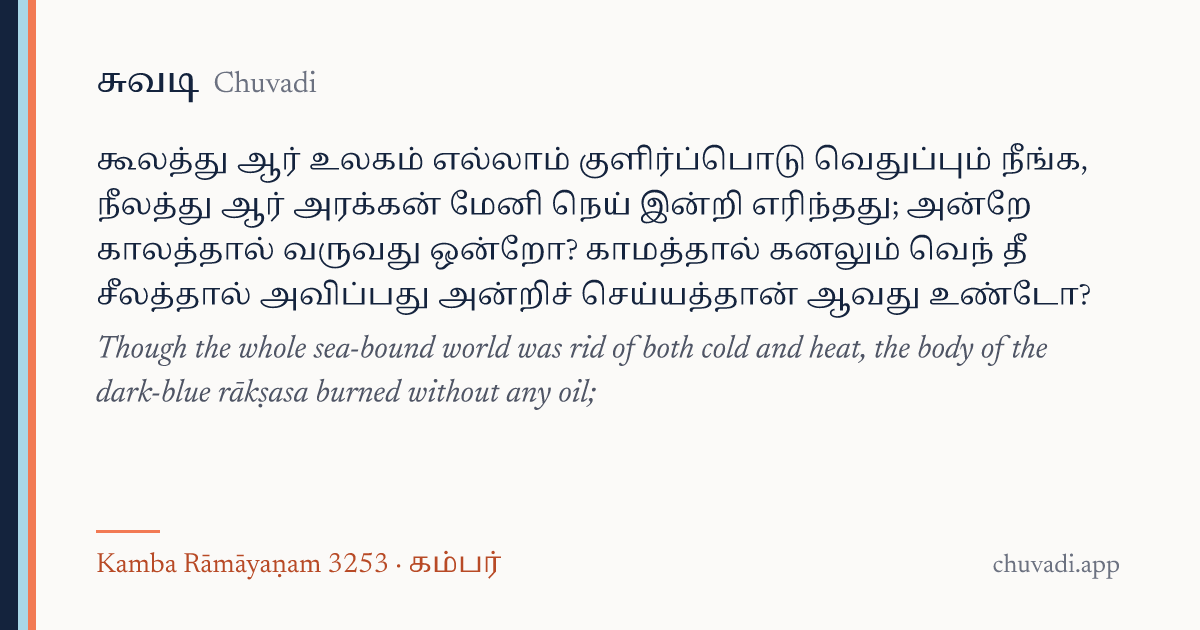
கூலத்து ஆர் உலகம் எல்லாம் - கடலால் சூழப்பெற்ற உலகம் முழுவதும்; குளிர்ப்பொடு வெதுப்பும் நீங்க - குளிர்ச்சியும் வெப்பமும் இல்லாமற் போன நிலையிலும்; நீலத்தார் அரக்கன் மேனி - நீல நிறம் பொருந்திய இராக்கதனாகிய இராவணனின் உடல்; நெய்யின்றி எரிந்தது - எண்ணெயின்றியே எரியலாயிற்று; காலத்தால் வருவது ஒன்றோ? - இவ்வெம்மைக்குக் காலம் (பருவம்) காரணமென்று கூறமுடியுமோ?; காமத்தால் கனலும் வெந்தீ - காமநோயால் எரியும் கொடு நெருப்பை; சீலத்தால் அவிப்பது அன்றி - நல்லொழுக்கத்தால் அணைக்கலாமே அன்றி; செய்யத் தான் ஆவது உண்டோ? - வேறு மாற்று ஏதேனும் செய்தல் இயலுவதோ? (இயலாது). அன்றே - அசை.
நெய்யின்றி நெருப்பு எரிந்தது என்றது காரணமின்றியே காரியம் நிகழ்வதாகக் காட்டுவதால் விபாவனை அணி.
ஆங்கிலம் · English translationAI
Translation
- Though the whole sea-bound world was rid of both cold and heat,
- the body of the dark-blue rākṣasa burned without any oil;
- is it something that comes from the season? The fierce fire that blazes from lust,
- other than quenching it by virtue, can anything be done about it?
What the poem says
Even with every season banished and the whole world neither hot nor cold, Irāvaṇaṉ's dark body keeps burning, like a fire that needs no fuel. The heat clearly has nothing to do with the weather.
The poet's moral: the fire of lust can be put out only by virtuous conduct, and by nothing else. Describing an effect, burning, without its usual cause, oil, is a recognised figure of speech.