



கம்பராமாயணம் 3257 · ஆரணிய 7.108
பாடல் · The poem
Tap a word to see its gloss in the commentary and where else it occurs.
பாட வேறுபாடு · Project Madurai reads
பொருள் · Meaning in Tamil
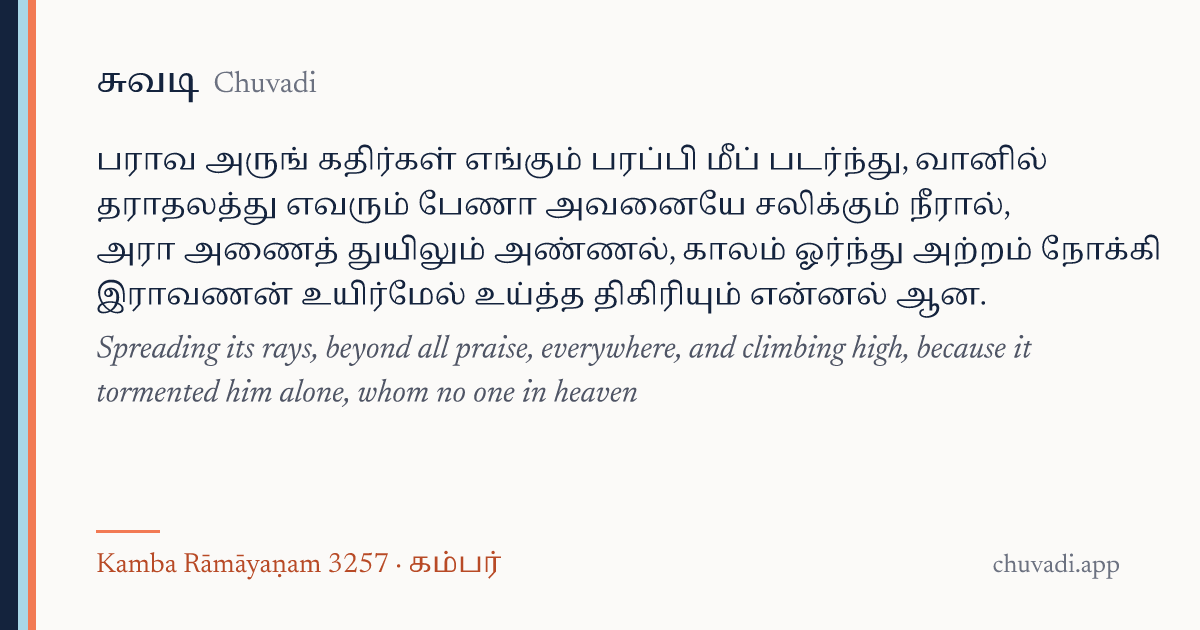
பராவ அருங் கதிர்கள் - போற்றுதற்கரிய (சிறப்புமிக்க) (அச்சந்திரனின்) கிரணங்களை; எங்கும் பரப்பி - எத்திசையிலும் பரவ விட்டுக் கொண்டு; மீப் படர்ந்து - மேற் சென்று; வானில் - விண்ணுலகில்; தராதலத்து - மண்ணுலகில்; எவரும் பேணா அவனையே - எவராலும் நேசிக்கப்படாத இராவணனையே; சலிக்கும் நீரால் - துன்புறுத்தும் தன்மையினால்; அரா அணைத் துயிலும் அண்ணல் - ஆதிசேடனாகிய பாம்புப் படுக்கையில் உறங்கும் திருமால்; காலம் ஓர்ந்து - சமயம் பார்த்து; அற்றம் நோக்கி - அவன் (இராவணன்) அழிவைக் கருதி, இராவணன் உயிர்மேல் உய்த்த - அவ்விராவணன் உயிர் மீது ஏவிய, திகிரியும் என்னல் ஆன - சக்கரப்படை என்று சொல்லும்படியாகவும் விளங்கின.
கடலினின்றும் பொங்கிய நிலா, பாற்கடல் துயிலும் பரமன் ஏவிய சக்கரமாகக்
ஆங்கிலம் · English translationAI
Translation
- Spreading its rays, beyond all praise, everywhere, and climbing high,
- because it tormented him alone, whom no one in heaven
- or on earth holds dear, it could be called the discus that the lord who sleeps on the serpent bed,
- biding his time and watching for his downfall, had hurled at Irāvaṇaṉ's life.
What the poem says
The moon spreads its rays everywhere as it climbs, but they torment only Irāvaṇaṉ, whom no one in heaven or on earth loves. So the round moon looks like the discus of Viṣṇu, who sleeps on the serpent Ādiśēṣa, thrown at Irāvaṇaṉ's life after waiting for the right moment to destroy him.
The image foreshadows the real outcome: Viṣṇu, born as Irāmaṉ, will in time bring about Irāvaṇaṉ's death.