



கம்பராமாயணம் 3258 · ஆரணிய 7.109
பாடல் · The poem
Tap a word to see its gloss in the commentary and where else it occurs.
பாட வேறுபாடு · Project Madurai reads
பொருள் · Meaning in Tamil
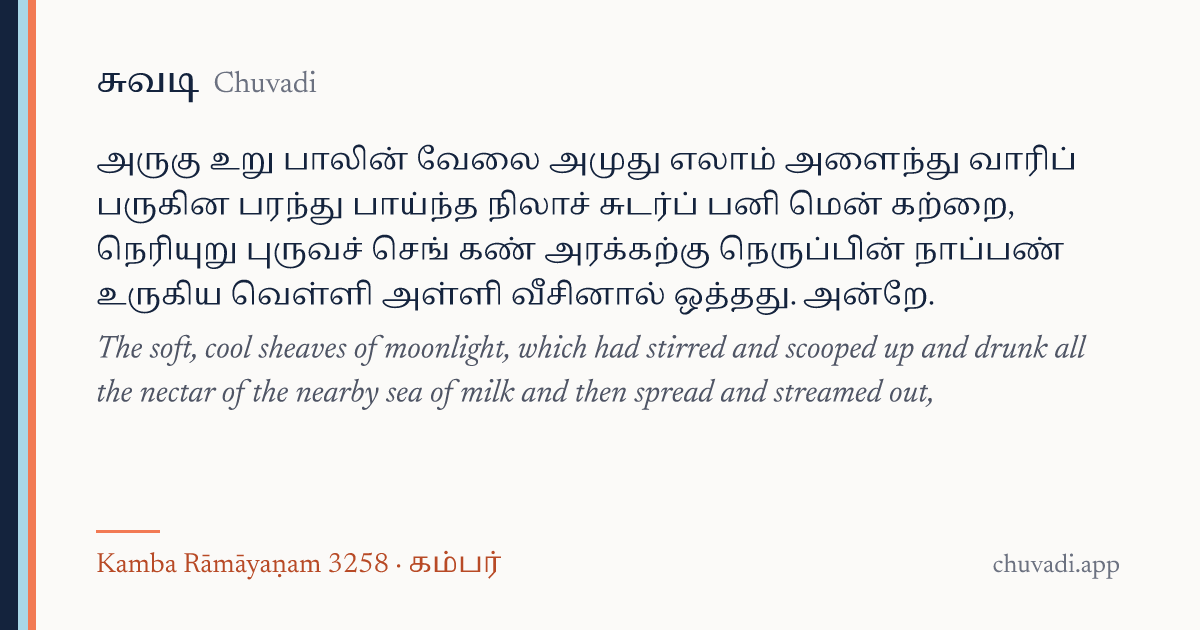
அருகு உறு பாலின் வேலை - பக்கத்தில் அமைந்துள்ள பாற் கடலினின்றும்; அமுதெலாம் அளைந்து வாரி - அமுதம் முழுவதையும் வாரி யெடுத்து; பருகின பரந்து பாய்ந்த நிலாச் சுடர் - குடித்து எங்கும் விரிந்து பரவிய சந்திரனின் ஒளியான; பனி மென் கற்றை - மெல்லிய குளிர்ந்த கிரணங்கள்; நெரியுறு புருவச் செங்கண் அரக்கற்கு - இப்போது நெரிந்த புருவங்களையும் சிவந்த கண்களையும் உடைய இராக்கதனாகிய இராவணனுக்கு; நெருப்பின் நாப்பண் - நெருப்பின் நடுவே (வைக்கப்பட்டதால்); உருகிய வெள்ளி - கொதித்த வெள்ளிக் குழம்பை; அள்ளி வீசினால் ஒத்தது - கைகளால் வாரி வீசினாற் போன்றிருந்தது. (அன்றே - அசை.
பாற்கடலில் தோன்றிய சந்திரன் அக்கடலிலிருந்தும் தோன்றிய அமுதத்தைப் பருகி நிலவொளியாக வெளியிடுவதாகக் கூறுதல் தற்குறிப்பேற்ற அணி.
ஆங்கிலம் · English translationAI
Translation
- The soft, cool sheaves of moonlight, which had stirred and scooped up and drunk
- all the nectar of the nearby sea of milk and then spread and streamed out,
- to the rākṣasa with knitted brows and red eyes
- were like molten silver, from the midst of a fire, scooped up and flung at him.
What the poem says
The moon was born from the ocean of milk, and the poet imagines that its cool rays have drunk up all the nectar of that ocean and now pour it out as moonlight.
Yet to Irāvaṇaṉ, frowning and red-eyed, this soft light feels like silver melted in a furnace and thrown over him by the handful. The fanciful explanation of moonlight as drunk nectar is again a figure of poetic fancy.