



கம்பராமாயணம் 3282 · ஆரணிய 7.133
பாடல் · The poem
Tap a word to see its gloss in the commentary and where else it occurs.
பாட வேறுபாடு · Project Madurai reads
பொருள் · Meaning in Tamil
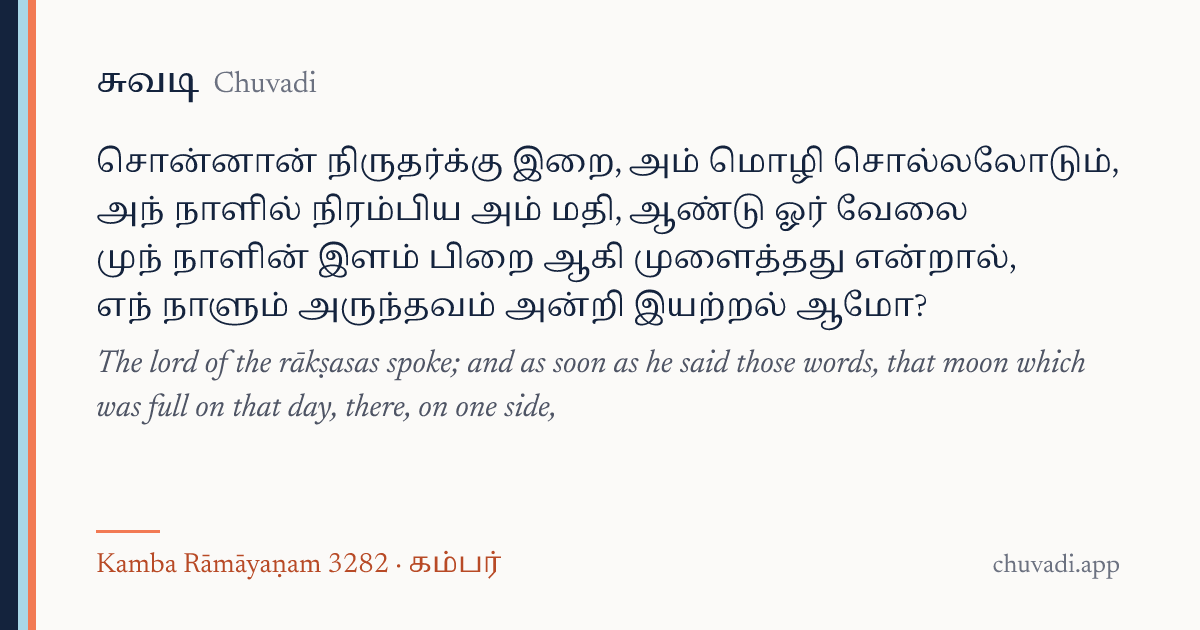
நிருதர்க்கு இறை - அரக்கரின் தலைவனாகிய இராவணன்; சொன்னான் - மேற் கூறியவாறு கட்டளையிட்டான்; அம்மொழி சொல்லலோடும் - அக் கட்டளை பிறப்பிக்கப்பட்டதும்; அந்நாளில் நிரம்பிய அம்மதி - அன்று முழுநிலவாய்த் திகழ்ந்த அச் சந்திரன்; ஆண்டு - அவ்விடத்தில், ஓர் வேலை - ஒரு புறத்தில்; முந்நாளின் - மூன்றாம் நாளின்; இளம்பிறை ஆகி - கீற்று நிலவாக; முளைத்தது என்றால் - உதித்தது எனில்; எந்நாளும் - எக்காலத்திலும், அருந்தவம் அன்றி - அரிய நற்றவம் செய்திருந்தால் அல்லாமல்; இயற்றல் ஆமோ? - இத்தகு அருஞ்செயல் நிகழ்த்துவது சாத்தியம் ஆகுமா? (ஆகாது).
முந்நாள் இளம்பிறை - மூன்றாம் பிறைச்சந்திரன். 'வேண்டிய வேண்டி யாங்கு எய்தலாற் செய்தவம் ஈண்டு முயலப் படும்' (திருக்குறள் 265) என்னும் கருத்து ஒப்பிடத்தக்கது.
ஆங்கிலம் · English translationAI
Translation
- The lord of the rākṣasas spoke; and as soon as he said those words,
- that moon which was full on that day, there, on one side,
- rose as the young crescent of the third day; if so,
- could such a thing ever be done except through rare penance?
What the poem says
As soon as Irāvaṇaṉ gives the order, the moon, which was full that night, appears in the western sky as the thin crescent of the third day after the new moon.
The poet marvels that such a thing can happen, and explains it by the immense penance Irāvaṇaṉ once performed. The idea echoes the Tirukkuṟaḷ, which says that penance is practised because it brings whatever one wishes.