



கம்பராமாயணம் 3283 · ஆரணிய 7.134
பாடல் · The poem
Tap a word to see its gloss in the commentary and where else it occurs.
பொருள் · Meaning in Tamil
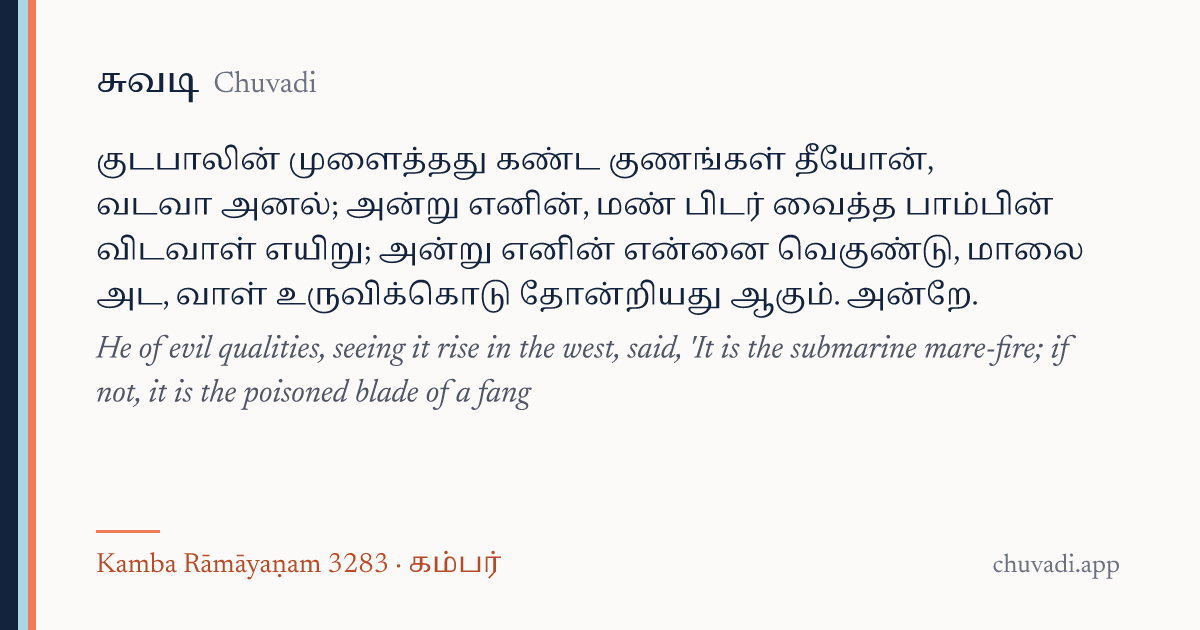
குடபாலின் முளைத்தது கண்ட - மேற்குத் திசையில் இளம்பிறை தோன்றியதைக் கண்ட; குணங்கள் தீயோன் - தீய பண்புகளை உடைய இராவணன்; (இது); வடவா அனல் - வடவைத் தீயே ஆகும்; அன்று எனின் - இல்லையெனில், மண்பிடர் வைத்த பாம்பின் - பூமியைத் தலையில் ஏந்திய ஆதிசேடனின்; விடவாள் எயிறு - நஞ்சு தோய்ந்த கூரிய பல் ஆகும்; அன்று எனின் - இல்லையெனில்; மாலை - மாலைப் பொழுது; என்னை வெகுண்டு - என் மீது சினம் கொண்டு; அட - கொல்லுதற்காக; வாள் உருவிக் கொடு - வாளை உருவிக் கொண்டு; தோன்றியது ஆகும் - எதிரில் காட்சி தருவது ஆகும்; அன்றே - அல்லவோ (என்றான்.
வடவைத் தீ கடலின் நடுவில் பெண் குதிரை முகத்தில் தோன்றுவது; பிரளய கால நெருப்பு என்றும் கூறுவர்.
ஆங்கிலம் · English translationAI
Translation
- He of evil qualities, seeing it rise in the west, said, 'It is
- the submarine mare-fire; if not, it is the poisoned blade of a fang
- of the serpent that bears the earth on its neck; if not, it is the evening,
- enraged with me, appearing with a sword drawn to kill me!'
What the poem says
Seeing the crescent rise in the west, the wicked Irāvaṇaṉ tries to name what it really is. It must be the vaṭavai fire, he says; or else a poisoned fang of Ādiśēṣa, the serpent that holds up the earth; or else evening itself, furious with him, coming at him with a drawn sword.
The vaṭavai is a fire said to burn in a mare's head under the ocean, and is also described as the fire that will consume the world at its end.