



கம்பராமாயணம் 3284 · ஆரணிய 7.135
பாடல் · The poem
Tap a word to see its gloss in the commentary and where else it occurs.
பாட வேறுபாடு · Project Madurai reads
பொருள் · Meaning in Tamil
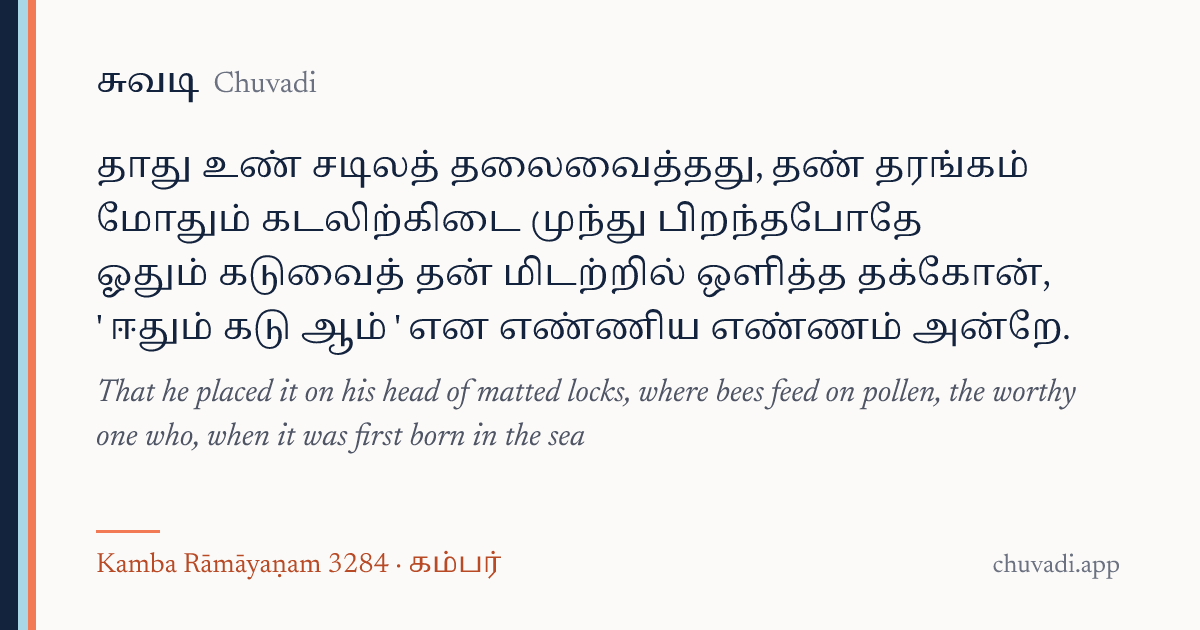
தண் தரங்கம் - குளிர்ந்த அலைகள்; மோதும் கடலிற்கிடை - வீசும் திருப்பாற் கடலிடையே இருந்து; முந்து பிறந்த போதே - முன்பு உதித்த காலத்தில்; ஓதும் கடுவை - கொடிதாய் உரைக்கப்படும் ஆலகால நஞ்சை; தன் மிடற்றில் ஒளித்த தக்கோன் - தன் கழுத்தில் மறைத்த சிவபெருமான்; தாது உண் சடிலம் - (கொன்றைப் பூவின்) மகரந்தம் மலிந்த சடை முடி சூழ்ந்த; தலை வைத்தது - தலைமீது பிறையை வைத்துக் கொண்டது; ஈதும் கடு ஆம் என - இதுவும் விடம் ஆகும் என்று; எண்ணிய எண்ணம் அன்றே - கருதிய கருத்தினால் அல்லவா?
இப்பாடலின் கருத்து தற்குறிப்பேற்ற அணி.
ஆங்கிலம் · English translationAI
Translation
- That he placed it on his head of matted locks, where bees feed on pollen,
- the worthy one who, when it was first born in the sea
- where cool waves beat, hid in his throat the poison men speak of,
- did so with the thought, 'This too is poison,' did he not?
What the poem says
Irāvaṇaṉ offers a fanciful explanation of why Śiva wears the crescent moon in his matted hair. When the gods churned the ocean of milk, the deadly poison came up first, and Śiva swallowed it and held it in his throat.
The moon rose from the same ocean, so Śiva, thinking it was poison too, kept it on his head where it could do no harm. Inventing a cause for a well-known fact is a figure of poetic fancy.