



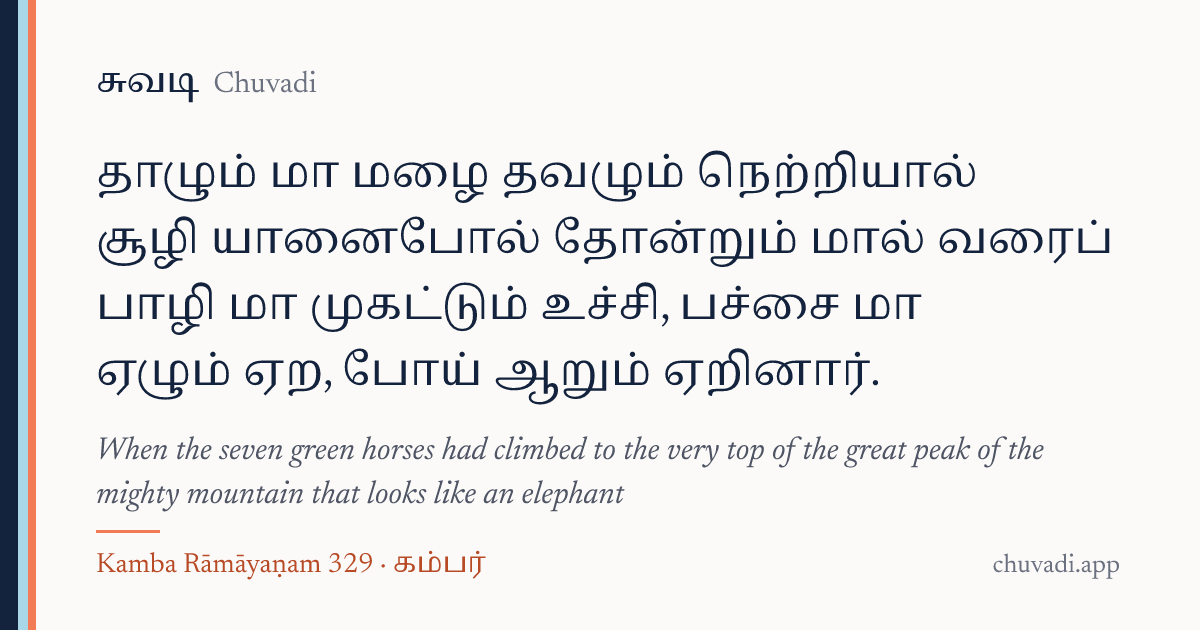
கம்பராமாயணம் 329 · பால 6.23
பாடல் · The poem
Tap a word to see its gloss in the commentary and where else it occurs.
பாட வேறுபாடு · Project Madurai reads
பொருள் · Meaning in Tamil
தாழும் மா மழை - படிந்திருக்கின்ற பெரு மேகங்களை; தழுவும் நெற்றியால் - தழுவியிருக்கும் தாழ்வரைகளால்; சூழி யானை போல் - முகபடாம் அணிந்துள்ள யானையைப் போல; தோன்றும் மால்வரை - காணப்படும் பெரிய மலையினது; பாழிமா முகட்டு உச்சி - பெருமை பொருந்திய உயர்ந்த சிகரத்தின் உச்சியில்; பச்சைமா ஏழும் ஏற - சூரியனது தேரில்பூட்டப்பட்ட பச்சைநிறக் குதிரைகள் ஏழும் ஏறும்படியான உச்சிக் காலத்தில்; ஆறும் ஏறினார் - அந்தச் சரயு நதியைக் கடந்து சென்றனர்.
இதில் முதல் இரண்டடி உவமையணியாகும். 'யானை' மலைக்கு உவமையாகும். நெற்றி: தாழ்வரை (உச்சியுமாம்). தாழ்வரையில் மேகம் படிந்திருப்பதால், கருநிறமுடைய அம்மலை, முகபடாம் அணிந்த யானையைப் போலத் தோன்றுகிறது என்பது கருத்து. பாழி: பெருமை. சூழி: முகபடாம் (நெற்றிப்பட்டம்). முகடு: சிகரம். மால்: பெரிய. பச்சைமா: பச்சைக் குதிரைகள். 'ஏழும் ஏற', 'ஆறும் ஏறினார்': ஏழு, ஆறு என்று எண்ணுப்பெயர்கள் தோன்றப் பாடிய நயம் கருதத்தக்கது. ஆக, நண்பகல் போதில் மூவரும் சரயு நதியைக் கடந்து சென்றனர் என்பது கருத்து.
ஆங்கிலம் · English translationAI
Translation
- When the seven green horses had climbed to the very top
- of the great peak of the mighty mountain that looks like an elephant
- in its face-ornament, with heavy clouds crawling on its brow,
- they had gone and crossed the river too.
What the poem says
By noon, when the sun's seven green horses have reached the summit of the sky, the three travellers have crossed the river. The mountain, with dark clouds lying on its slopes, looks like an elephant wearing its ornamental face-cloth.
The poet plays on numbers: as the 'seven' horses climbed, they climbed across the river, 'āṟu', which also means 'six'.