



கம்பராமாயணம் 330 · பால 6.24
பாடல் · The poem
Tap a word to see its gloss in the commentary and where else it occurs.
பாட வேறுபாடு · Project Madurai reads
பொருள் · Meaning in Tamil
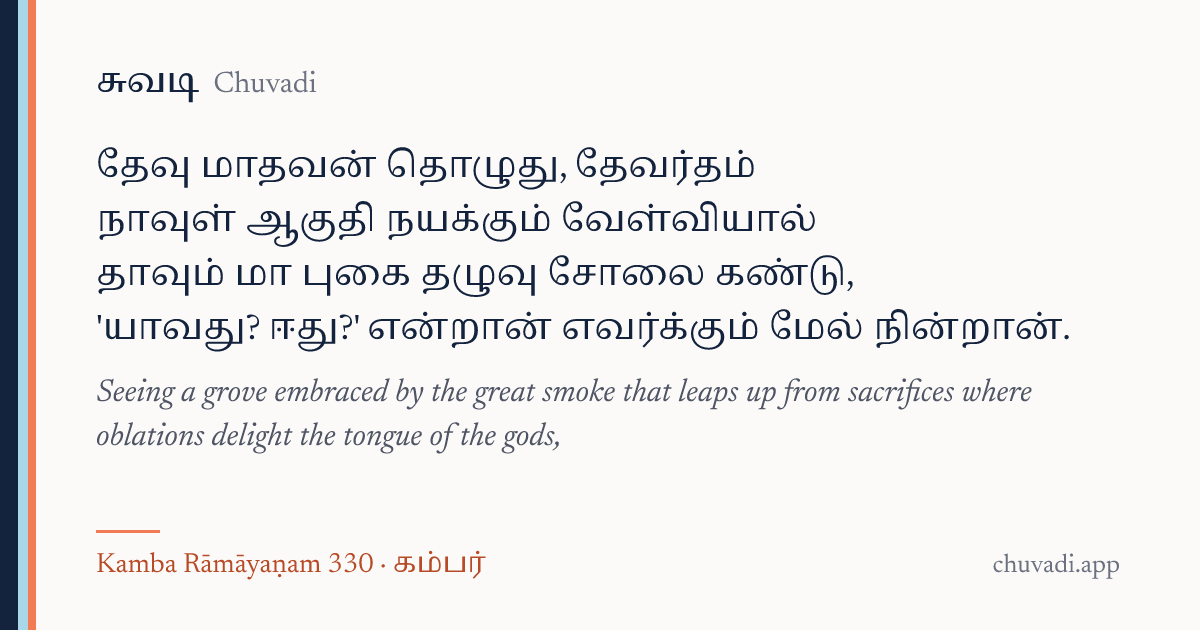
தேவர் தம் நாவுள் - தேவர்களது நாவான நெருப்பினிடம்; ஆகுதி நயக்கும் வேள்வியால் - ஆகுதியை விரும்பி அளிக்கும் வேள்வியில் இருந்து; தாவும் மாபுகை - தாவி வருகின்ற பெரும்புகையை; தழுவு சோலைகண்டு - தழுவி நிற்பதோர் சோலையைப் பார்த்து; தேவு மாதவன் தொழுது - தெய்வத்தன்மை பொருந்திய விசுவாமித்திர முனிவனை வணங்கி; எவர்க்கும் மேல் நின்றான் - யாவருக்கும் மேல் நின்றவனான ராமன்; யாவது ஈது என்றான் - இந்தச் சோலை யாது என்றான்.
தேவு: தே. மாதவன்: அரியதவத்தை உடையவன். வேள்வியில் தேவர்களுக்கு அளிக்கும் அவியுணவினைப் பெற்றுக்கொண்டு, அவர்களைச் சென்றடையச் செய்பவன் நெருப்புக் கடவுள் என்பதால், அந்த நெருப்புத் தேவனைத் “தேவர் தம்நா” என்றார். கண்டு யாவது: கண்டியாவது - குற்றியலிகரம். எவர்க்கும் மேல் நின்றான்: தனக்கு மேல் வேறொரு பொருள் இல்லாதவன் என்பது பொருள். “மேலொரு பொருளுமில்லா மெய்ப் பொருள்” என்பார் (வாலிவதைப்படலம்).
வேள்விப் புகையைத் தழுவிநிற்பதோர் சோலையைக் கண்டு, இராமன் முனிவனை வணங்கி, 'இச்சோலை யாது' என வினவினன் என்பது கருத்து.
ஆங்கிலம் · English translationAI
Translation
- Seeing a grove embraced by the great smoke that leaps up
- from sacrifices where oblations delight the tongue of the gods,
- he who stands above all bowed to the divine ascetic
- and asked, 'What place is this?'
What the poem says
Irāmaṉ sees a grove wreathed in the smoke of sacrifices, offerings poured into Agni, the fire god, who is called the gods' tongue because he carries the offerings to them. He bows to Vicuvāmittiraṉ and asks what place it is.
The poet calls Irāmaṉ 'he who stands above all', the Supreme Being beyond whom there is nothing, while he asks like an ordinary pupil.