



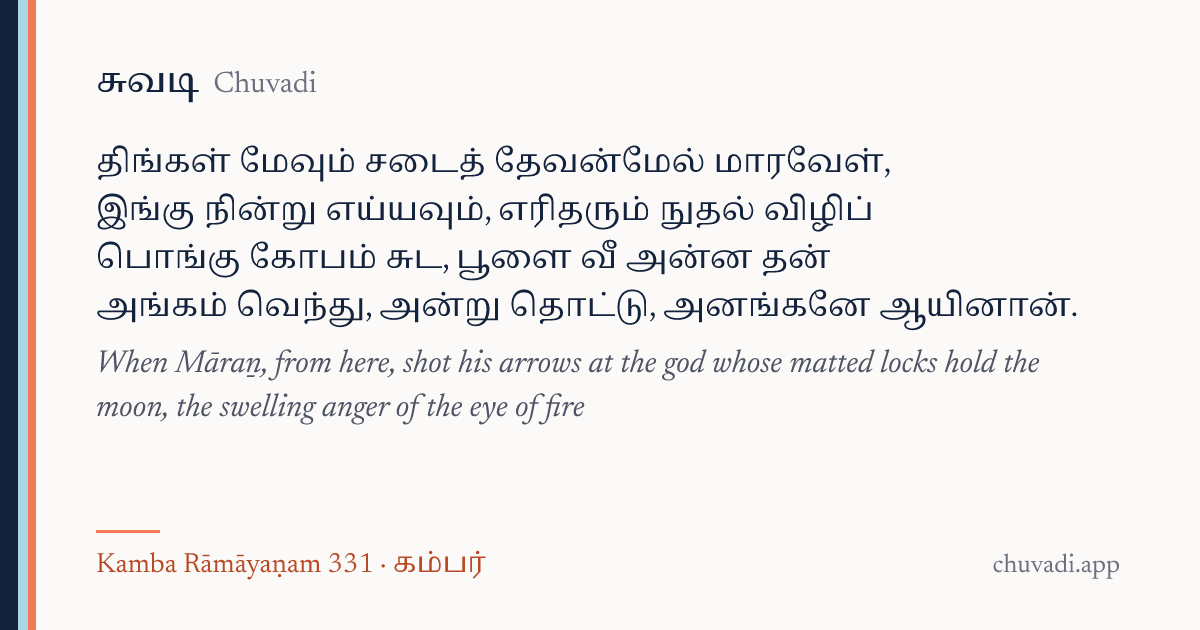
கம்பராமாயணம் 331 · பால 7.1
பாடல் · The poem
Tap a word to see its gloss in the commentary and where else it occurs.
பொருள் · Meaning in Tamil
திங்கள் மேவும் சடைத் தேவன் மேல் - சந்திரனைத் தாங்கியுள்ள சடைமுடியையுடைய தேவனாகிய சிவபிரான் மேல்; மார வேள் இங்கு நின்று எய்யவும் - மன்மதன் மலரம்புகளை இங்கு இருந்து எடுத்தெய்யவே; எரிதரு நுதல் விழி - நெருப்பைக் கக்கும் நெற்றிக் கண்ணில்; பொங்கு கோபம்சுட - பொங்கி எழுந்த சீற்றம் சுடுதலால்; பூளை வீஅன்ன தன் அங்கம்வெந்து - பூளைப் பூப்போன்ற தனது உடல் முழுதும் எரிந்து போய்; அன்று தொட்டு அனங்கனே ஆயினான் - அந்த நாள் முதல் மன்மதன் அங்க மற்றவனே ஆய்விட்டான்.
திங்கள்: சந்திரன். சடைத்தேவன்: சிவபிரான். மாரவேள்: மன்மதன். 'வேள்' என்பதற்கு விரும்பத்தக்க அழகுடையவன் என்பது பொருள். நுதல் விழி: ஏழாம் வேற்றுமை உருபும் பயனும் உடன் தொக்க தொகை. விழி: முதல் நிலைத் தொழிற் பெயர். வீ: நன்குமலர்ந்த மலர். அனங்கன்: அங்கம் இல்லாதவன். பூளைவீ: பூளைப்பூ காற்றில் பறக்குமளவு லேசானது. “மாருதமறைந்த பூளை” என்பார் பின்னும்.
சிவபிரானது நெற்றிக்கண் நெருப்பால் மன்மதன் எரிந்து சாம்பலானான் என்பது கந்தபுராணத்துட் கூறப்படும் செய்தியாம்.
ஆங்கிலம் · English translationAI
Translation
- When Māraṉ, from here, shot his arrows at the god
- whose matted locks hold the moon, the swelling anger of the eye of fire
- on his forehead burned him; his body, like a pūḷai flower, was consumed,
- and from that day on he became the Bodiless One.
What the poem says
A new chapter begins: the slaying of Tāṭakai. Vicuvāmittiraṉ answers Irāmaṉ's question with a story. Here Kāmaṉ, the god of love, shot his flower arrows at Śiva, who burned him to ashes with the fire of his third eye. Kāmaṉ's body was as light as the fluffy pūḷai flower that blows away in the wind.
From that day the god of love has been Anaṅgaṉ, 'the bodiless one'. The story is told in the Kantapurāṇam.