



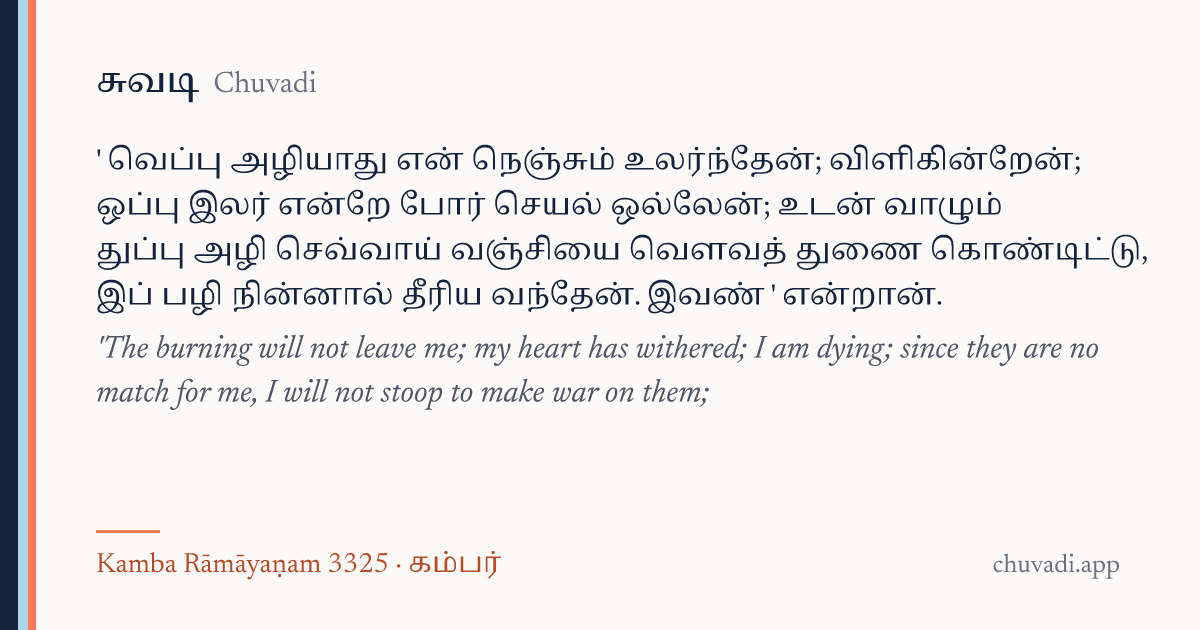
கம்பராமாயணம் 3325 · ஆரணிய 7.176
பாடல் · The poem
Tap a word to see its gloss in the commentary and where else it occurs.
பாட வேறுபாடு · Project Madurai reads
பொருள் · Meaning in Tamil
வெப்பு அழியாது - (முற்கூறிய நிகழ்ச்சியால்) மனத்தின் வெப்பம் தணியாமல்; என் நெஞ்சும் உலர்ந்தேன் - என் உள்ளமும் வாடினேன்; விளிகின்றேன் - உயிரும் அழிகின்றேன்; ஒப்பு இலர் என்றே - அம்மானுடர் என் ஆற்றலுக்கு நிகர் ஆகாதார் என்பதால்; போர் செயல் ஒல்லேன் - அவர்களோடு போரிடவும் விருப்பம் கொள்ளேன்; உடன் வாழும் துப்பு அழி செவ்வாய் - பவளத்தை வெல்லும் சிவந்த இதழ்களை உடைய, வஞ்சியை வௌவ - சீதையைக் கவர்ந்து வர; துணை கொண்டிட்டு - உன் உதவியை மேற்கொள்ள வேண்டியும்; இப்பழி நின்னால் தீரிய - எனக்கு நேர்ந்த அவமானத்தை உன்னால் துடைப்பதற்கு வேண்டியும்; இவண் வந்தேன் - இங்கு (உன்பால்) வந்தேன்; என்றான் - என்று இராவணன் மொழிந்தான்.
என்னுடைய சகோதரியை அவர்கள் இழிவுபடுத்தியதால் அவர்களுடன் இருக்கும் சீதையைக் கவர்ந்து அவர்களை இழிவுபடுத்துவேன் எனத் துணை நாடினான் இராவணன்.
ஆங்கிலம் · English translationAI
Translation
- 'The burning will not leave me; my heart has withered; I am dying;
- since they are no match for me, I will not stoop to make war on them;
- to carry off the slender one who lives with them, with red lips that outdo coral,
- I have come here, so that with your help this disgrace may be wiped out by you.'
What the poem says
Irāvaṇaṉ at last names his purpose. The heat of the insult will not leave him, his heart is dry, he feels close to death. The two men are beneath him, so he will not lower himself to fight them.
Instead he will carry off the coral-lipped Cītai who lives with them, and he has come to ask Mārīcaṉ's help to wipe out the disgrace. They shamed his sister; he will shame them by taking their woman.