



கம்பராமாயணம் 3328 · ஆரணிய 7.179
பாடல் · The poem
Tap a word to see its gloss in the commentary and where else it occurs.
பாட வேறுபாடு · Project Madurai reads
பொருள் · Meaning in Tamil
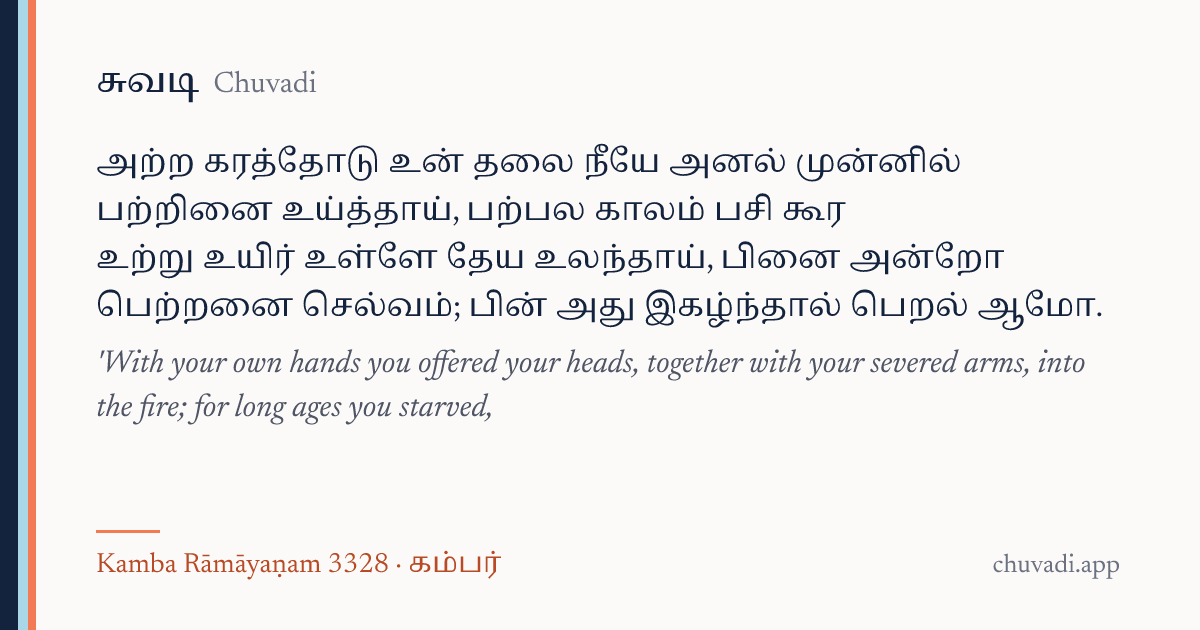
அற்ற கரத்தோடு - (வாள் கொண்டு வெட்டி) அறுத்த கைகளோடு; உன்தலை - உன் தலைகளையும்; நீயே அனல் முன்னில் - நீயே யாக நெருப்பில், பற்றினை உய்த்தாய் - எடுத்து இட்டாய்; பற்பல காலம் - மிக நெடுங்காலம்; பசிகூர உற்று - பட்டினி நோன்பு இருந்து; உயிர் உள்ளே தேய உலந்தாய் - உயிர் உடலில் வாடும்படி துன்புற்றாய்; பினை அன்றோ - (இவ்வாறு தவம் செய்த) பிறகு அல்லவா; செல்வம் பெற்றனை - திருவெல்லாம் உற்றாய்; பின் அது இகழ்ந்தால் - இத்தவப் பயனையெல்லாம் அலட்சியப்படுத்தினால்; பெறல் ஆமோ? - மீண்டும் அவற்றைப் பெறுதல் முடியுமோ? (முடியாது)
கோகர்ண ஆசிரமத்தில் ஆயிரம் ஆண்டு பட்டினித் தவம் புரிந்த இராவணன், ஒவ்வோர் ஆயிரம் ஆண்டுக்கும் ஒரு சிரமும் இருகரமும் அறுத்து, ஒன்பதினாயிரம் ஆண்டு தவம் புரிந்தான். கடைசித் தலையையும் கரங்களையும் வெட்ட முற்படுகையில் பிரமன் தோன்றி இழந்தன எலாம் தந்து வரங்களும் அருளினான். உற்ற நோய் நோன்றல், உயிர்க்கு உறுகண் செய்யாமை ஆகிய இரட்டை இலக்கணம் கொண்டது தவம். உற்ற நோய் நோன்ற இராவணன் உயிர்க்கு உறுகண் தேட முயல்வது கண்டு வருந்திப் பேசுகிறான், மாரீசன்.
ஆங்கிலம் · English translationAI
Translation
- 'With your own hands you offered your heads, together with your severed arms,
- into the fire; for long ages you starved,
- wasting away until your life dwindled within you; was it not only after that
- that you won your wealth? If you scorn it later, can it be won again?'
What the poem says
Mārīcaṉ reminds Irāvaṇaṉ how he gained his power. In his great penance he cut off his own heads and arms and offered them into the sacrificial fire, and fasted for ages until his life nearly wasted away. Only after that did Brahmā appear, restore him and grant him boons and wealth.
If he now throws away what that penance earned, he will never get it back. Penance means enduring suffering and not harming others; Mārīcaṉ grieves that one who endured so much now seeks to do harm.