



கம்பராமாயணம் 3330 · ஆரணிய 7.181
பாடல் · The poem
Tap a word to see its gloss in the commentary and where else it occurs.
பொருள் · Meaning in Tamil
நாரம் கொண்டார் - அன்பு பூண்டாரது; நாடு கவர்ந்தார் - நாட்டைக் கைப்பற்றிக் கொண்டவர்களும்; நடை அல்லா - நீதி நெறிக்குப் பொருந்தாத; வாரம் கொண்டார் - வரிப் பொருளை (குடிமக்களை வருத்திப்) பெற்றவர்களும்; மற்றொருவற்காய் - பிறர் ஒருவருக்கு உரிமையாய்; மனை வாழும் தாரம் கொண்டார் - அவர் இல்லத்திலே வாழும் மனைவியை வசப்படுத்திக் கொண்டவரும்; என்றிவர் தம்மை - எனப்படும் இவர்களை; தருமம் தான் - அறக் கடவுள்தானே; ஈரும் கண்டாய் - (சின்னா பின்னமாக்கி) அழித்து விடுவான் என அறிவாய்; ஐயா - தலைவனே; கண்டகர் உய்ந்தார் எவர் - கொடியவருள் எவர் தப்பிப் பிழைத்துள்ளார்? (எவரும் இல்லை).
பிறன் மனை விழைவோர், அன்புடையோரின் நாடு கவர்ந்தோர், கொடிய வரி வாங்குவோர் மூவரையும் கண்டகர் என ஓரினப்படுத்தினான். கண்டகர் - முள் போல் பிறரைத் துன்புறுத்துவோர்
ஆங்கிலம் · English translationAI
Translation
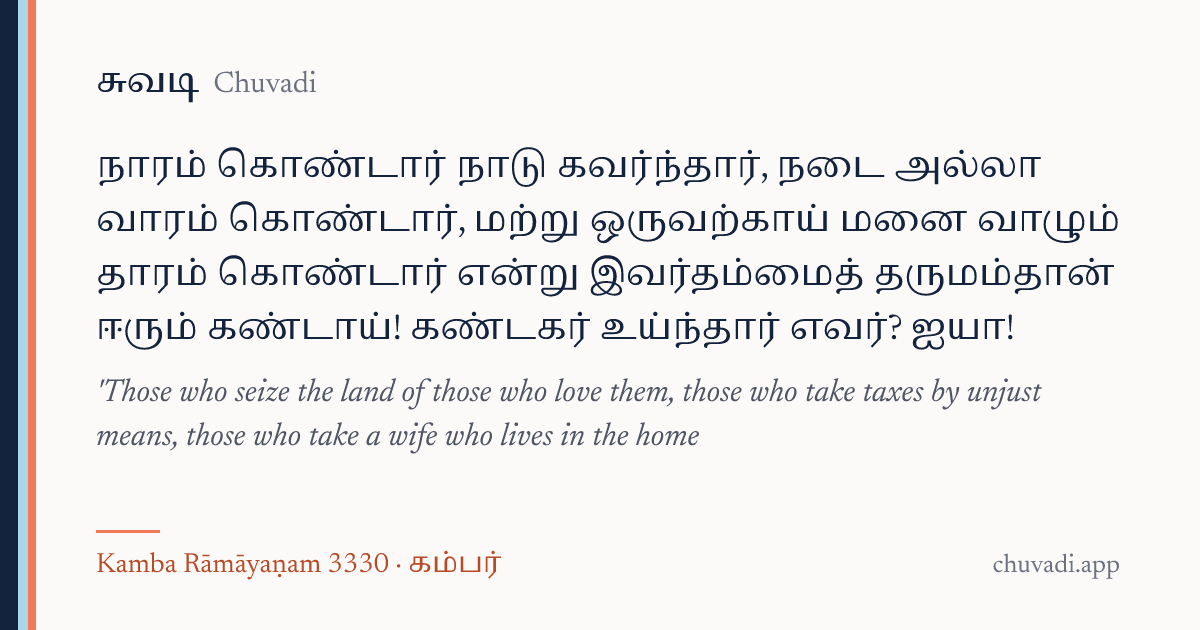
- 'Those who seize the land of those who love them, those who take taxes
- by unjust means, those who take a wife who lives in the home
- as another man's own: these, know that dharma itself
- tears apart! Which of the thorn-like wicked has ever survived, my lord?'
What the poem says
Mārīcaṉ names three kinds of wrongdoer: those who seize the land of people who trusted them, those who squeeze their subjects with unjust taxes, and those who take another man's wife from his home.
Dharma itself, he warns, tears such people to pieces. He calls them all 'thorns', people who prick and wound others, and asks whether any such villain has ever escaped.