



கம்பராமாயணம் 3332 · ஆரணிய 7.183
பாடல் · The poem
Tap a word to see its gloss in the commentary and where else it occurs.
பொருள் · Meaning in Tamil
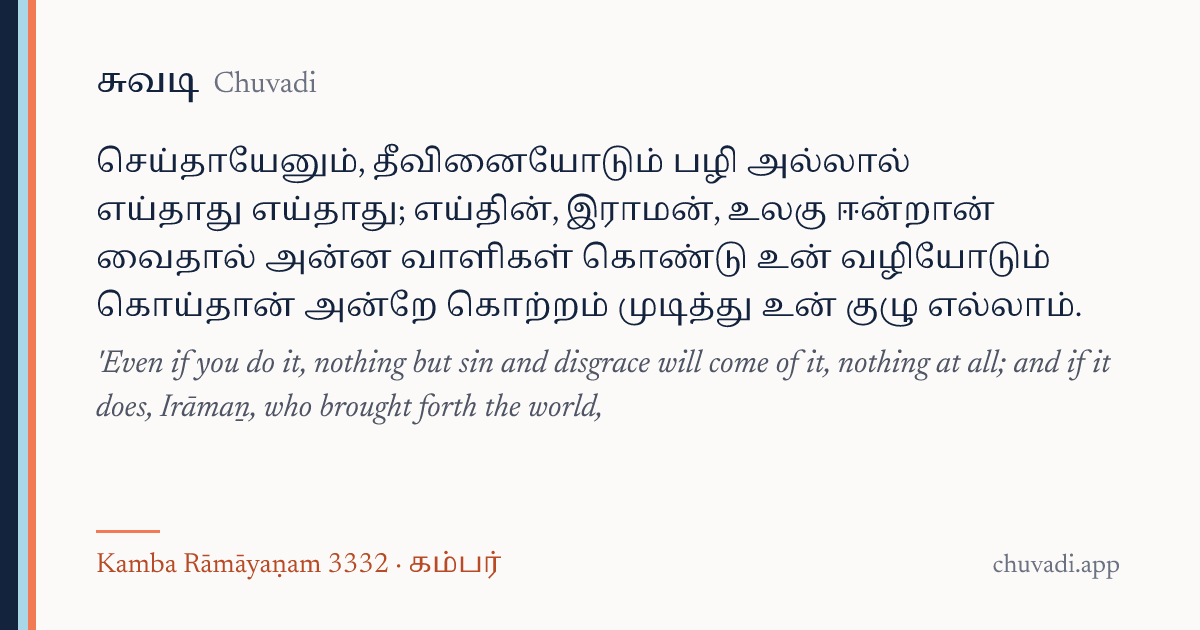
செய்தாயேனும் - (என் கருத்தை மீறி) நீ செயல்பட்டாலும்; தீவினையோடும் பழி அல்லால் - பாவமும் பழியும் அன்றி (வேறு நன்மை); எய்தாது எய்தாது - உனக்கு நிச்சயம் கிடைக்காது; எய்தின் - ஒருவேளை உன் எண்ணப்படி (சீதையைச் சிறைபிடிப்பதில் வெற்றி பெற்றாலும்; உலகு ஈன்றான் இராமன் - உலகையெல்லாம் படைத்தளிக்கும் இராமபிரான்; வைதால் அன்ன வாளிகள் கொண்டு - (முனிவர் சாபம் போன்ற கூரிய அம்புகளால்; உன் குழு எல்லாம் - உன் இனம் முழுவதையும்; உன் வழியோடும் - உன் சந்ததிகளோடும் சேர்த்து; கொற்றம் முடித்து - உங்கள் வெற்றி (வரலாறு) முடித்து; கொய்தான் அன்றே - நிச்சயமாய் அழித்துவிடுவான்.
பாவம் மறுமையையும், பழி இம்மையையும் அழிக்கும் என்பது கருத்து. உன்னால் உன் குலமும் அழியும் என எச்சரித்தான்.
வைதாலன்ன வாளிகள் - பால காண்டம் தாடகை வதைப் படலத்தில், 'சொல் ஒக்கும் கடிய வேகச் சுடு சரம்' (378) என்பதனோடு ஒப்பு நோக்கத்தக்கது. எய்தாது, எய்தாது - அடுக்கு, உறுதியை வலியுறுத்தியது. நிகழ்ந்தே தீருமென்ற உறுதியால் கொய்தான் என்று இறந்த காலத்தில் குறித்தான்; கால வழுவமைதி.
ஆங்கிலம் · English translationAI
Translation
- 'Even if you do it, nothing but sin and disgrace
- will come of it, nothing at all; and if it does, Irāmaṉ, who brought forth the world,
- with arrows like a sage's curse, will have ended your victories
- and cut down your whole clan along with your line.'
What the poem says
Mārīcaṉ warns that if Irāvaṇaṉ goes ahead, he will gain nothing but sin, which ruins the next life, and disgrace, which ruins this one. And if he does succeed in taking Cītai, Irāmaṉ, the creator of the world, will use arrows as deadly as a sage's curse to wipe out his whole race and descendants.
The phrase 'arrows like a curse' echoes an earlier verse about Irāmaṉ's arrows striking like a spoken curse. The past tense, 'will have cut down', presents the outcome as already certain.