



கம்பராமாயணம் 3340 · ஆரணிய 7.191
பாடல் · The poem
Tap a word to see its gloss in the commentary and where else it occurs.
பொருள் · Meaning in Tamil
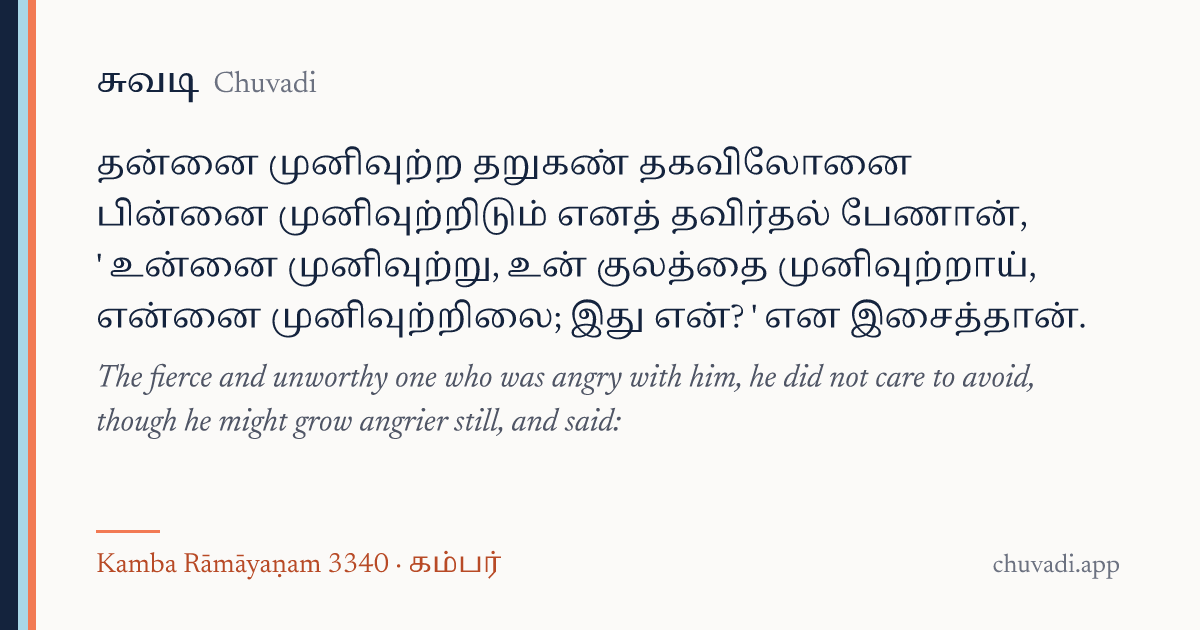
தன்னை முனிவுற்ற - தன் மீது சினம் கொண்ட, தறுகண் - வீரம் உடையவனும்; தகவு இலோனை - பெருமை இல்லாதவனுமான இராவணனை; பின்னை முனிவுற்றிடும் எனத் - மேலும் தன் மீது கோபம் கொள்ளுவான் என்பதனால், தவிர்தல் பேணான் - அறிவுரை கூறாது விலக விரும்பாதவனாய், 'உன்னை முனிவுற்று - உன்னோடு நீயே சினம் கொண்டு; உன் குலத்தை முனிவுற்றாய் - உன் குலத்தோடும் சினம் கொண்டாய்; (உண்மையில்); என்னை முனிவுற்றிலை - என்னோடு சினமுற்றாய் இல்லை; இது என் - ஏன் இவ்வாறு செய்கிறாய்; என இசைத்தான் - என்று கேட்டான்.
உன் சினம் எனக்குச் செய்யும் அழிவினும் உனக்கும் குலத்துக்கும் அழிவு தருவதாகும் என மாரீசன் சுட்டிக் காட்டுகிறான்.
ஆங்கிலம் · English translationAI
Translation
- The fierce and unworthy one who was angry with him,
- he did not care to avoid, though he might grow angrier still, and said:
- 'You are angry with yourself; you are angry with your own clan;
- you are not angry with me; why is this?'
What the poem says
Irāvaṇaṉ is furious and could grow angrier, but Mārīcaṉ does not hold back. He tells the king that his anger is not really aimed at Mārīcaṉ at all.
By pursuing this plan, Irāvaṇaṉ is turning his rage against himself and his own family, since they are the ones who will be destroyed by it. Why, Mārīcaṉ asks, does he act like this?