



கம்பராமாயணம் 3341 · ஆரணிய 7.192
பாடல் · The poem
Tap a word to see its gloss in the commentary and where else it occurs.
பாட வேறுபாடு · Project Madurai reads
பொருள் · Meaning in Tamil
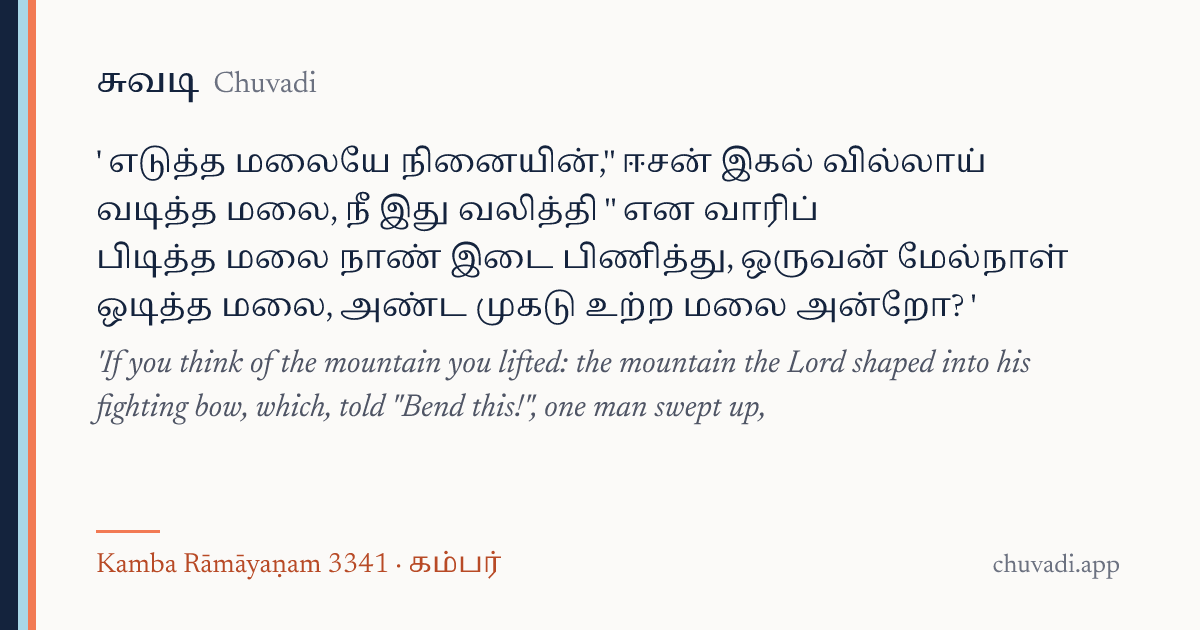
எடுத்த மலையே நினையின் - கயிலையங்கிரியை எடுத்ததையே பெரிதாக நீ கருதினால்; ஈசன் இகல் வில்லாய் வடித்த மலை - இது சிவபெருமான் முன்பு வளைத்து வில்லாய்ப் பிடித்த மேருமலை போன்றது; நீ இது வலித்தி என - இதனை நீ வளைப்பாயாக (என்று சனகன் கூற); வாரிப் பிடித்த மலை - அள்ளியெடுத்துப் பிடித்த மலைக்கு நிகரானதும்; ஒருவன் - ஒப்பற்ற இராமன் (அன்று); நாணிடை பிணித்து - நாண் கயிற்றைப் பற்றி; மேல் நாள் - முன்னொருநாள்; ஒடித்த மலை - ஒடித்த மலைக்கு நிகரானதுமான வில்; அண்ட முகடு - உச்சி வானத்தை; உற்ற மலை அன்றோ - தழுவிய மேரு மலை போன்றதே அன்றோ?
நீ எடுத்தது கயிலை மலை. ஆனால் இராமன் ஒடித்த வில் அதனினும் மேலான மேருமலை போன்றது. இதனால் வலிமையினை ஒப்பிட்டுப் பார்க்க வேண்டுகிறான். சொற்பொருட் பின்வருநிலை அணி.
ஆங்கிலம் · English translationAI
Translation
- 'If you think of the mountain you lifted: the mountain the Lord shaped
- into his fighting bow, which, told "Bend this!", one man swept up,
- seized, bound with the string and, long ago,
- broke, was that not the mountain that touches the dome of the universe?'
What the poem says
Irāvaṇaṉ boasted of lifting Kailāsa. Mārīcaṉ answers with another mountain. Śiva once bent Mount Mēru into a bow, and that bow was kept at Caṉakaṉ's court. When Irāmaṉ was told to bend it, he picked it up, strung it and snapped it.
Mēru reaches to the very roof of the universe, far greater than Kailāsa, so the comparison of strength speaks for itself. The verse repeats the word 'mountain' in every line, a deliberate figure of repetition.