



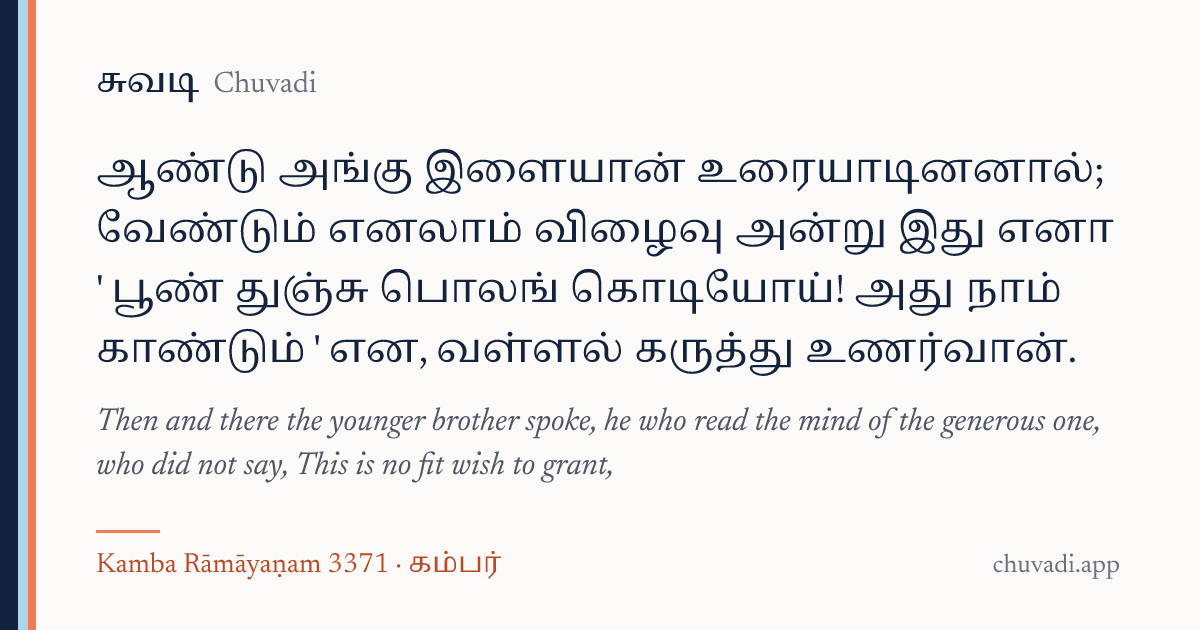
கம்பராமாயணம் 3371 · ஆரணிய 7.222
பாடல் · The poem
Tap a word to see its gloss in the commentary and where else it occurs.
பாட வேறுபாடு · Project Madurai reads
பொருள் · Meaning in Tamil
வேண்டும் எனலாம் - சீதை விரும்பிக் கேட்கின்ற தன்மையினால்; விழைவு அன்று இது - பொருத்தமான ஆசை அன்று இது; எனா! - என்று கூறாது; 'பூண் துஞ்சு பொலங் கொடியோய் - அணிகலன்கள் அழகுடன் பொருந்தும் பொற்கொடி போன்றவளே!; அது நாம் காண்டும் - அந்த மானைக் காணலாம்; எனும் வள்ளல் கருத்து உணர்வான் - என்று கூறும் இராமனுடைய சிந்தனைப் போக்கை உணர்ந்தவனாய்; இளையான் - தம்பியாகிய இலக்குவன்; ஆண்டு அங்கு உரையாடினன் - அப்போது அவ்விடத்துத் தன் கருத்தை உரைக்கலானான். ஆல் - அசை.
கேட்டதைக் ச.” என்பதால் வள்ளல் என்றார். உரிய சமயத்தில் லக்குவன் குறுக்கிட்டான்.
ஆங்கிலம் · English translationAI
Translation
- Then and there the younger brother spoke,
- he who read the mind of the generous one, who did not say, This is no fit wish to grant,
- but said, 'You golden creeper on whom jewels rest, that deer we
- shall see.'
What the poem says
Irāmaṉ does not tell Cītai that her wish is unwise. He gently says, 'Let us go and see the deer.' He is called the generous one, because he gives whatever is asked of him.
Ilakkuvaṉ, who understands his brother's mind, sees that Irāmaṉ is tempted, and steps in at just the right moment to speak.