



கம்பராமாயணம் 3376 · ஆரணிய 7.227
பாடல் · The poem
Tap a word to see its gloss in the commentary and where else it occurs.
பொருள் · Meaning in Tamil
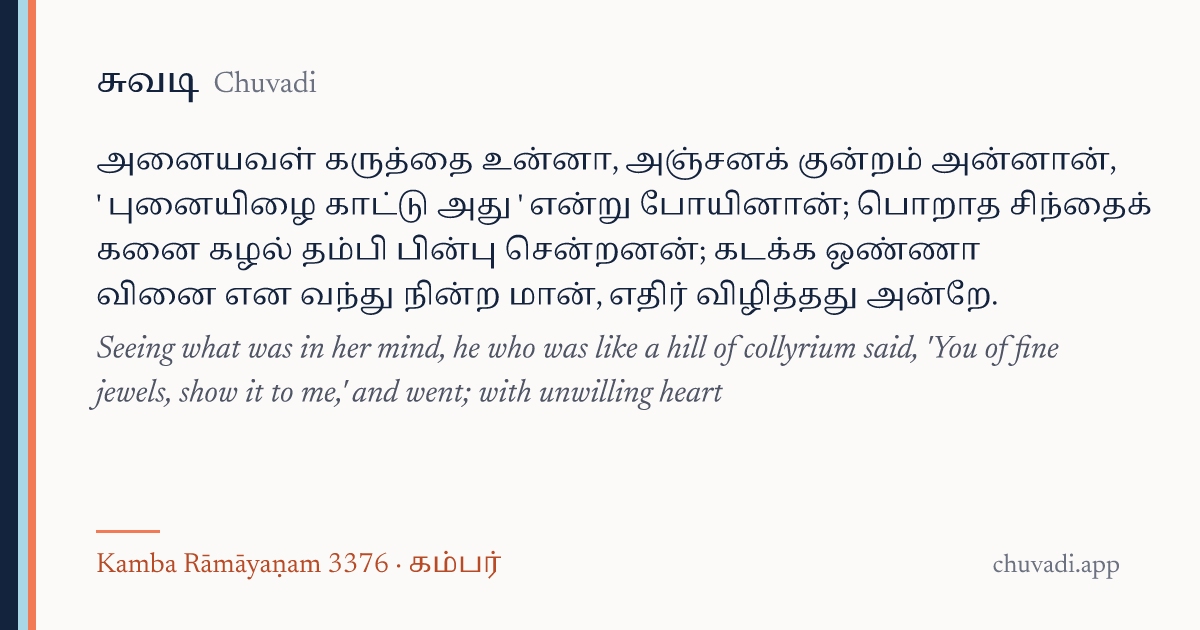
அனையவள் கருத்தை உன்னா - சீதையின் இவ் வருத்தச் சிந்தனையை எண்ணி; அஞ்சனக் குன்றம் அன்னான் - நீல மலை போன்ற இராமன்; 'புனையிழை - நல்லணி புனைந்தவளே!; அது காட்டு' என்று போயினான் - அம்மானை எனக்குக் காட்டுவாயாக' என்று புறப்படலானான்; பொறாத சிந்தை - இதனை ஏற்றுக் கொள்ள மனமின்றி; கனைகழல் தம்பி - ஓசை செய்யும் வீரக் கழலணிந்த தம்பி இலக்குவனும்; பின்பு சென்றனன் - அவர்கள் பின்னே சென்றான்; கடக்க ஒண்ணா வினை என - தாண்டிச் செல்ல முடியாத விதியினைப் போல, வந்து நின்ற மான் - வந்து நின்ற மாயமான்; எதிர் விழித்தது - எதிரில் வந்து காட்சி தந்தது. (அன்றே - அசை.
விதி, தவறாமல் பயனளிப்பது போன்று, மாயமான் தீமை விளைவிக்கத் தவறாது வந்து நின்றது, எனினும் கவனமுள்ள தம்பி பின்தொடர்ந்தான்.
ஆங்கிலம் · English translationAI
Translation
- Seeing what was in her mind, he who was like a hill of collyrium
- said, 'You of fine jewels, show it to me,' and went; with unwilling heart
- the younger brother with ringing anklets followed behind; like fate
- that cannot be escaped, the deer that had come stood and gazed at them.
What the poem says
Seeing how anxious Cītai is, Irāmaṉ, dark as a hill of collyrium, asks her to show him the deer and sets off. Ilakkuvaṉ does not approve, but he follows, watchful.
The deer stands facing them like fate that no one can escape. Fate never fails to bear its fruit, and the false deer is just as sure to bring harm.