



கம்பராமாயணம் 3388 · ஆரணிய 7.239
பாடல் · The poem
Tap a word to see its gloss in the commentary and where else it occurs.
பாட வேறுபாடு · Project Madurai reads
பொருள் · Meaning in Tamil
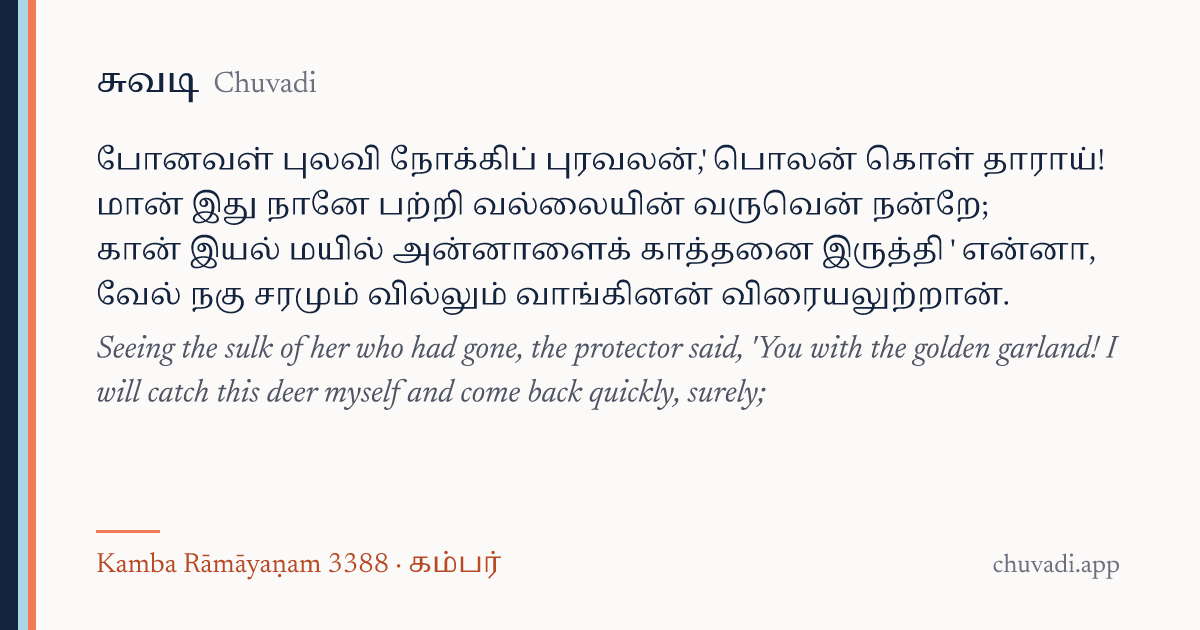
போனவள் புலவி நோக்கி - அவ்வாறு சென்ற சீதையின் ஊடலைப் பார்த்து; புரவலன் - அனைவரையும் காத்தல் வல்ல இராமன், (இலக்குவனிடம்); 'பொலன் கொள் தாராய் - பொன்மயமான மலர் மாலை புனைந்தவனே; மான் இது நானே பற்றி - இம் மானை நானே பிடித்துக் கொண்டு; வல்லையின் வருவென் நன்றே - விரைவில் நன்கு வந்து விடுவேன்; (அதுவரை, கான் இயல் மயில் அன்னாளை - கானகத்து மயில் போன்ற சீதையை; காத்தனை இருத்தி - நீ காவல் காத்து இருப்பாயாக; என்னா - என்று கூறி; வேல் நகு சரமும் வில்லும் வாங்கினன் - வேல் போன்ற கூரிய அம்புகளையும் வில்லையும் எடுத்துக் கொண்டு; விரையல் உற்றான் - வேகமாகச் செல்லலானான். சீதையின் ஊடலைத் தவிர்க்கும் பொருட்டு இராமன் தானே புறப்பட்டான். மேகம் கண்டு களிக்கும் மயில் போல, நீல மேக வடிவினனான இராமனைக் கண்டு களிக்கும் மயில் சீதை என்பதாம். கோப்பெருந்தேவி ஊடல் பாண்டியனுக்கும் கண்ணகிக்கும் அவலம் விளைத்தது; சீதையின் ஊடல் சீதைக்கும் இராமனுக்கும் அவலம் விளைத்தது.
ஆங்கிலம் · English translationAI
Translation
- Seeing the sulk of her who had gone, the protector said, 'You with the golden garland!
- I will catch this deer myself and come back quickly, surely;
- keep guard over her who is like a forest peacock and stay here,'
- and took up his spear-sharp arrows and his bow and hurried off.
What the poem says
To end Cītai's sulk, Irāmaṉ decides to go himself. He tells Ilakkuvaṉ to stay and guard her, a peacock of the forest who delights in him as peacocks delight in dark rain clouds, and he leaves with his bow and arrows.
The commentary compares Kōvalaṉ's story in the Cilappatikāram: there a queen's sulk brought ruin on the king and on Kaṇṇaki. Here Cītai's sulk brings sorrow on herself and Irāmaṉ.