



கம்பராமாயணம் 3406 · ஆரணிய 8.4
பாடல் · The poem
Tap a word to see its gloss in the commentary and where else it occurs.
பாட வேறுபாடு · Project Madurai reads
பொருள் · Meaning in Tamil
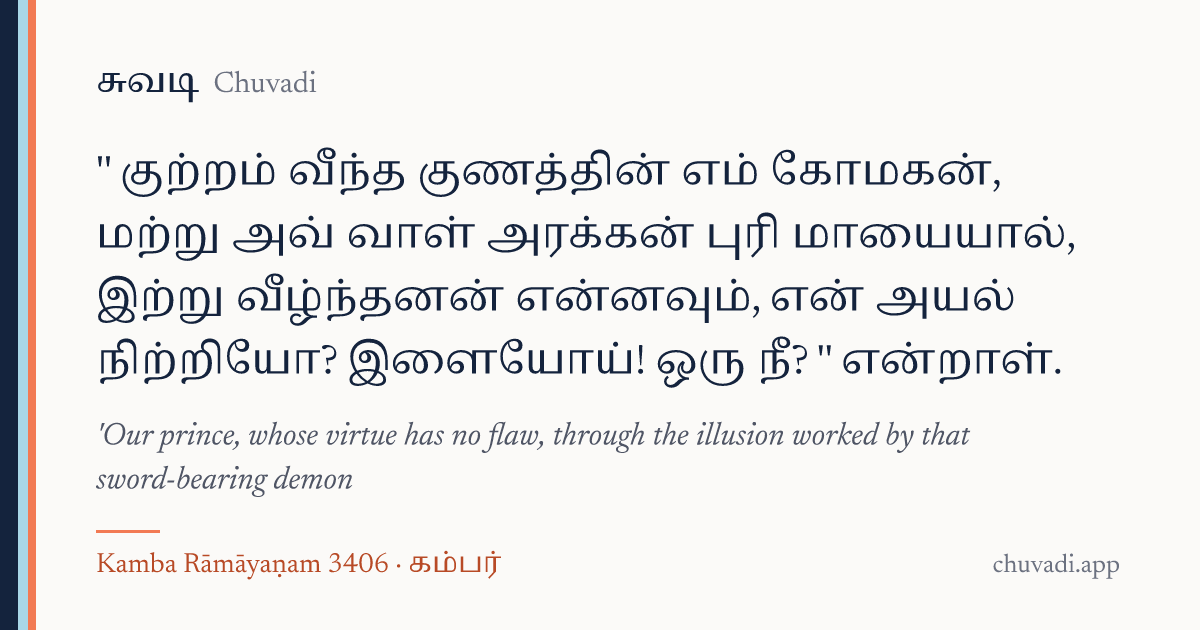
குற்றம் வீந்த குணத்தின் எம் கோமகன் - குற்றம் என்பது இல்லா நற்பண்புடை எம் தலைவன்; மற்று அவ் வாள் அரக்கன் புரி மாயையால் - வேறு பட்ட அந்தக் கொடிய அரக்கன் செய்த வஞ்சகத்தால்; இற்று வீழ்ந்தனன் என்னவும் - உயிர் அற்றுக் கீழே விழுந்தான் எனக் (அவன் குரலால்) கேட்ட பின்னும்; இளையோய் ஒரு நீ - இராமன் தம்பியாம் நீ ஒருவனும்; என் அயல் நிற்றியோ - என் அருகில் நிற்கின்றாயோ: என்றாள் - (எனச் சீதை இலக்குவனிடம்) கூறினாள்.
வீந்த - அழிந்த, வீதல் என்றதனடியாகப் பிறந்தது. வாள் - வாட்படையை உடைய எனலுமாம், 'இற்று வீழ்ந்தனன் என்னவும் என் அயல் நிற்றியோ' என்பதில் 'இராமனுக்கு நீ தீங்கு நிகழ்வதை விரும்பியுள்ளாய்' என்ற குறிப்பும் தொனிக்கக் கூறினாள். இச்சிறு தொடரில் ஆழமான பொருள் அடங்கியிருப்பதால் இதனைக் கம்ப சூத்திரம் என்பர். இராமன் 'குணத்தின் எம் கோமான்' என்றதால் இலக்குவன் குற்றம் நிறைந்தவன் என்பதாம். 'ஒரு நீ' என்பது 'நீயும் ஒரு தம்பியாக இருக்கின்றாயே' எனப் பழித்துக் கூறியதாம். சீதையின் கொடுஞ் சொற்களை இனிவரும் பாடல்களிலும் காண இயலும் (3330, 3331).
ஆங்கிலம் · English translationAI
Translation
- 'Our prince, whose virtue has no flaw,
- through the illusion worked by that sword-bearing demon
- has been cut down and fallen, they say, and still by my side
- do you stand, younger one, you alone?' she said.
What the poem says
Cītai turns on Ilakkuvaṉ. Irāmaṉ, a prince without fault, has been struck down by a demon's trick, so how can his brother simply stand beside her?
Her words hint that Ilakkuvaṉ wants harm to come to Irāmaṉ. Calling Irāmaṉ flawless implies that Ilakkuvaṉ is the opposite. So much is packed into the short phrase that it is called a 'Kampaṉ aphorism'. Her harsh words continue in the verses that follow.