



கம்பராமாயணம் 3422 · ஆரணிய 8.20
பாடல் · The poem
Tap a word to see its gloss in the commentary and where else it occurs.
பொருள் · Meaning in Tamil
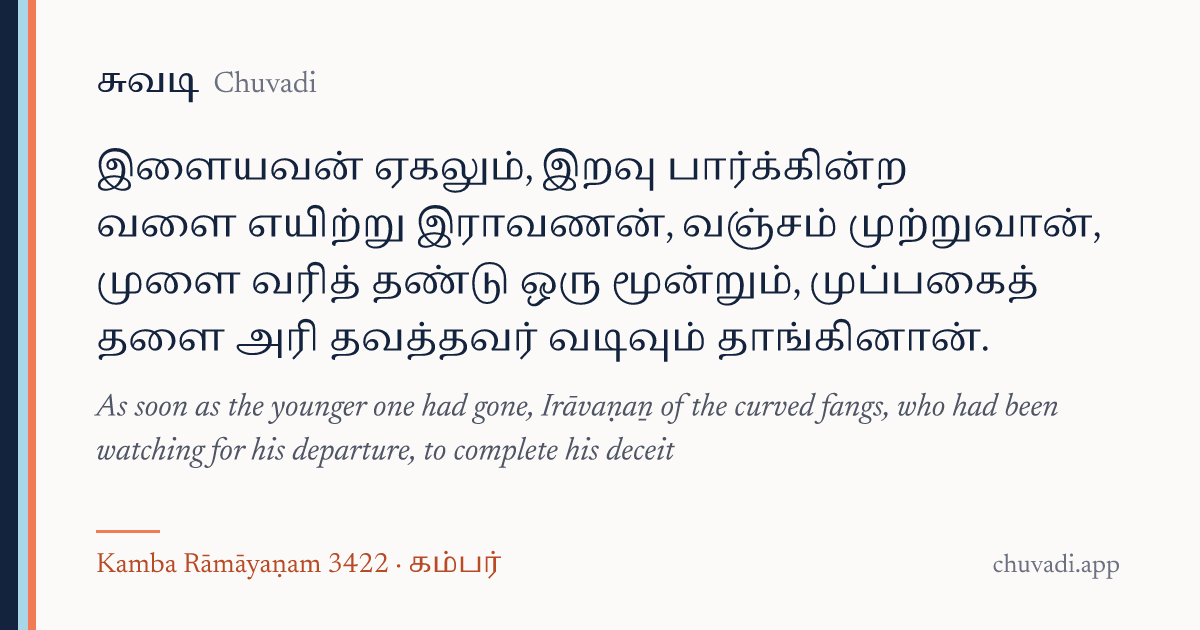
இளையவன் ஏகலும் - இலக்குவன் அவ்வாறு சென்றதும்; இறவு பார்க்கின்ற வளை எயிற்று இராவணன் - இலக்குவன் நீங்கிச் செல்வதை எதிர் பார்த்திருந்த வளைந்த பற்களையுடைய இராவணன்; வஞ்சம் முற்றுவான் - தான் கருதிய வஞ்சகச் செயலைச் செய்து முடிப்பதற்காக; வரிமுளைத்தண்டு ஒரு மூன்றும் - வரிந்து கட்டிய மூங்கில் தண்டுகள் ஒரு மூன்றையும்; முப்பகைத்தளை அரிதவத்தவர் வடிவம் தாங்கினான் - காமம் வெகுளி மயக்கம் எனும் மூன்று உட்பகையாம் கட்டுகளை அறுத்த தவ வடிவையும் ஏற்றுக் கொண்டான்.
இறவு - நீக்கம். வளை எயிறு - வளைந்த பல். அரக்கர்க்கு இத்தகைய பற்கள் உண்டு. முளை வரித் தண்டு ஒரு மூன்று - முக்கோல் அல்லது திரிதண்டம் எனப்படும். மனப்பகையாம் காமம் வெகுளி மயக்கம் ஆகியவற்றை அடக்கியவர் என்பதை இத்திரிதண்டம் குறிக்கும். ' துறவிகளை முக்கோற் பகவர்' என்பர் முன்னையோர் நூலேகரகம் முக்கோல் மணையே ஆயுங்காலை அந்தணர்க்குரிய (தொல். பொருள் மரபியல். 71) எனத் தொல்காப்பியம் கூறும். 'கற்றோய்த் துடுத்த படிவப் பார்ப்பான் முக்கோலசை நிலை' என்பது முல்லைப் பாட்டு (37 - 38). 'உரைசான்ற முக்கோல்' எனக் கலித்தொகையில் காணலாம்.
ஆங்கிலம் · English translationAI
Translation
- As soon as the younger one had gone, Irāvaṇaṉ of the curved fangs,
- who had been watching for his departure, to complete his deceit
- took up a triple staff of banded bamboo, and the form
- of an ascetic who has cut the bonds of the three inner foes.
What the poem says
Irāvaṇaṉ has been waiting for Ilakkuvaṉ to leave. As soon as he goes, the demon, with his curved fangs, disguises himself as an ascetic carrying the triple staff.
The three bound bamboo rods stand for the conquest of the three inner enemies: desire, anger and delusion. The commentary cites early Tamil works, the Tolkāppiyam, Mullaippāṭṭu and Kalittokai, where the triple staff marks holy men and Brahmins.